

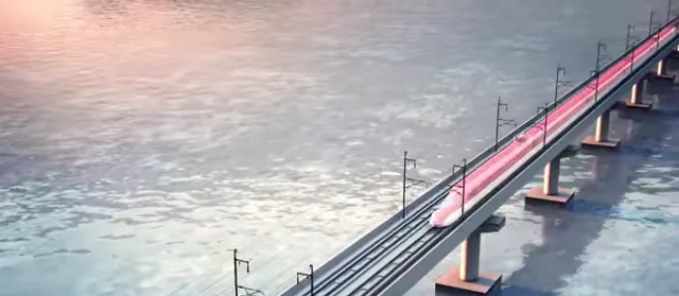
Introduction: A Paradigm Shift in Indian Rail Infrastructure
India’s ambitious infrastructure landscape is undergoing a tectonic shift, spearheaded by the National High-Speed Rail Corporation Limited (NHSRCL). At the heart of this transformation is the Mumbai-Ahmedabad High-Speed Rail (MAHSR) corridor—a project that seeks to bridge the commercial nerve centers of Maharashtra and Gujarat with unprecedented speed and efficiency.
Despite the operational headwinds posed by global health crises, NHSRCL has demonstrated remarkable resilience, pivoting to digital platforms to keep the project on track. Recently, the corporation successfully concluded three crucial online pre-bid meetings aimed at finalizing the construction parameters for 14 major bridges spanning the Gujarat and Dadra and Nagar Haveli sections. This milestone marks a significant step forward in the execution of one of the most complex engineering feats in the country’s history.
Main Facts: The Scope of the Tenders
The recent pre-bid meetings were strategically designed to resolve technical queries and procedural ambiguities for potential contractors, ensuring a seamless submission process for the upcoming tender packages. These tenders are pivotal to the continuity of the 508-km rail corridor.
The Three Core Tender Packages:
- The Zaroli-Vadodara Bridge Package: This tender focuses on the construction of bridges situated between Zaroli Village, located on the Maharashtra-Gujarat border, and the city of Vadodara. This section traverses the Union Territory of Dadra and Nagar Haveli, requiring complex coordination between state and federal authorities.
- The Vadodara-Ahmedabad Bridge Package: Serving as a vital link in the northern leg of the corridor, this tender encompasses the development of new bridge infrastructure between the two major Gujarati hubs, essential for maintaining the high-speed velocity required for the bullet train.
- The Steel Truss Superstructure Package: Beyond simple masonry, this tender covers the intricate requirements of procurement, fabrication, specialized check-assembly, high-grade painting at industrial workshops, and the logistics of transporting these massive steel components to various bridge sites.
By conducting these sessions online, NHSRCL ensured that international and domestic bidders remained engaged, preventing the project’s timeline from stagnating during periods of restricted physical movement.
Chronology: A Roadmap to High-Speed Connectivity
The MAHSR project is not a product of sudden ambition but the result of years of meticulous planning, diplomatic cooperation, and phased implementation.
- 2017–2018: Foundation and Alignment. The project was officially inaugurated, with teams focusing on land acquisition and geotechnical surveys along the 508-km alignment.
- 2019: Civil Works Procurement. NHSRCL launched a landmark tender for the design and construction of civil and building works for a 237-km stretch of the line. This tender was comprehensive, covering viaducts, bridges, maintenance depots, and state-of-the-art stations.
- November 2020: Hub Integration. A critical milestone was achieved with the awarding of the contract for the Sabarmati HSR Terminal. This facility was specifically designed to integrate the high-speed rail with Ahmedabad’s existing Metro network and the Bus Rapid Transit System (BRTS), signaling a move toward "multi-modal" connectivity.
- 2020–2021: Digital Transformation. Facing the limitations of the COVID-19 pandemic, NHSRCL shifted its stakeholder interactions to digital platforms, conducting the aforementioned pre-bid meetings for bridge construction to ensure that the supply chain remained uninterrupted.
Supporting Data: Engineering and Economic Projections
The MAHSR is designed to be more than just a faster train; it is intended to be an economic catalyst.
Technical Specifications:
- Corridor Length: 508 km.
- Stations: 12 strategically located stations connecting the Sabarmati Hub in Gujarat to the Bandra Kurla Complex (BKC) in Mumbai.
- Operational Speed: Trains are designed to cruise at 320 km/h, effectively cutting the travel time between the two financial capitals to approximately 2 hours—a journey that currently takes significantly longer via conventional rail or road.
Ridership Projections:
NHSRCL’s feasibility studies offer a compelling case for the economic viability of the line.
- Initial Phase: Projections suggest an initial ridership of 17,900 passengers per day per direction.
- Long-term Growth: As the high-speed culture takes hold and the economic corridors surrounding the stations develop, experts anticipate a surge in demand. By the year 2053, ridership is expected to climb to nearly 93,000 passengers per day.
These figures underscore the necessity of the project, not merely for convenience, but for accommodating the massive population growth and urbanization anticipated in Western India over the next three decades.
Official Responses and Strategic Resilience
NHSRCL’s management has maintained a proactive stance, emphasizing that the "digital-first" approach is not just a workaround for the pandemic but a permanent upgrade to their operational efficiency.

In official statements, NHSRCL representatives have noted: "The objective is to clear all technical and commercial doubts of the bidders well in advance. Transparency in the bidding process is non-negotiable, and digital meetings have allowed us to maintain the momentum of the tender evaluation process without compromising on the quality of interaction."
The corporation has further highlighted that project monitoring—ranging from site progress reports to financial milestones—is now being conducted through sophisticated cloud-based project management software. This allows the Ministry of Railways to keep a real-time pulse on construction activities across the various sites in Gujarat and Maharashtra.
Implications: The Broader Impact of the MAHSR
The successful execution of the bridge tenders is symbolic of a larger transition in India’s transport sector.
1. Technological Sovereignty and Skill Development
The procurement of specialized steel truss superstructures requires a high level of engineering precision. By involving Indian firms in these complex tenders, the project acts as a training ground for the domestic construction sector, helping local players adopt international standards in safety, precision, and durability.
2. Urban and Economic Integration
The Sabarmati terminal model serves as a blueprint for future infrastructure. By linking the HSR with local transit systems, NHSRCL is preventing the "silo effect," where high-speed stations exist in isolation. This integration ensures that the economic benefits of the HSR radiate outward into the city’s peripheral areas.
3. Sustainability and Environmental Impact
While construction involves significant land use, the long-term environmental implications are positive. A high-speed rail corridor of this magnitude is expected to significantly reduce the carbon footprint of inter-city travel by shifting thousands of passengers away from short-haul flights and private vehicles toward a clean, electric-powered rail system.
4. Challenges Ahead
Despite the progress, the project faces ongoing hurdles, including land acquisition in specific districts and the complexities of building through densely populated urban centers like Mumbai. The ability of NHSRCL to navigate these challenges through transparent dialogue—much like the recent bridge pre-bid meetings—will determine the project’s success in meeting its projected timelines.
Conclusion: A Vision for the Future
The Mumbai-Ahmedabad High-Speed Rail corridor represents the aspirations of a modernizing India. Through the rigorous pursuit of global engineering standards, the strategic use of digital communication to overcome physical barriers, and a forward-thinking approach to multi-modal connectivity, NHSRCL is laying the groundwork for a new era of transportation.
As the tenders for the 14 bridges move toward finalization, the project inches closer to reality. For the millions of citizens who will eventually traverse the distance between Mumbai and Ahmedabad in a mere two hours, these bridges are more than just steel and concrete—they are the links to a faster, more connected, and more efficient future. The resilience shown by NHSRCL in the face of global uncertainty serves as a testament to the nation’s commitment to building world-class infrastructure that stands the test of time.

