

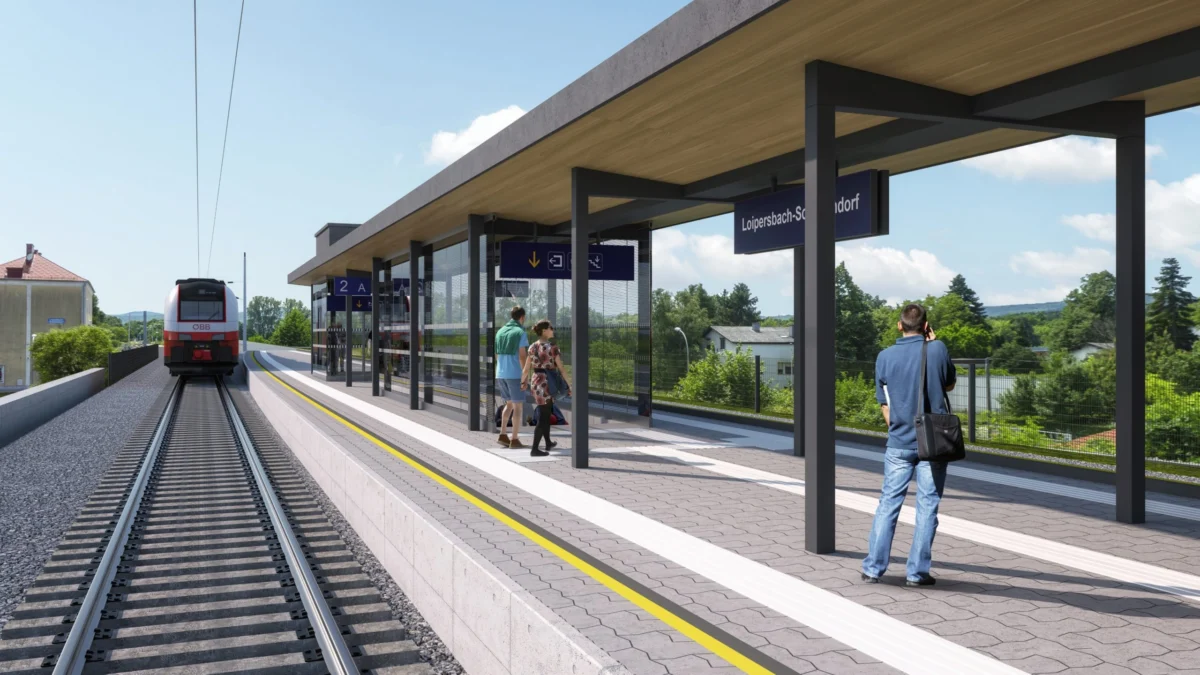
The landscape of regional transit in Austria is set for a profound transformation. Austrian Federal Railways (ÖBB) has officially announced that the comprehensive electrification project for the Mattersburg line—a vital artery connecting the Burgenland region to the broader national network—is entering its most intensive phase. Starting in early February 2026, the project moves from preparatory groundwork to major infrastructure deployment, marking a pivotal step in Austria’s commitment to sustainable mobility, carbon neutrality, and the modernization of its regional rail corridors.
This initiative is not merely a technical upgrade; it is a strategic investment in the socio-economic future of eastern Austria, aimed at reducing the region’s reliance on individual transport and positioning the rail network as the backbone of local and regional connectivity.
Main Facts: A Project of Scale and Ambition
The modernization of the Mattersburg line is a massive undertaking, characterized by a total investment of nearly 143 million EUR. While ÖBB continues to focus heavily on the primary west-east and north-south transit corridors of Austria, this project underscores a vital shift toward bolstering the resilience and appeal of regional lines.
Core Project Components:
- Electrification: The transition from diesel-powered regional trains to electric traction is the primary driver of the project, promising a substantial reduction in CO2 emissions and noise pollution along the route.
- Capacity Expansion: The construction of a second track on the critical sections between Wiener Neustadt Hbf and Katzelsdorf, as well as the stretch toward Loipersbach-Schattendorf, will significantly increase line capacity and reliability.
- Safety and Infrastructure: A central component of the plan is the elimination of dangerous level crossings. These are being replaced by modern underpasses, while remaining crossings are undergoing comprehensive rehabilitation, including the installation of state-of-the-art automatic barrier systems.
- Structural Adaptation: Iconic landmarks, such as the Wiesen-Sigleß and Mattersburger viaducts, are being meticulously adapted to house the necessary overhead electrification equipment without compromising their structural integrity.
- Modernization of Facilities: Five stations along the line are undergoing full renovations. This includes the construction of technical buildings for electronic signaling, new drainage systems, and the installation of energy-efficient lighting. Furthermore, the project integrates "Park&Ride" and "Bike&Ride" facilities to facilitate seamless multi-modal commuting.
Chronology: The Road to Completion
The project is structured in distinct phases to ensure that the disruption to passenger services, while inevitable, is managed with clear communication and alternative arrangements.
Phase 1: Preparation (Completed)
Over the past several months, ÖBB teams have completed the essential groundwork. This included site surveys, environmental impact assessments, and the procurement of materials. Crucially, the foundational work necessary to begin the installation of overhead catenary systems was laid during this period.
Phase 2: The Intensive Construction Period (February 2026 – December 2026)
Starting in February 2026, the main construction phase commences. Because of the nature of the track work, the line between Wiener Neustadt and Deutschkreutz will experience a full closure. During this time, the REX93 and R93 lines will cease operations. To mitigate the impact on daily commuters, ÖBB has organized a robust alternative bus service to ensure that travelers can continue to reach their destinations throughout the 2026 calendar year.
Phase 3: Final Integration and Modernization (2027)
The project is slated for completion in 2027. This final phase will focus on testing the new electrical systems, final track renewals, and the completion of station accessibility upgrades. By the end of 2027, the line is expected to be fully operational, with all stops featuring barrier-free access for people with disabilities.
Supporting Data: Why the Investment Matters
The decision to allocate 143 million EUR to the Mattersburg line is backed by long-term regional development goals. Currently, the reliance on diesel traction and older infrastructure limits the frequency of service and the speed of travel, making private car ownership a more attractive, albeit less sustainable, option for many residents of Burgenland.
Performance Indicators:
- Emission Reduction: Electrification is the most effective way to lower the carbon footprint of regional rail. By moving to electric traction, the line will align with Austria’s national target of achieving a climate-neutral transport sector by 2040.
- Operational Efficiency: The addition of a second track is a game-changer for scheduling. It allows for higher frequency (taktverkehr) and reduces the risk of delays cascading through the network when a single train experiences a technical issue.
- Safety Metrics: Replacing level crossings is statistically proven to reduce the risk of accidents. By creating grade-separated crossings (underpasses/overpasses), the project effectively eliminates the most common point of failure in railway safety.
Official Responses and Strategic Vision
ÖBB management has emphasized that this project is a "cornerstone of regional development." In recent statements, company representatives noted that the modernization is designed to meet the evolving needs of a mobile population.

"We are not just laying tracks and wires," an ÖBB spokesperson stated. "We are creating a service that reflects the standards of modern life. By providing better infrastructure, we make it easier for people to choose the train over their own car. This isn’t just about moving people from A to B; it’s about connecting communities in a way that respects the environment and improves the quality of life for everyone in Burgenland."
Regional planners in Burgenland have echoed this sentiment, noting that the investment will likely have a positive impact on local real estate, tourism, and labor market participation. By making the region more accessible, the railway line effectively expands the reach of the local workforce and makes the region a more attractive location for both families and businesses.
Implications: A Sustainable Future for Burgenland
The electrification of the Mattersburg line is part of a wider, systemic upgrade of the Austrian railway infrastructure. While international high-speed lines often dominate the headlines, the "hidden work" being performed on regional lines like this one is what ultimately dictates the success of a national transport strategy.
Socio-Economic Impact
The integration of accessibility features—such as elevators, tactile paving, and level platforms—ensures that the rail network is inclusive. In an aging society, the ability for passengers with reduced mobility to navigate stations independently is not just a convenience, but a necessity for social cohesion.
Environmental Stewardship
By reducing noise levels through the use of modern electric rolling stock and better track maintenance, the project also improves the quality of life for residents living in the immediate vicinity of the rail corridor. The transition away from fossil fuels for transit is a direct contribution to the health of the local ecosystem, reducing the long-term environmental burden on the Burgenland countryside.
Long-term Regional Competitiveness
In the long run, the success of this project will be measured by the increase in passenger numbers. As the service becomes faster, quieter, and more reliable, the "modal shift"—the transition of passengers from private vehicles to public transit—is expected to accelerate. This shift is essential for easing congestion on the regional road network and ensuring that Burgenland remains a competitive and vibrant place to live and work.
Conclusion
As February 2026 approaches, the commencement of major works on the Mattersburg line signifies a point of no return for regional transport in Austria. The commitment of 143 million EUR is a bold statement of confidence in the future of rail. While the closure of the line during the construction period will necessitate patience from daily commuters, the long-term payoff—a modernized, accessible, and sustainable rail link—will provide dividends for decades to come.
By prioritizing these regional upgrades, ÖBB is ensuring that the transition to a greener, more connected Austria is not limited to its urban centers, but is felt in every community connected by its rails. As the project progresses toward its 2027 completion date, the Mattersburg line will serve as a model for regional rail modernization, proving that sustainable infrastructure is the bedrock upon which the future of local mobility is built.

