

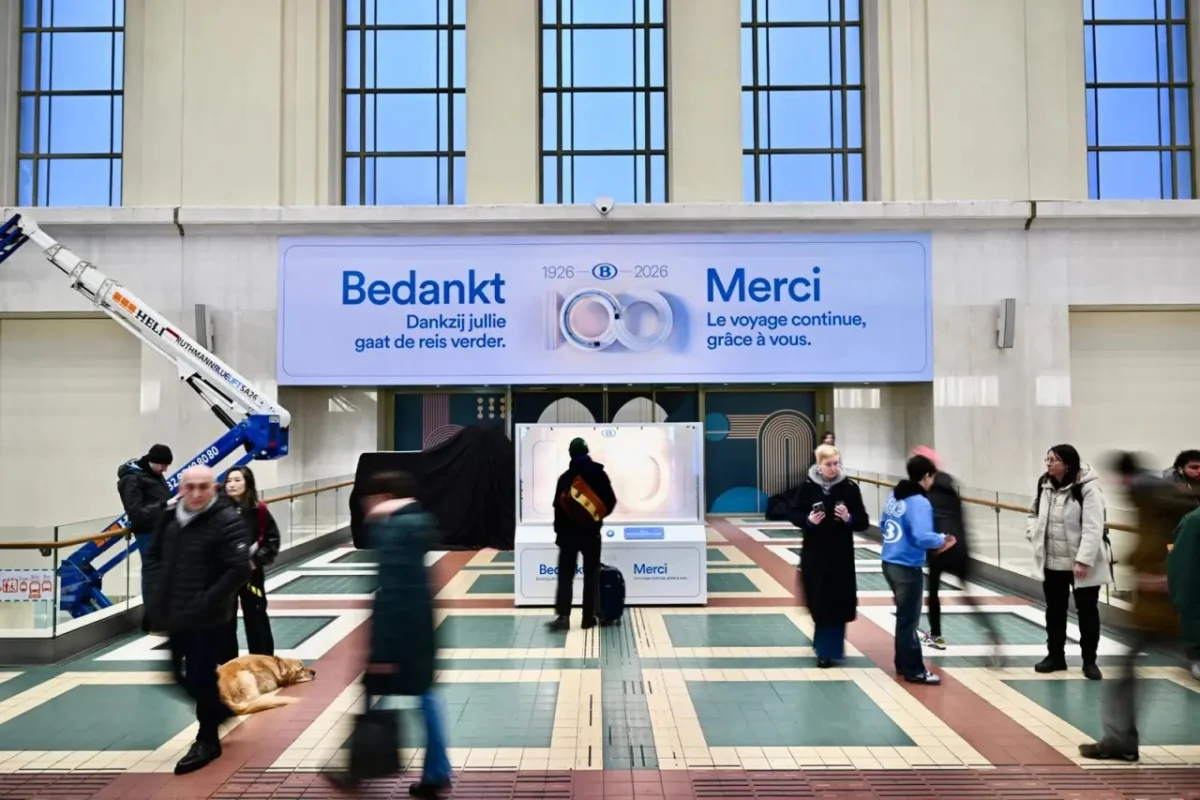
On July 23, 2026, the Belgian national railway operator, the Société Nationale des Chemins de fer Belges (SNCB), celebrates a monumental milestone: the centenary of its founding legislation. Passed exactly one hundred years ago, the law of July 23, 1926, transformed the landscape of Belgian transportation, centralizing the management of a nation still grappling with the physical and economic scars of the First World War.
Today, the SNCB is far more than a public utility; it is a cultural icon and the backbone of Belgian mobility. To honor a century of service, the operator has launched a comprehensive year-long anniversary program titled "100 years. The journey continues," designed to bridge the gap between the historic steam-era beginnings and the high-tech, sustainable future of European rail.
The Anniversary Program: A Tribute to History and Passengers
The centenary is not merely a corporate milestone but a nationwide celebration. Since February, the SNCB has rolled out an expansive schedule of events aimed at recognizing the vital role played by its 17,000 employees and the millions of passengers who have made the train a staple of their daily lives.
Connecting Through Experience
On the official anniversary date, July 23, the SNCB is executing a series of "gratitude gestures." Passengers and staff across five major Belgian stations and various transit lines will receive commemorative gifts. This personal touch is complemented by a 24-hour digital competition, offering limited-edition centenary merchandise.
The visual identity of the network has also shifted; trains adorned with the "Merci" branding now traverse the country, while curated playlists and a traveling model railway exhibit bring the history of the rails to schools and public squares.

The 300-Metre Time Machine
Perhaps the most ambitious project in the anniversary portfolio is the 300-metre-long "Historic Train." This massive rolling exhibition features carriages and locomotives representative of different epochs of Belgian rail development. Visitors will have the unique opportunity to walk through restored historic cabins, offering a tangible connection to the technological advancements of the past century.
Complementing this, the Train World museum—the beating heart of Belgian rail heritage—will host an immersive exhibition in late August, focusing on the evolution of model railroading as a reflection of the national network’s expansion.
Commemorating in Metal: The 2-EUR Coin
In collaboration with the Royal Mint, the SNCB has unveiled a special 2-EUR commemorative coin. The design is a masterpiece of symbolism: it features the iconic oval "B" logo created by Jean De Roy in 1938, alongside an emblem where the number 100 is stylized as railway tracks, with the zeros forming an infinity symbol. Emerging from this infinity loop are both a 1926 steam locomotive and a modern-day train, perfectly encapsulating the theme of "the journey continuing."
Sophie Dutordoir, Managing Director of the SNCB, remarked on the significance of the release: "The 2-EUR coin is a powerful symbol of a public company that has been an inseparable part of everyday life in Belgium for 100 years. It represents our resilience, our history, and our unwavering commitment to the future."
While the coin serves as legal tender within the Eurozone, its collector-grade status—with limited minting of proof and Brilliant Uncirculated editions—ensures it will remain a cherished piece of Belgian numismatic history rather than a common pocket-change item.

Cultural and Technical Horizons
The celebration extends beyond the tracks and into the realm of culture and industry. From September 18, Train World will host "Fashion & Trains, from 1835 to the present day," an exhibition exploring the intersection of industrial design, travel, and social fashion trends.
For those interested in the nuts and bolts of the operation, the SNCB is opening its central workshops in Salzinnes and Mechelen to the public on October 4. This rare glimpse behind the curtain will allow visitors to witness the specialized technical work involved in maintaining and modernizing the fleet, highlighting the human expertise that keeps the system running safely.
Furthermore, a new series of podcasts—launching July 20—will weave together archive audio with modern testimonies. These episodes are intended to document the company’s history while serving as a forum for discussing the challenges of the coming decades, particularly as the European rail sector faces increasing liberalization and competition.
Chronology: A Century of Belgian Rail Evolution
To understand the scale of the SNCB’s achievement, one must look at the historical trajectory of the company:
- 1926: The SNCB is formally established by law on July 23. Operations commence on September 1, tasked with rebuilding a war-torn network.
- 1935: The first major electrification project is completed between Brussels and Antwerp, setting a new standard for speed and efficiency.
- 1938: The "B" logo is introduced, becoming one of the most recognizable corporate identities in Europe.
- 1952: The opening of the Brussels Nord-Midi junction, the massive underground artery that revolutionized travel through the capital.
- 1966: The final commercial steam train service ends, marking the full transition to electric and diesel traction.
- 1984: The implementation of the IC-IR plan establishes the regular-interval timetable, the blueprint for modern passenger service.
- 1997: Belgium enters the high-speed era with the launch of lines connecting Brussels to the French border.
- 2005: Institutional restructuring separates infrastructure management (Infrabel) from train operations (SNCB).
- 2023: A new long-term public service contract is signed, providing the investment framework until 2032.
Supporting Data and Future Implications
The SNCB of 2026 is a massive enterprise. As the nation’s largest consumer of electricity, the company plays a pivotal role in Belgium’s climate goals. The infrastructure today comprises thousands of kilometers of track, managed under a public service contract that mandates strict punctuality, safety, and accessibility standards.

However, the "journey" is not without its hurdles. The upcoming expiration of the current public service contract in 2032 looms large. As the European Union pushes for a more competitive, open-access railway market, the SNCB is currently in a phase of intensive modernization. The investment strategy is focused on digital signaling, fleet renewal, and intermodal connectivity—ensuring that the train remains the preferred choice for commuters in an era of rapid technological disruption.
Strategic Outlook
The transition from a state-run monopoly to a player in a competitive European landscape is the defining challenge of the next decade. By focusing on customer experience—as evidenced by the current centenary initiatives—the SNCB is attempting to strengthen the public’s emotional and practical bond with the railway.
The incorporation of DJ sets at major hubs like Liège-Guillemins and Antwerp-Central, alongside the focus on student art competitions, indicates a desire to remain relevant to a younger generation that prioritizes sustainability and ease of use.
Official Reflections: A Legacy of Service
The centenary is a moment of introspection for the leadership at the SNCB. The consensus is clear: while the technology has shifted from steam engines to digital, high-speed rail, the fundamental mission of the company has remained unchanged.
As the SNCB enters its second century, the focus remains on the "human factor." From the engineers in the Mechelen workshops to the conductors navigating the busy Brussels-Midi platforms, the network is defined by its people. The commemorative slogan, "The journey continues," is not just a marketing phrase; it is an acknowledgment that the SNCB is a work in progress.

In a world defined by volatility, the Belgian railway has proven to be a constant. As the last steam train fades further into the archives and the next generation of high-speed, sustainable rail solutions takes center stage, the SNCB continues to serve as the vital link connecting Belgium’s past to its future. Whether through a 2-EUR coin or the daily commute of a passenger in 2026, the legacy of 1926 remains vibrant, functional, and essential to the nation’s identity.

