

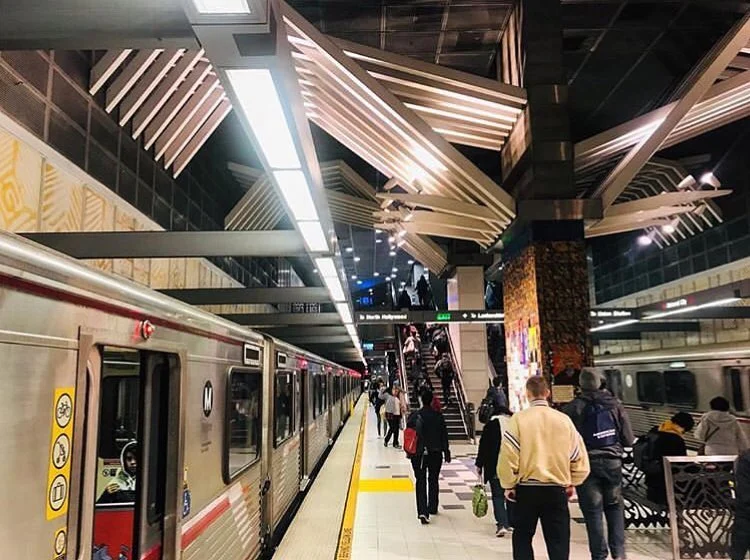
In a move that signals a paradigm shift for the most congested urban landscape in the United States, the Los Angeles County Metropolitan Transportation Authority (LA Metro) has unveiled an updated draft of its 2020 Long Range Transportation Plan (LRTP). This monumental $400 billion strategy serves as a comprehensive roadmap for the next three decades, aiming to dismantle the city’s reputation for gridlock while fostering a sustainable, high-tech transit future.
Described as the most aggressive transit expansion plan currently underway in the United States, the 2020 LRTP is more than a construction schedule—it is an economic and social manifesto designed to reshape how millions of Southern Californians live, work, and commute.
The Core Mandate: A $400 Billion Vision
The 2020 LRTP is a multi-layered financial and engineering endeavor. At its heart, the strategy seeks to construct more than 160 kilometers of new transit network, weaving together a fragmented geography into a cohesive regional grid.
However, the strategy acknowledges that expansion is only half the battle. Of the $400 billion total budget, approximately $200 billion is earmarked specifically for operations and the "state of good repair"—the critical maintenance of aging infrastructure. Furthermore, the plan allocates $38 billion in direct funding to local agencies, empowering municipalities to bolster their own local transit systems. This dual focus on "build" and "maintain" represents a maturation of Los Angeles transit planning, moving away from the "expansion-only" models of the past.
A Chronological Perspective: From Legacy to Future
To understand the gravity of the 2020 LRTP, one must look at the historical trajectory of Los Angeles transit.
- The Last Three Decades: Over the past 30 years, LA Metro has successfully constructed 210 km of rail and bus rapid transit networks. This period saw the rebirth of the subway system and the expansion of the light rail network, transforming LA from a purely car-dependent sprawl into a city with a burgeoning multi-modal backbone.
- The 2020 Pivot: With the release of the updated 2020 LRTP, Metro is transitioning from the era of "foundational building" to "system optimization." The current plan integrates lessons learned from previous decades, particularly regarding project delivery times and community integration.
- The Public Consultation Phase: As of June 2020, the plan entered a vital public consultation period. Ending on July 13, this phase allows residents, stakeholders, and advocacy groups to provide input, ensuring the plan remains responsive to the diverse needs of LA County’s 10 million residents.
- The 30-Year Horizon: The implementation phase stretches through 2050, requiring sustained political will and economic stability across multiple cycles of municipal, state, and federal leadership.
Supporting Data: The Calculus of Change
The efficacy of the 2020 LRTP is supported by rigorous modeling that highlights the tangible benefits of the proposed investments. If implemented in its entirety, the plan promises to alter the fundamental statistics of daily life in Los Angeles:
Mobility and Environmental Impact
- Transit Utilization: A projected 81% increase in daily transit trips, suggesting a significant shift in commuter behavior.
- Traffic Relief: A 31% decrease in traffic delays, a statistic that would provide billions of dollars in annual economic relief to businesses and individuals alike.
- Climate Goals: A 19% decrease in greenhouse gas emissions, aligning Los Angeles with aggressive state-level climate targets and global sustainability efforts.
The "10-Minute Walk" Metric
Perhaps the most ambitious target involves accessibility. Currently, only 8% of LA County residents and 16% of jobs are within a 10-minute walk of high-quality rail or bus rapid transit. The 2020 LRTP aims to catapult these numbers to 21% and 36%, respectively. By concentrating development around transit hubs, the plan seeks to create "15-minute cities" within the larger LA sprawl, effectively reducing the need for long-distance car commutes.
Official Responses: Navigating Complex Decisions
The leadership at LA Metro recognizes that this plan is as much a political challenge as it is an engineering one.
Board Chair James Butts underscored the reality of managing a legacy system while planning for future growth:
"Over the coming decades, Metro will be faced with numerous, complex decisions about how to address our region’s transport challenges. Significant investments will be needed to maintain the region’s aging roadway and transit systems, while managing and modernizing the system to prioritize safe and reliable transportation services."
The board’s stance is clear: the status quo is unsustainable. The modernization of existing infrastructure—ensuring safety and reliability—is now viewed as a prerequisite for winning the public trust required to fund new projects.

CEO Phillip Washington emphasized the necessity of inter-agency cooperation:
"For this plan to succeed, we must and will continue to build strong partnerships with local, state, and federal agencies as well as our many local stakeholders. These partnerships are crucial for funding and delivering projects and for coordinated planning on issues of regional significance."
Washington’s focus on stakeholders highlights the reality that in a county as large and diverse as Los Angeles, transit cannot be imposed from the top down. It requires a delicate balancing act between regional throughput and local neighborhood concerns.
Implications: Beyond Rails and Buses
While the headlines focus on the 160 km of new rail, the 2020 LRTP is significantly more eclectic. It represents a "Total Mobility" approach, recognizing that a train or bus alone cannot solve the "last mile" problem or address the specific needs of diverse urban environments.
Diversifying the Mobility Portfolio
- Arterial and Freeway Projects: Recognizing that freeways will remain a part of the landscape, the plan includes investments in arterial road improvements to reduce bottleneck congestion.
- Active Transportation: A major commitment to bicycle and pedestrian infrastructure ensures that the system is accessible to those who choose not to drive, promoting health and reducing urban heat-island effects.
- Innovative Technology: The plan earmarks significant resources for "new mobility" options. This includes the integration of carsharing, Microtransit (on-demand shuttle services), and advanced freight-focused technologies to streamline the movement of goods through the region’s massive logistics corridors.
Economic and Social Mobility
The implications of this plan extend to social equity. By focusing on transit-rich neighborhoods, the LRTP effectively lowers the barrier to entry for employment. For low-income residents, the cost of car ownership is a major burden; by providing high-quality transit alternatives, the plan acts as an economic stimulus, increasing disposable income for families and widening the talent pool for employers.
Challenges and Future Outlook
Despite the enthusiasm surrounding the 2020 LRTP, the path forward is not without hurdles. The scale of the $400 billion budget is contingent upon a complex mix of local sales tax measures, state grants, and federal infrastructure funding. Economic volatility, such as the fluctuations in revenue caused by global pandemics or recessions, poses a constant threat to long-term capital projects.
Furthermore, the "aggressive" nature of the plan necessitates a high degree of political cohesion. As administrations change, the pressure to divert funds toward short-term projects or to prioritize specific districts over others will remain a constant friction point.
However, the 2020 LRTP represents a rare, unified vision for a region that has historically struggled with fragmented planning. By institutionalizing these goals, LA Metro is attempting to create a "locked-in" pipeline of progress that can withstand political cycles.
Conclusion: A New Era for the City of Angels
The Los Angeles of 2050, as envisioned by the 2020 Long Range Transportation Plan, is a fundamentally different place. It is a city where the freeway is no longer the sole arbiter of time and space, where public transit is a viable, high-quality choice for a significant portion of the population, and where technology is leveraged to make every journey more efficient.
As the public consultation period concludes and the transition to implementation begins, the world will be watching. If Los Angeles—the global poster child for car culture—can successfully pivot to a multi-modal, sustainable transit model, it will provide a blueprint for every major metropolitan area on Earth. The 2020 LRTP is not just a plan for a city; it is a laboratory for the future of urban life.

