

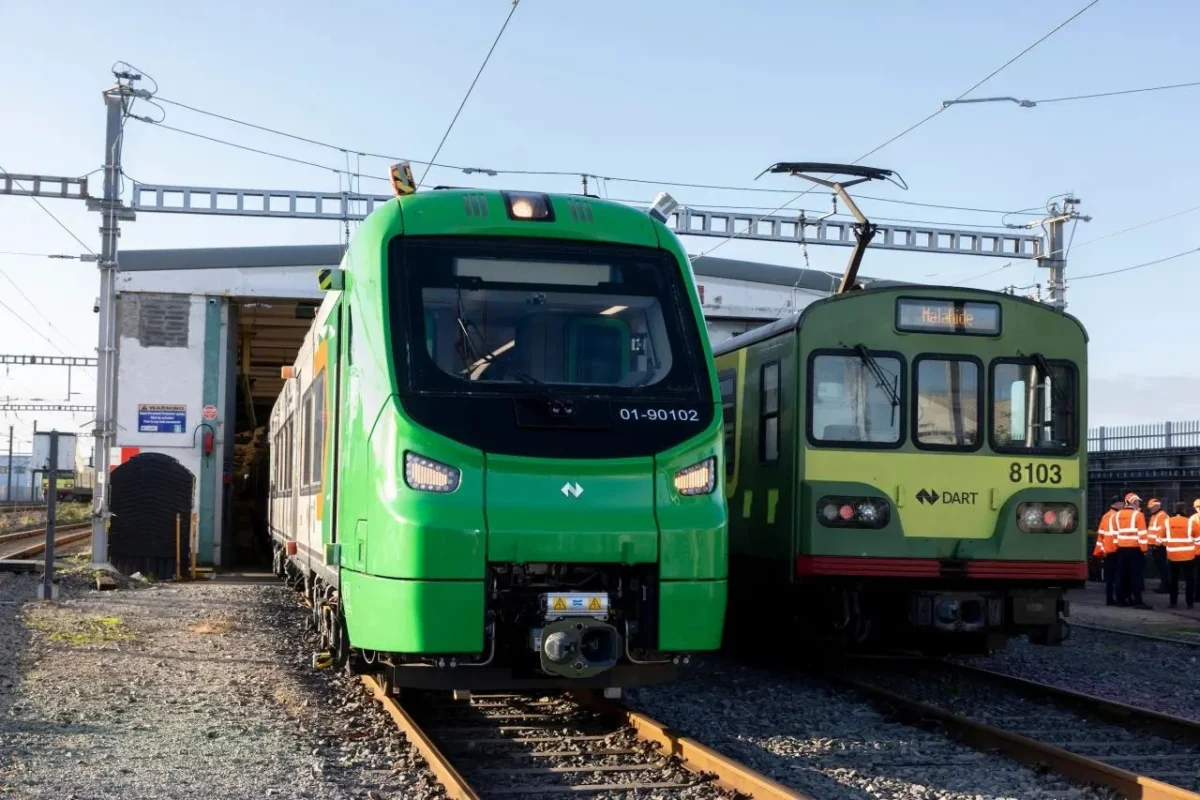
In a landmark move to modernize Ireland’s national rail infrastructure, Irish Rail (Iarnród Éireann) has officially announced the launch of "FourNorth," a transformative project designed to double the capacity of the country’s most congested railway line. Spanning a 14-kilometre stretch between Dublin Connolly station and Malahide, the initiative seeks to expand the existing two-track corridor into a four-track powerhouse. With an estimated price tag exceeding €1 billion, the project represents one of the most significant infrastructure investments in the history of the Irish transport network.
The FourNorth project is not merely an expansion of steel and sleepers; it is a strategic response to the chronic bottlenecks that have plagued the Dublin-Belfast corridor. By separating commuter services from faster intercity and Enterprise trains, Irish Rail aims to create a more resilient, reliable, and high-capacity artery capable of supporting the growth of the Greater Dublin Area and beyond for decades to come.
Main Facts: The Scope of the FourNorth Project
The FourNorth project is a complex engineering undertaking aimed at decongesting the northern rail corridor. At its core, the project proposes the following:
- Quadrupling the Tracks: The primary objective is to build two additional tracks alongside the existing pair, effectively doubling the capacity along a 14-km segment.
- Station Modernization: The plan includes an extensive refurbishment of ten stations along the route, ensuring they can accommodate the increased volume of passengers and the operational requirements of a four-track system.
- Strategic Connectivity: The expansion is designed to facilitate both the Dublin Commuter rail services and the critical Enterprise service connecting the capitals of the Republic of Ireland and Northern Ireland.
- Infrastructure Resilience: By providing additional track capacity, the project aims to eliminate the "cascade effect" of delays, where a minor disruption on one service currently brings the entire line to a standstill.
The project is currently in its preliminary assessment phase. While the €1 billion figure is the current working estimate, Irish Rail officials have cautioned that this number is subject to change as design work progresses and more detailed geotechnical and environmental surveys are completed.
Chronology: A Roadmap to 2030 and Beyond
The journey to a four-track corridor is a long-term commitment that will unfold in distinct stages over the next decade.
Phase 1: Planning and Consultation (2024–2025)
The current period is defined by intense design work and public engagement. Irish Rail is preparing for a public consultation process later this year, which will be the primary mechanism for determining the exact configuration of the new tracks and the impact on surrounding landscapes.
Phase 2: Interim Congestion Mitigation (2025–2027)
Recognizing that the full FourNorth build will take years, the Department of Transport has authorized immediate, smaller-scale interventions. This includes the construction of passing loops and "turn-back" facilities at key locations such as Mosney, Skerries, Malahide, and Clongriffin. These measures are designed to provide operational flexibility, allowing trains to be rerouted or returned to service during disruptions, thereby minimizing the impact on passengers in the short term.
Phase 3: Detailed Design and Authorizations (2026–2028)
Following the initial consultation, Irish Rail will move into the formal planning application phase. This will involve securing the necessary statutory approvals and navigating the complex legal requirements regarding land acquisition and environmental impact assessments.
Phase 4: Full-Scale Construction (2028–Early 2030s)
The main civil engineering works are slated for the late 2020s, with construction extending into the early 2030s. This phase will involve major modifications to the ten stations along the route and the laying of new tracks, a process that will require careful management of ongoing rail traffic.
Supporting Data: Addressing the Capacity Crisis
The necessity of the FourNorth project is underscored by recent data and historical performance issues. The Dublin-Belfast route, once considered a quiet intercity line, has seen a surge in demand following the introduction of an hourly service.
The All-Island Strategic Rail Review
The 2024 All-Island Strategic Rail Review serves as the foundational policy document for this project. The review highlighted the northern corridor as a primary bottleneck in the national network. Crucially, the review estimated that the Dublin-to-Clongriffin section alone—which constitutes roughly two-thirds of the total FourNorth scope—would cost between €700 million and €1 billion at 2021 prices. When adjusted for inflation and the additional works required to reach Malahide, the €1 billion-plus estimate for the full 14-km stretch is consistent with current inflationary trends in the construction sector.
Bottleneck Vulnerabilities
Current operations are hindered by a "shared-track" dependency. When the Enterprise service, which carries passengers between Dublin and Belfast, shares tracks with suburban commuter trains, the entire line operates on a razor-thin margin. If a commuter train experiences a mechanical issue or a signal delay, the high-speed Enterprise service is immediately blocked. This lack of "buffer" capacity is a significant risk to the reliability of the entire national network.
Official Responses: Vision for a Resilient Future
The leadership at Irish Rail and the Irish Government have been vocal about the strategic importance of this project.

Mary Considine, Chief Executive of Irish Rail, emphasized the broader social and economic impact of the expansion:
"FourNorth is about more than just building new lines. It is about creating a resilient, high-capacity rail corridor to support daily commutes and regional connections. We are looking to build a system that meets the needs of Ireland’s growing population, ensuring that rail remains the preferred, sustainable choice for travel."
Minister for Transport, Darragh O’Brien, has focused on the immediate relief the project will provide:
"We are taking a dual-track approach. While we push forward with the major investment of the FourNorth expansion, we are also implementing immediate operational fixes—such as new passing loops at Skerries and Malahide—to give passengers a more reliable service right now."
The project has also garnered support from urban planners who argue that the expansion is essential to meet Ireland’s climate goals. By increasing rail capacity, the government aims to encourage a modal shift away from private vehicle use on the congested M1 motorway, further reducing the carbon footprint of the transport sector.
Implications: Challenges and Considerations
While the benefits of the FourNorth project are clear, the path to completion is fraught with significant challenges that will require delicate handling.
The Land Acquisition Hurdle
One of the most sensitive aspects of the project is the potential impact on private property. The construction of two additional tracks will inevitably require widening the rail corridor, which may encroach upon gardens, agricultural land, and commercial property. Irish Rail has committed to a transparent process, promising to engage directly with affected landowners once the final design plans are finalized. This phase is likely to be a point of significant scrutiny during the public consultation process.
Funding Uncertainty
Perhaps the most significant challenge remains the funding gap. While the initial planning stages are supported by the Irish Department of Transport and the European Connecting Europe Facility (CEF), the total cost of the project has not been fully underwritten. Irish Rail is currently tasked with preparing a preliminary economic feasibility study. This study will be the deciding factor in how the project is financed, whether through further exchequer funding, EU grants, or potential public-private partnerships.
Disruption During Construction
For commuters, the coming years will involve a period of "construction pain." Managing the logistics of laying new track while keeping the country’s busiest line operational is an immense engineering challenge. Passengers can expect temporary speed restrictions, weekend closures, and altered schedules as the project progresses. Clear, consistent communication from Irish Rail will be essential to maintaining public support throughout the construction window.
Environmental and Community Impact
The modernization of ten stations will be welcomed by residents, as it provides an opportunity to improve accessibility, lighting, and passenger amenities. However, the construction period will likely bring noise, dust, and localized traffic management issues to the communities along the route. Mitigating these impacts will be a key performance indicator for the project’s success in the eyes of local stakeholders.
Conclusion
The FourNorth project stands as a testament to the evolving priorities of the Irish transport sector. As the nation grapples with rapid population growth and the urgent need for sustainable transit, the expansion of the Dublin-Malahide corridor represents a necessary evolution of the national rail infrastructure.
By investing over €1 billion into this 14-kilometre stretch, Irish Rail is laying the physical and operational foundations for a more connected, efficient, and resilient future. While the project faces significant hurdles—ranging from complex land negotiations to the ongoing challenge of securing full project financing—the long-term benefits of a high-capacity, reliable northern rail link remain undeniable. As Ireland looks toward the 2030s, the completion of FourNorth will undoubtedly serve as a critical benchmark for the modernization of the nation’s public transport system.

