

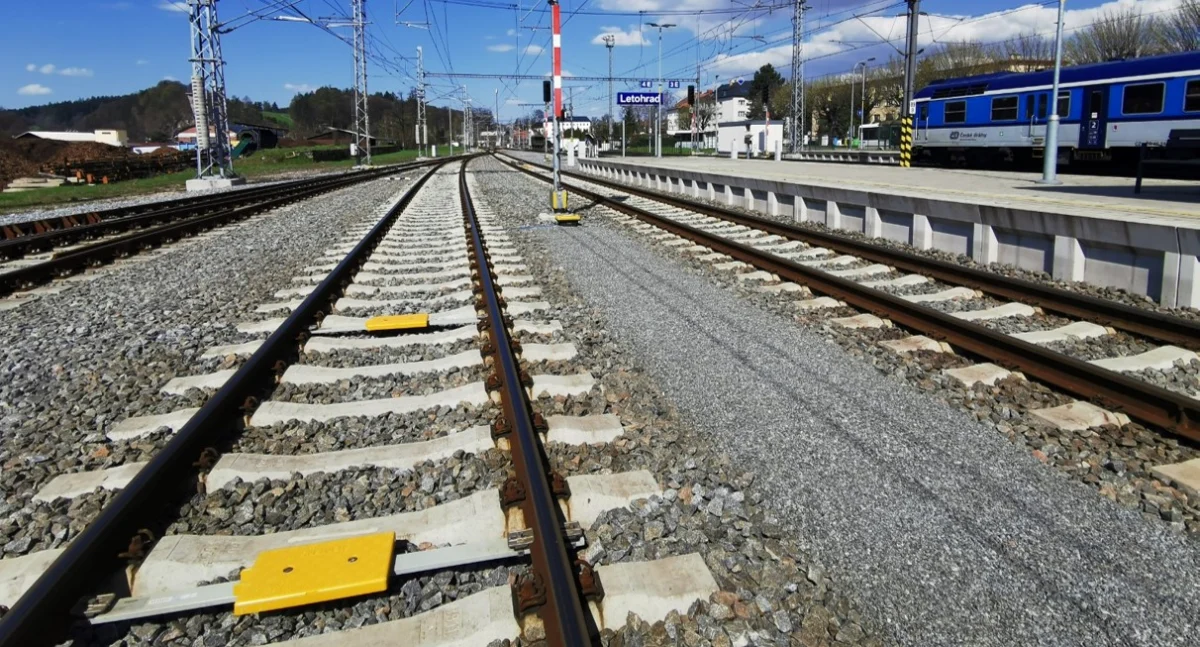
PRAGUE – The landscape of Central European rail transport is undergoing a profound transformation as the Czech Republic prepares for the launch of its new winter timetable on December 14. This transition marks a pivotal moment in the nation’s "Digital Railway" strategy, characterized by the expansion of exclusive European Train Control System (ETCS) operations and the unveiling of major infrastructure upgrades across the network.
From the vital corridors connecting Prague to the north, to the regional hubs of Brno and Jihlava, Správa železnic (the Czech railway infrastructure manager) is signaling a future of increased safety, higher capacity, and seamless international interoperability.
Main Facts: A New Era for Czech Rail
The cornerstone of the December 14 update is the extension of exclusive ETCS operation. Unlike previous years where ETCS functioned alongside legacy national signaling systems, "exclusive operation" means that only locomotives equipped with functional ETCS on-board units are permitted to enter these sections.
Key highlights of the upcoming transition include:
- The Prague–Kralupy nad Vltavou Corridor: An additional 30 kilometers of this high-traffic route will move to exclusive ETCS operation. This section is a critical artery for the Czech network, facilitating over 200 trains daily, including international expresses bound for Germany and regional commuter services.
- Brno to Zastávka u Brna: The busy route connecting the Moravian capital with its western hinterlands will see the activation of the European signaling system, enhancing safety on a line that has recently undergone significant modernization.
- Station Modernization: Jihlava Město station will open a newly built platform as part of its ongoing total reconstruction. Similarly, Brno-Královo Pole will see the commissioning of its final platform, marking the near-completion of a major suburban transport hub.
- Heritage and Connectivity: The reconstruction of the bridge over the Lužnice River in Tábor is complete, allowing the resumption of traffic on the historic "Bechyňka" line—the first electrified railway in the former Austro-Hungarian Empire.
- Network Progress: As of early 2025, ETCS is operational on 622 kilometers of the main Czech network, accounting for approximately 42% of its total capacity.
Chronology: The Road to Exclusive Operation
The transition to a digital railway has not happened overnight. It is the result of a decade-long strategic framework designed to align the Czech Republic with European Union standards for the Trans-European Transport Network (TEN-T).
2019–2023: The Preparation Phase
Following the adoption of the National Plan for the Implementation of ETCS, transport operators were given a five-year window to retrofit their rolling stock. During this period, Správa železnic focused on installing trackside equipment (Level 2 ETCS) on the main corridors (Prague–Brno–Břeclav and Prague–Ostrava).
January 2025: The First Major Wave
In early 2025, the Czech Republic became one of the first European nations to implement exclusive ETCS operation on a significant portion of its core network. Over 600 kilometers were switched over, fundamentally changing how train drivers interact with the signaling system. The transition proved successful, with data showing a sevenfold increase in ETCS-supervised train kilometers.
December 2024 – January 2025: The Current Expansion
The December 14 timetable change serves as the "Go-Live" date for the Prague–Kralupy section. This week, final strength tests were conducted on the Lužnice bridge in Tábor, ensuring the infrastructure is ready for the return of passenger and freight traffic.
2030: The Ultimate Goal
The Czech Ministry of Transport has set a firm deadline of 2030 to have the entire 5,200-kilometer TEN-T core network fully equipped with ETCS, effectively retiring the aging national LS signaling system.
Supporting Data: Efficiency and Reliability Metrics
The shift to ETCS is often discussed in terms of safety, but the statistical data provided by Správa železnic highlights significant gains in operational efficiency and reliability.
Reliability Statistics
In February 2025, a comprehensive report on the first month of exclusive ETCS operations revealed a 99% reliability rate. During this period:
- 1,600 trains operated daily under exclusive ETCS supervision.
- Over 2 million train-kilometers were covered in a single month.
- The system now supervises over 50,000 trains per day across the wider network (including sections where ETCS is active but not exclusive), totaling 4 million train-kilometers per month.
Capacity and Volume
The Prague–Kralupy nad Vltavou section is one of the densest in the country. By implementing ETCS, the "headway" (the time interval between successive trains) can theoretically be reduced, allowing for more frequent services without compromising safety. The 200+ daily trains currently using this corridor represent a mix of:

- EuroCity (EC) and Railjet services connecting Prague to Berlin and Hamburg.
- Regional S-Bahn style services (Linka S4) serving the Central Bohemian suburbs.
- Heavy freight moving goods from the Adriatic and Danubian regions toward Northern European ports.
Official Responses: Aligning Policy with Infrastructure
Government and rail officials have emphasized that the December 14 changes are more than just a timetable update—they are a commitment to European integration.
Správa železnic Spokespersons have noted that the five-year preparation period for operators was essential. "The transition to exclusive ETCS operation on the Prague–Kralupy section is a testament to the readiness of our carriers. We have moved from a testing phase to a standard of high-intensity, high-reliability digital operation."
The Ministry of Transport has reiterated that the modernization of the "Bechyňka" bridge and the Jihlava Město station reflects a balanced approach to investment. While ETCS represents the "high-tech" future of the main corridors, the reconstruction of regional bridges and platforms ensures that the benefits of modernization reach rural and regional passengers.
Regarding the Brno-Královo Pole station, officials highlighted the importance of "multimodal accessibility." The inclusion of new elevators and an extended underground passage is designed to make rail travel a viable alternative to the car for commuters in the Czech Republic’s second-largest city.
Implications: What This Means for the Future of Rail
The expansion of ETCS and the completion of these infrastructure projects carry profound implications for safety, the economy, and the environment.
1. Safety and Human Error Mitigation
ETCS Level 2 removes the reliance on trackside signals that can be obscured by weather or misread by drivers. The system provides continuous communication between the train and the trackside control center. If a driver exceeds the speed limit or fails to acknowledge a stop command, the system automatically intervenes to brake the train. The 99% reliability rate recorded in early 2025 suggests that the "teething problems" often associated with digital transitions have been largely overcome in the Czech context.
2. European Interoperability
For decades, international trains had to be equipped with multiple, expensive signaling systems to cross borders (e.g., the Czech LS system, the German PZB/LZB, and the Austrian systems). By moving to ETCS, the Czech Republic is helping create a "borderless" European rail network. This is particularly vital for the Prague–Kralupy section, which serves as a gateway to the German rail network via Děčín.
3. Economic Stimulus through Regional Hubs
The modernization of stations like Jihlava Město and Brno-Královo Pole is expected to drive regional economic growth. Improved station facilities make rail travel more attractive for high-skilled workers who commute, while also providing better logistics for local businesses. In Jihlava, the opening of the new platform is the first step in a broader project that will eventually see a modern terminal building that integrates bus and rail travel.
4. The "Bechyňka" and Heritage Tourism
The successful strength test of the Lužnice bridge in Tábor is a major win for cultural heritage. The Bechyňka line is a "living museum" that remains a vital transport link. By upgrading the bridge to modern standards while maintaining the line’s historic character, Správa železnic is ensuring that one of the most beautiful rail routes in Central Europe remains operational for the next generation of travelers.
5. Environmental Impact
By increasing the reliability and capacity of the rail network, the Czech Republic is actively working toward its climate goals. Every freight train that moves through the Prague–Kralupy corridor under ETCS supervision can replace dozens of heavy trucks on the highway, significantly reducing CO2 emissions and road wear.
Conclusion
As the December 14 deadline approaches, the Czech railway network stands at the threshold of a new era. The extension of ETCS to the Prague–Kralupy and Brno–Zastávka sections, combined with the reopening of modernized platforms and bridges, represents a comprehensive overhaul of the nation’s transit backbone.
While the transition to "ETCS-only" operation presents a challenge for operators of older rolling stock, the long-term benefits—unmatched safety, 99% reliability, and seamless European integration—position the Czech Republic as a leader in the digital railway revolution. Passengers from Prague to Jihlava and beyond can look forward to a more robust, modern, and efficient travel experience as the new timetable takes effect.

