

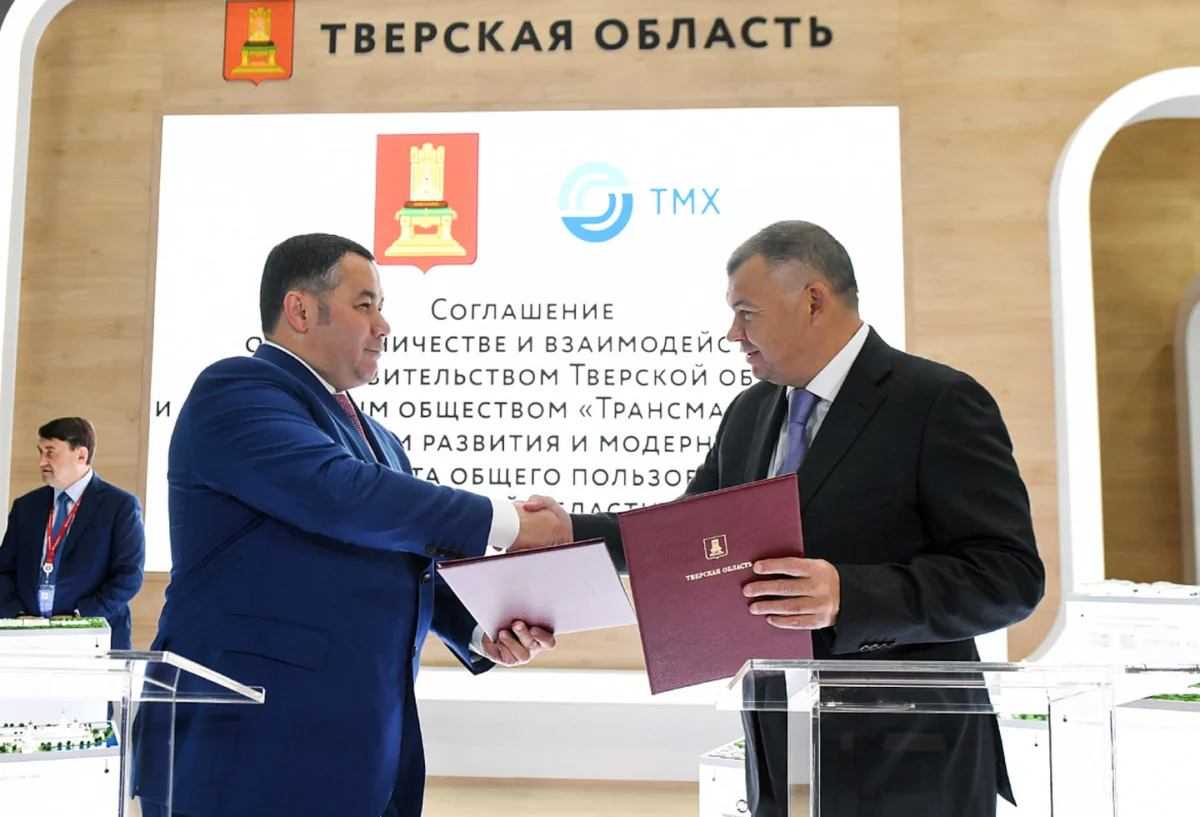
In a landmark move to reshape the future of urban mobility in Russia, Transmashholding (TMH), the country’s leading manufacturer of railway equipment, and the government of the Tver Region have formalized a comprehensive five-year cooperation agreement. Signed during the prestigious St. Petersburg International Economic Forum (SPIEF), the accord marks a significant shift toward the total digital and physical modernization of public transport infrastructure across the region.
The agreement, inked by TMH President Andrey Bokarev and Tver Region Governor Igor Rudenya, establishes a framework for holistic development, encompassing everything from the renewal of aging rolling stock to the implementation of advanced digital traffic management systems. By leveraging the industrial prowess of the Tver Carriage Works (TVZ)—a subsidiary of TMH—the region aims to transform its transport network into a blueprint for modern Russian urban planning.
The Core Mandate: Modernization and Digitalization
The five-year partnership is built upon three fundamental pillars: infrastructure expansion, fleet renewal, and digital transformation. Beyond merely replacing old vehicles, the project seeks to integrate intelligent transport systems (ITS) that optimize route efficiency, improve passenger safety, and reduce the environmental footprint of regional transport.
Under the terms of the agreement, both parties are committed to developing effective mechanisms to attract private and public investment. This financial structure is intended to stimulate the broader regional economy, fostering industrial growth and creating high-quality jobs. By synchronizing the needs of the Tver administration with the engineering capabilities of TMH, the agreement ensures that the region will receive tailored, state-of-the-art solutions rather than off-the-shelf equipment.
Chronology of Development: From City Star to Regional Integration
The path to this major partnership was not an overnight development but the result of years of incremental progress in local transport engineering.
- 2015: The Prototype Success: The city of Tver took its first significant step toward modernization by introducing five 71-911 "City Star" low-floor trams. Manufactured by the Tver Carriage Works, these vehicles proved the viability of local, high-quality manufacturing in elevating the urban experience.
- 2020–2021: The Agglomeration Model: The Tver administration launched a successful pilot program, deploying 471 modern, class-A buses across 85 routes. This system, which currently serves 18,000 passengers daily, provided the necessary proof-of-concept for a larger, regional-scale transformation.
- June 2021: The SPIEF Agreement: During the St. Petersburg International Economic Forum, the formal five-year pact was signed, codifying the commitment to expand these successes from the city center to four additional urban agglomerations within the region.
- Late 2021 and Beyond: The current roadmap mandates the immediate commencement of tram infrastructure reconstruction, including the overhaul of tracks, depots, and electrical substations, followed by the delivery of new energy-efficient rolling stock.
Supporting Data: Assessing the Tver Transport Landscape
The Tver Region’s transport infrastructure has historically faced the challenges common to many post-Soviet industrial hubs: aging track infrastructure, high energy consumption in legacy vehicles, and a lack of integrated digital scheduling.
The current statistics underscore the necessity of the TMH intervention:
- Existing Capacity: The current bus network services approximately 18,000 passengers per day.
- Scale of Modernization: The project targets four additional urban agglomerations beyond the city of Tver, significantly widening the reach of the "New Model" transport system.
- Industrial Impact: Tver Carriage Works (TVZ) remains the cornerstone of the region’s industrial economy, employing thousands of local residents. The partnership ensures that the facility remains at the cutting edge of global transit technology, securing the livelihoods of its workforce for years to come.
Official Perspectives: A Synergy of Industry and Governance
The Governor’s Vision
Governor Igor Rudenya emphasized that the agreement is not merely a procurement contract but the start of a "new model of development."
"Now we are starting to implement a new stage of creating a new model on the development of the region’s public transport system," Governor Rudenya stated. He noted that the summer rollout represents a critical acceleration of the program. "We also plan to start implementing a project to modernize the tram traffic in the city of Tver this year. This is about more than just moving people; it is about raising the standard of living for every citizen in our region."

The Industrialist’s Commitment
Andrey Bokarev, President of Transmashholding, highlighted the company’s extensive experience with concession-based models, citing their successful work in Moscow as a template for success.
"We are applying the same rigors and standards we used for the renewal of Moscow’s tram fleet to the Tver project," Bokarev remarked. "This gives Tver the opportunity to implement at the highest quality level a project to modernize the entire public transport system in the metropolitan area. The success of the project will mean an improvement in the quality of life of our colleagues, their families, and friends. By investing in our home city, we are ensuring that TMH remains a global leader in transport engineering."
Implications: A Model for Russian Urbanism
The implications of the TMH-Tver partnership extend far beyond the region’s borders. As the Russian Federation pushes for greener, more efficient urban centers, the "Tver Model" serves as a potential template for other mid-sized Russian cities.
1. The Concessionary Advantage
By utilizing concession agreements, the Tver administration avoids the burden of immediate, massive capital expenditure. Instead, they partner with private entities like TMH to operate and maintain systems over the long term. This ensures that the manufacturer has a vested interest in the long-term reliability and efficiency of the rolling stock, as they are often responsible for the maintenance lifecycle.
2. Economic Multiplier Effect
The project creates a "virtuous cycle" for the local economy. Because the manufacturing is done locally at the Tver Carriage Works, the funds invested into the transport system circulate back into the local economy through payroll and supply chain logistics. This keeps the Tver region competitive in attracting talent and industry.
3. Sustainability and Urban Quality
The transition from legacy tram systems to energy-efficient, low-floor models significantly reduces urban noise pollution and carbon emissions. Furthermore, the digitalization of the network—allowing for real-time tracking and optimized routing—is expected to decrease private car dependency. As traffic flow improves, the city becomes more accessible, potentially boosting commercial activity in the city center.
4. Technological Sovereignty
In an era where global supply chains are increasingly volatile, the ability to manufacture, maintain, and modernize critical transport infrastructure domestically is a strategic advantage. The partnership reinforces Russia’s technological sovereignty, proving that local firms can deliver world-class transit solutions without relying on foreign imports.
Conclusion: A Roadmap for the Future
The agreement between Transmashholding and the Tver Region is a significant milestone in the evolution of Russian public infrastructure. By combining the industrial expertise of a global manufacturing powerhouse with the administrative foresight of regional leadership, Tver is positioning itself as a leader in modern, sustainable urban living.
As the project moves from the planning phase to the deployment of new tracks and rolling stock, the focus will remain on the passenger experience. With a commitment to digitalization and efficiency, the upcoming five years promise to turn the Tver Region into a showcase for how traditional industrial cities can reinvent themselves for the 21st century. For the thousands of workers at the Tver Carriage Works and the millions of commuters who depend on regional transport, this partnership represents a tangible promise of progress, mobility, and economic stability.

