

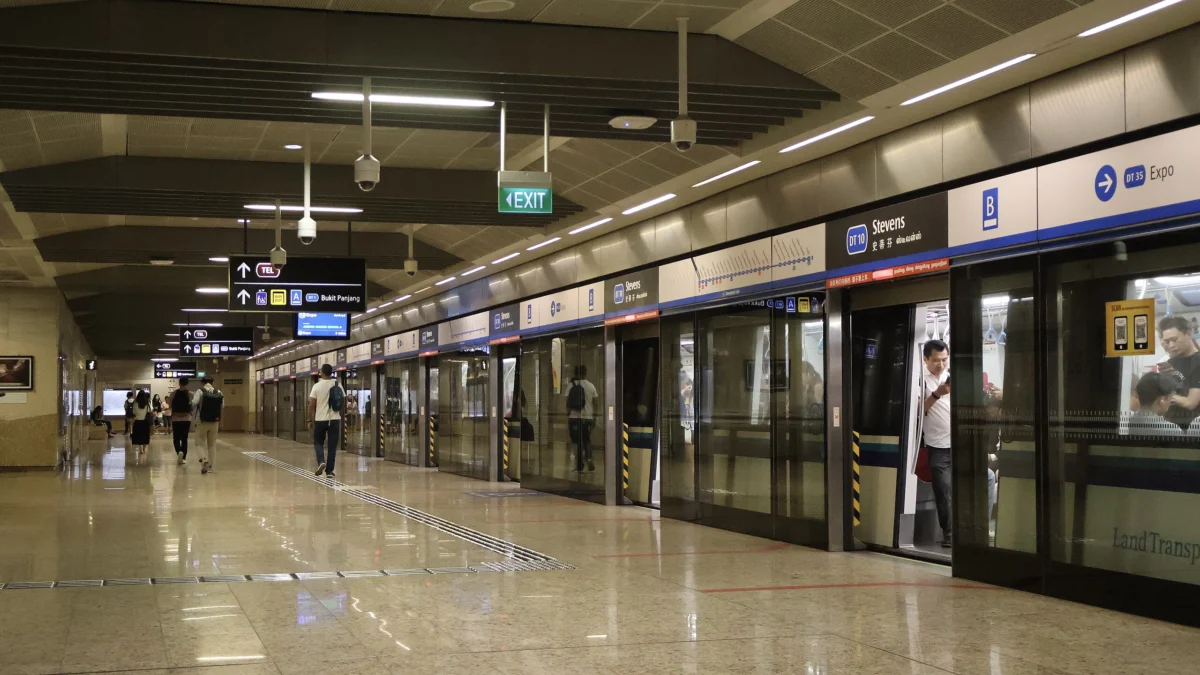
In a move that underscores Singapore’s commitment to world-class transit reliability and long-term infrastructure sustainability, Siemens Mobility and SBS Transit have announced a significant extension of their partnership. The two entities have finalized a comprehensive Long-Term Service Support (LTSS) contract for the signaling system of the Downtown Line (DTL), one of the most technologically advanced and reliable automated metro systems globally.
This performance-based agreement, which spans an unprecedented 22-year period from January 2026 to December 2047, represents a paradigm shift in how urban rail assets are managed. By moving beyond traditional maintenance toward a lifecycle-centric, proactive management model, the agreement ensures that the DTL will remain at the forefront of operational efficiency for decades to come.
Main Facts: A Strategic Blueprint for Longevity
The Downtown Line, often referred to as the "Blue Line" of Singapore’s Mass Rapid Transit (MRT) network, serves as a critical corridor connecting the northwestern and eastern regions of the island to the Central Business District (CBD). The new contract focuses on the core "brain" of the railway: the signaling system. Originally developed and installed by Siemens Mobility, this system allows for high-frequency, driverless (Grade of Automation 4) operations.
The scope of the 22-year contract is broad and multifaceted, covering:
- Equipment Obsolescence Management: Identifying and replacing hardware components before they reach the end of their functional life.
- Continuous Technology Upgrades: Integrating software and hardware advancements to keep the system modern.
- Cybersecurity Enhancements: Implementing robust, evolving security measures to protect critical infrastructure against digital threats.
- Predictive Maintenance: Utilizing data analytics to transition from a "fail-and-fix" model to a "predict-and-prevent" strategy.
This agreement does not exist in a vacuum; it complements a previous LTSS contract signed in May 2024, which focused on immediate technical support and spare parts management. Together, these two frameworks provide a holistic "cradle-to-grave" management strategy for the DTL’s signaling infrastructure through the mid-21st century.
Chronology: From Implementation to 2047
To understand the significance of this 22-year commitment, one must look at the evolution of the Downtown Line and its relationship with Siemens Mobility.
The Genesis of the Downtown Line (2008–2017)
The DTL was constructed in three distinct stages. Siemens Mobility was involved from the outset, providing the Trainguard MT Communication-Based Train Control (CBTC) system.
- Stage 1 (2013): Opened with six stations, connecting Bugis to Chinatown.
- Stage 2 (2015): Added 12 stations, extending the line to Bukit Panjang.
- Stage 3 (2017): Added 16 stations, reaching Expo in the east.
By the completion of Stage 3, the DTL had become the longest underground automated metro line in Singapore, spanning approximately 42 kilometers (later expanded to 44km).
Operational Excellence and Reliability (2018–2023)
Following the full opening, the DTL quickly established itself as a global leader in reliability. Singapore’s Land Transport Authority (LTA) measures performance via Mean Kilometres Between Failure (MKBF). The DTL consistently exceeded the 1-million-MKBF target, a testament to the robustness of the Siemens signaling system and SBS Transit’s operational rigor.
The New Era of Lifecycle Management (2024–2047)
In May 2024, the first phase of the modern LTSS was signed, focusing on immediate operational needs. Recognizing the rapid pace of technological change—particularly in electronics and software—the parties moved to finalize the extended December 2024 agreement. This new contract officially commences in January 2026, ensuring a seamless transition into a long-term maintenance regime that will carry the line through to December 2047.
Supporting Data: The Scale of the Downtown Line
The Downtown Line is a massive undertaking in terms of both engineering and daily logistics. The following data points highlight the scale of the infrastructure that Siemens Mobility will support:
- Total Length: Approximately 44 kilometers of entirely underground track.
- Total Stations: 37 stations (with future expansions like the Hume station and the DTL extension to Sungei Bedok currently in the works).
- Automation Level: GoA4 (Unattended Train Operation), meaning trains operate without any staff on board.
- Headways: The signaling system allows for trains to run at intervals as short as 2 to 3 minutes during peak hours.
- Daily Ridership: Prior to the pandemic, the line saw upwards of 470,000 passenger trips daily, a number that continues to recover and grow as Singapore expands its "car-lite" initiatives.
- System Complexity: The signaling system includes thousands of trackside transponders, sophisticated onboard computers on each train set, and a centralized Operation Control Centre (OCC) that manages the entire fleet in real-time.
The 22-year timeframe is particularly notable. In the world of technology, 22 years represents multiple generations of hardware. By securing this contract, SBS Transit is effectively "future-proofing" the line against the rapid turnover of industrial electronics.
Official Responses: A Partnership of Shared Vision
Leadership from both Siemens Mobility and SBS Transit have emphasized that this contract is less about a traditional vendor-client relationship and more about a strategic partnership aimed at public service.

Siemens Mobility representatives highlighted the importance of "proactive aging management." They noted that in the past, rail operators often waited for components to fail or for manufacturers to issue "end-of-life" notices before seeking replacements. This new contract empowers Siemens to monitor the global supply chain and technological trends, intervening years before a component becomes a liability.
"Our goal is to ensure that the Downtown Line remains one of the most reliable metro lines in the world," a Siemens Mobility spokesperson stated. "By integrating our latest digital solutions and cybersecurity protocols over the next two decades, we are ensuring that the DTL evolves alongside the city it serves."
SBS Transit officials underscored the "performance-based" nature of the contract. This means that Siemens Mobility is not just paid for labor and parts, but is held to specific Key Performance Indicators (KPIs) regarding system uptime and reliability. This aligns the financial incentives of the manufacturer with the operational goals of the transport operator and the daily needs of the commuting public.
Implications: Setting a New Standard for Urban Rail
The implications of this 22-year LTSS extension reach far beyond the shores of Singapore. It serves as a case study for the global rail industry in several key areas:
1. The Transition to Proactive Asset Management
The most significant implication is the shift from reactive to proactive maintenance. In a proactive model, Siemens Mobility will use "Digital Twins" and advanced simulation to predict how the signaling system will age. If a specific processor or sensor is expected to become obsolete by 2032, the redesign and replacement process will begin in 2028. This prevents the "obsolescence traps" that have plagued older metro systems in cities like New York or London, where decades-old technology becomes impossible to repair because parts are no longer manufactured.
2. Cybersecurity as a Permanent Priority
As signaling systems become more integrated with data networks, they become potential targets for cyber-attacks. By including "security-related measures" in a 22-year contract, SBS Transit is acknowledging that cybersecurity is not a one-time upgrade but a continuous process of evolution. Siemens will be responsible for patching vulnerabilities and upgrading encryption standards as new threats emerge through 2047.
3. Economic Stability and Risk Mitigation
For SBS Transit and the Singapore government, a 22-year contract provides immense fiscal predictability. It locks in service costs and transfers the technical risk of system aging to the original equipment manufacturer (OEM). For Siemens, it provides a stable, long-term revenue stream and a "living laboratory" to refine their CBTC technologies.
4. Commuter Confidence and "Car-Lite" Goals
Singapore’s "Land Transport Master Plan 2040" aims for a "20-minute town and 45-minute city," where the vast majority of trips are made via public transport. Achieving this requires a level of reliability that makes the train more attractive than a private car. The DTL’s signaling system is the invisible engine behind this reliability. If the signaling system is flawless, trains are on time, intervals are short, and the "car-lite" vision becomes a reality for the residents of Bukit Panjang, Tampines, and beyond.
5. Environmental Sustainability
Maintaining and upgrading existing infrastructure is inherently more sustainable than wholesale replacement. By extending the life of the DTL signaling system through 2047, Siemens and SBS Transit are reducing the carbon footprint associated with manufacturing and installing entirely new systems. This "circular" approach to infrastructure management aligns with global ESG (Environmental, Social, and Governance) trends.
Conclusion: A Legacy of Reliability
The 22-year extension between Siemens Mobility and SBS Transit is a landmark agreement that redefines the lifecycle of urban transport infrastructure. By combining Siemens’ technical expertise with SBS Transit’s operational excellence, Singapore is ensuring that the Downtown Line will continue to serve as a high-capacity, high-reliability backbone for the city-state.
As January 2026 approaches, the focus moves from the signing of papers to the implementation of a sophisticated monitoring and upgrade regime. For the millions of passengers who rely on the DTL, the result will be invisible but profound: a journey that remains safe, efficient, and consistently on time, today and for the next quarter-century. In the high-stakes world of urban mobility, this agreement is a clear signal that Singapore is playing the long game.

