

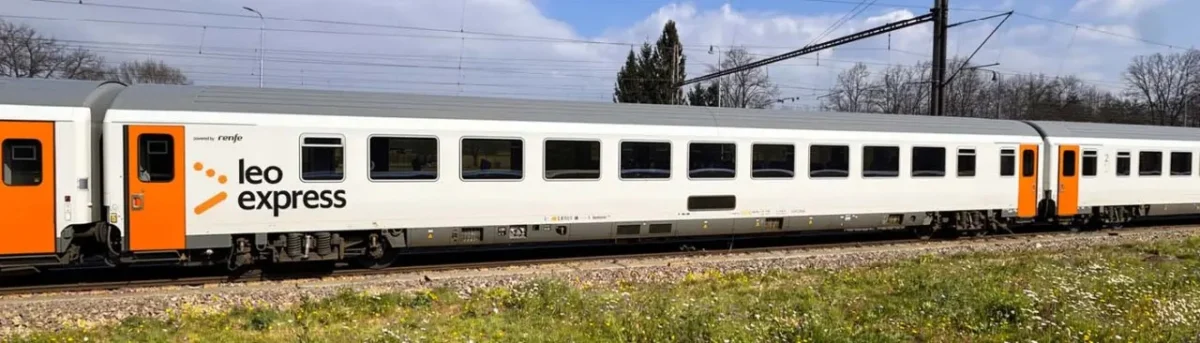
Prague, Czech Republic – July 25, 2026 – Leo Express, the prominent Czech private rail operator, is set to revolutionize overnight travel between Western and Eastern Europe. From July 31st, the company will introduce couchette railcars on its international Frankfurt–Prague–Przemyśl route, offering enhanced comfort and affordability for long-distance passengers. This significant development coincides with the full operational launch of the route, as the temporary suspension on the Polish section, which previously necessitated bus transfers, has now been lifted. Passengers can look forward to uninterrupted train journeys across Germany, the Czech Republic, and Poland, with fares for the new Economy Sleeper class starting from an attractive EUR 37.9, inclusive of breakfast.
This expansion marks a pivotal moment for Leo Express and European rail travel, reinforcing the growing trend of private operators enhancing cross-border connectivity. The re-establishment of a fully integrated rail service, particularly with the addition of sleeper options, addresses a crucial demand for convenient, sustainable, and cost-effective travel between key European hubs and the strategically vital city of Przemyśl, often referred to as a gateway to Ukraine.
A New Era for Cross-European Rail Travel
The announcement from Leo Express heralds a new chapter for its ambitious Frankfurt–Prague–Przemyśl service. Initially launched on June 25th, the route faced an unforeseen hurdle in Poland, where an "economic feasibility test" temporarily mandated bus transfers for passengers. This regulatory procedure, designed to assess the potential impact of new commercial services on existing public service contracts, has now been successfully concluded, paving the way for seamless rail operations.
Full Service Restoration and Enhanced Passenger Experience
From the last day of July, travellers will experience the full potential of Leo Express’s vision for this corridor. The transition from mixed rail and bus transport to an entirely train-based journey significantly improves the passenger experience, eliminating the inconvenience of transfers and ensuring a smoother, more predictable travel schedule. This operational continuity is particularly important for long-distance routes, where comfort and efficiency are paramount.
The introduction of the Economy Sleeper class is a game-changer, catering specifically to the needs of overnight travellers. These dedicated couchette railcars are designed to provide a restful journey, transforming what could be a tiring overnight trip into a comfortable and productive one. The service is a direct response to the increasing demand for affordable night train options across Europe, a segment that has seen a resurgence in recent years due to environmental concerns and a desire for more experiential travel.
The Strategic Importance of the Frankfurt-Prague-Przemyśl Corridor
The route itself is strategically significant, linking the financial heart of Germany, Frankfurt, with the historical and cultural capital of the Czech Republic, Prague, and extending deep into Eastern Poland to Przemyśl. Przemyśl, in particular, holds immense importance as a major transport hub and a critical link to Ukraine, especially in the current geopolitical landscape. By strengthening this connection, Leo Express is not only facilitating tourism and business travel but also potentially supporting humanitarian and logistical efforts to and from Ukraine. This route underscores the increasing integration of Central and Eastern European networks into the broader continental rail system.
Chronology of a Route: Navigating Regulatory Hurdles
The journey to full operational status for the Frankfurt–Prague–Przemyśl route has been marked by a period of initial launch followed by a temporary, albeit significant, regulatory pause. Understanding this chronology provides crucial context for the current announcement.
Initial Launch and Temporary Disruptions
Leo Express commenced operations on the ambitious Frankfurt–Prague–Przemyśl route on June 25th, demonstrating its commitment to expanding cross-European rail connectivity. However, almost immediately, passengers on the Polish section of the journey encountered a temporary logistical challenge: they were required to transfer from train to bus. This interim solution, while allowing the service to launch, naturally impacted the overall travel experience, adding complexity and time to the journey. The company was transparent about this situation, attributing it to ongoing administrative procedures.
Understanding the "Economic Feasibility Test"
The reason behind the temporary bus transfer was an "economic feasibility test" initiated by Polish authorities. This procedure is a standard regulatory step in many European countries when a new commercial rail service is proposed, particularly one that might overlap with routes covered by existing public service contracts (PSCs). Public service contracts are typically awarded to operators to ensure essential services are maintained, often with public subsidies, on routes that might not be commercially viable otherwise.
The purpose of an economic feasibility test is to:
- Assess Market Impact: Determine if the introduction of a new, unsubsidised commercial service would unfairly compete with or financially endanger existing, publicly funded services.
- Ensure Fair Competition: Prevent new entrants from "cherry-picking" profitable routes, leaving less lucrative but socially necessary routes solely dependent on public funds, or undermining the viability of operators fulfilling PSCs.
- Protect Public Interest: Safeguard the stability of essential rail services for citizens, ensuring that the introduction of new services leads to overall improvements rather than detrimental market disruption.
For private operators like Leo Express, navigating these regulatory frameworks is a critical part of expanding their networks. While necessary for market stability, these tests can introduce delays and operational complexities during the initial launch phases of new routes. The temporary nature of the disruption indicated that it was a procedural matter, rather than an insurmountable operational or safety concern.
Green Light for Uninterrupted Service
The successful conclusion of the economic feasibility test by the Polish authorities signals a clear approval for Leo Express to operate its full rail service without restrictions. This outcome not only validates Leo Express’s business model for the route but also demonstrates that the authorities deemed the new service to be a beneficial addition to the rail network, or at least not detrimental to existing public service obligations. The resumption of full train operations from July 31st represents the culmination of this regulatory process, allowing Leo Express to deliver the seamless, high-quality travel experience it initially envisioned for this vital European corridor. This approval is a testament to effective collaboration between a private operator and national railway regulators, ultimately benefiting the travelling public.
Unveiling the Economy Sleeper: Comfort and Affordability
The most exciting enhancement to the Frankfurt–Prague–Przemyśl route is undoubtedly the introduction of the Economy Sleeper class. This new offering aims to redefine affordability and comfort for overnight rail travel, making long-distance journeys more accessible and enjoyable for a broader demographic.
Amenities and Booking Options
The Economy Sleeper class is designed with the modern traveller in mind, balancing cost-effectiveness with essential comforts. Each couchette compartment is equipped with several key amenities to ensure a pleasant overnight journey:
- Air Conditioning: Providing a comfortable temperature regardless of external weather conditions, crucial for restful sleep.
- Wi-Fi Connectivity: Allowing passengers to stay connected, work, or entertain themselves throughout their journey.
- Power Sockets: Ensuring that electronic devices can be charged, a fundamental requirement for today’s travellers.
Flexibility in booking is a core feature of the Economy Sleeper. Passengers have the option to reserve compartments for one to four people, catering to solo travellers, couples, families, or small groups. This versatility makes it an attractive option for various travel needs. Furthermore, Leo Express is committed to passenger comfort and safety by offering a choice between mixed-gender compartments and those reserved exclusively for women. This thoughtful provision addresses privacy concerns and enhances the travel experience for all passengers.
The competitive starting fare of EUR 37.9 makes the Economy Sleeper an extremely attractive proposition, particularly when considering that breakfast is included in the ticket price. This all-inclusive pricing strategy adds significant value, eliminating the need for passengers to seek out morning meals upon arrival and contributing to a stress-free start to their day.
Expanding Capacity and Enhancing Night Travel
The integration of these new couchette railcars will directly increase the train’s overall capacity by 32 seats. While this might seem a modest number, these are specialized berths designed for overnight comfort, adding a completely new dimension to the service. This expansion specifically targets the growing market for night train travel, a sector that offers a sustainable and often more relaxing alternative to short-haul flights or extensive daytime travel. The additional capacity also helps to meet anticipated demand for this popular and strategically important route.
Diverse Fare Options Across Classes
Beyond the new Economy Sleeper, Leo Express continues to offer its established classes, ensuring a range of options to suit different budgets and preferences:

- Economy Class: Tickets for Economy Class start from an exceptionally competitive EUR 9.90. This entry-level option provides a highly affordable way to travel, appealing to budget-conscious passengers, students, and those undertaking shorter segments of the journey.
- Business Class: For passengers seeking enhanced comfort and services, Business Class fares begin at EUR 24.90. While specific amenities for Business Class are not detailed in the original brief, typically this class offers more spacious seating, possibly complimentary refreshments, and a quieter environment, catering to business travellers or those desiring a more premium experience.
All trains operating on this route utilize railcars that comply with the international RIC standard. This standard is crucial for cross-border travel, ensuring that the carriages are technically compatible with railway infrastructure across multiple European countries. These RIC-compliant railcars are also equipped with modern amenities such as air conditioning and Wi-Fi, ensuring a consistent level of comfort and connectivity across all classes. The availability of diverse fare options, from ultra-affordable Economy to comfortable Business and now the new Sleeper class, positions Leo Express as a versatile and competitive player in the European long-distance rail market.
Connecting East and West: Route Details and Operational Insights
The Frankfurt–Prague–Przemyśl route is more than just a line on a map; it’s a critical artery connecting diverse regions of Europe. Its operational details and strategic stops highlight its importance for both passengers and regional development.
Przemyśl: A Gateway to Eastern Europe
As articulated by Peter Köhler, CEO of Leo Express, "Przemyśl is a natural gateway to Ukraine and a major transport hub in eastern Poland. The new service will make travel easier for thousands of passengers and strengthen the link between western and eastern Europe." This statement underscores the profound strategic significance of Przemyśl. Located close to the Ukrainian border, it has become a crucial logistical and humanitarian hub, particularly in recent years. By establishing a direct rail link from major Western European cities to Przemyśl, Leo Express is not only facilitating conventional travel but also potentially aiding in the movement of aid, volunteers, and those seeking refuge or connection with Ukraine. It transforms the city into a more accessible node within the broader European transport network.
Comprehensive Polish Stop Network
Within Poland, the Leo Express train provides extensive coverage, making stops at over 16 stations. This comprehensive network ensures that the service benefits a wide range of cities and towns, connecting them directly to the international corridor. The stops include:
- Przemyśl Główmy, Przemyśl Zasanie: Serving the key city of Przemyśl itself, differentiating between its main station and another important local stop.
- Radymno, Jarosław, Przeworsk, Łańcut: These stops connect smaller towns in the Podkarpackie Voivodeship, providing regional access to the international route.
- Rzeszów Główmy: The capital of the Podkarpackie Voivodeship and a significant regional economic and educational centre, offering a major connection point.
- Sędziszów Małopolski, Ropczyce, Dębica, Tarnów: Further stops in southern Poland, serving communities along the main rail line.
- Brzesko Okocim, Bochnia: Providing access to areas east of Kraków.
- Kraków Główmy, Kraków Płaszów: Connecting Poland’s second-largest city and a major tourist destination. Kraków’s inclusion ensures that a substantial population centre and a hub for domestic and international connections are well-served. Płaszów serves as another important railway junction in the city.
- Oświęcim: Known historically for Auschwitz-Birkenau, this stop provides a direct link for visitors to this profoundly significant site.
This extensive network of stops within Poland demonstrates Leo Express’s commitment to integrating regional centres into the wider European rail network, offering convenience for both local and international travellers.
Timetable and Operational Considerations
The schedule for the Frankfurt–Prague–Przemyśl route is designed to facilitate both daytime and overnight travel, maximizing convenience for passengers.
- Towards Germany: The train will depart from Przemyśl at 12:04, arriving in Prague at 22:32, and reaching Frankfurt at 07:22 the following morning. This overnight leg from Prague to Frankfurt is ideal for the new sleeper service, allowing passengers to arrive refreshed and ready for their day in Germany.
- Towards Poland: In the opposite direction, the train will depart from Frankfurt at 15:03, arriving in Prague at 01:17 (early morning), and reaching Przemyśl at 11:25 the next day. The overnight segment from Frankfurt to Prague, followed by a comfortable morning journey through Poland, offers a practical schedule for those heading east.
Future Bookings and Infrastructure Challenges
While the full service is now confirmed, Leo Express advises passengers that times may vary on certain days due to ongoing infrastructure works in Germany. Such works are common across European rail networks as countries invest in modernizing and expanding their railway capabilities. While necessary for long-term improvements, they can lead to temporary adjustments in timetables, and passengers are encouraged to check the latest schedules before travelling.
Currently, tickets for the Polish section are available for sale until August 29th, which aligns with the end of the current timetable period for train services in Poland. However, for the longer Frankfurt–Bohumín section (Bohumín being a key railway junction in the Czech Republic, near the Polish border), bookings are already open until December 12, 2026. This staggered booking availability reflects the different national timetable cycles and planning horizons within the interconnected European rail system. The extended booking window for the core international section provides assurance for long-term travel planning.
Official Perspectives and Industry Impact
The full operational launch and the introduction of sleeper services on the Frankfurt–Prague–Przemyśl route represent more than just a service upgrade; they embody a broader vision for European connectivity and sustainable transport.
Leo Express’s Vision for European Connectivity
Peter Köhler’s statement encapsulates Leo Express’s strategic intent: to bridge geographical and logistical gaps between Western and Eastern Europe. His emphasis on Przemyśl as a "natural gateway to Ukraine" highlights the company’s awareness of geopolitical realities and its ambition to serve not just conventional tourist and business markets, but also to facilitate crucial connections in a region of heightened importance. This vision aligns with the broader European Union agenda of enhancing cohesion and accessibility across its member states and towards its eastern neighbours. By offering affordable, comfortable, and direct rail links, Leo Express positions itself as a key enabler of cross-cultural exchange, economic development, and robust humanitarian corridors. The investment in RIC-standard compliant rolling stock further demonstrates a commitment to long-term, pan-European operability, moving beyond national borders to create a truly integrated network.
Broader Implications for European Rail Competition and Sustainability
The success of Leo Express in launching and expanding this route carries significant implications for the wider European rail industry:
- Increased Competition and Passenger Choice: The entry and expansion of private operators like Leo Express inject healthy competition into a market traditionally dominated by state-owned enterprises. This competition often leads to improved service quality, more innovative offerings (like the Economy Sleeper), and more competitive pricing, ultimately benefiting passengers. It encourages incumbent operators to innovate and adapt, fostering a dynamic rail landscape.
- Growth of Night Train Revival: The introduction of the Economy Sleeper is a direct contribution to the burgeoning "night train revival" across Europe. Driven by environmental concerns (reducing carbon footprint compared to flying) and a desire for more relaxed travel, night trains are regaining popularity. Leo Express’s affordable sleeper option makes this mode of travel accessible to a wider demographic, furthering the shift towards sustainable transport.
- Cross-Border Integration: The challenges faced and overcome by Leo Express in navigating the "economic feasibility test" highlight the complexities but also the progress in achieving seamless cross-border rail travel in Europe. Each successful integration of a new international route strengthens the overall European rail network, making it easier for people to travel without the hassle of national boundaries impeding the journey.
- Economic and Social Impact: By linking major economic centres like Frankfurt with regional hubs and a crucial gateway city like Przemyśl, Leo Express facilitates economic exchange, tourism, and social connections. This is particularly vital for regions that might otherwise feel more isolated from Western European networks.
The Future of European Rail: A Growing Network
The successful implementation of the full Frankfurt–Prague–Przemyśl service by Leo Express, complete with new sleeper options, is a microcosm of the larger trends shaping the future of European rail travel. It demonstrates a clear path towards a more interconnected, sustainable, and passenger-centric rail network.
Passenger Benefits and Market Dynamics
For passengers, the benefits are clear:
- Convenience: Direct, uninterrupted travel eliminates the stress and time loss associated with transfers.
- Affordability: With fares starting from EUR 9.90 for Economy Class and EUR 37.9 for the sleeper, rail travel becomes a highly competitive alternative to other modes of transport, particularly for longer distances.
- Comfort: The introduction of couchette cars with amenities like air conditioning, Wi-Fi, and power sockets significantly enhances the overnight travel experience, allowing passengers to arrive refreshed.
- Sustainability: Choosing rail over air travel contributes to a lower carbon footprint, aligning with growing environmental consciousness.
These factors are driving a resurgence in rail travel, particularly among younger generations and environmentally conscious individuals. Private operators like Leo Express are agile in identifying and responding to these market demands, often introducing services that traditional state-owned companies might be slower to implement.
Addressing Challenges and Embracing Opportunities
While the outlook is positive, challenges remain. The need for ongoing infrastructure works, as noted by Leo Express regarding Germany, indicates that while the network is expanding, it also requires continuous investment and maintenance. Such works can cause temporary disruptions, and effective communication with passengers is crucial.
However, the opportunities far outweigh the challenges. The European Union’s commitment to a single European railway area, coupled with initiatives like the "Year of Rail," provides a supportive regulatory and political environment for operators like Leo Express. The continued expansion of high-quality, affordable, and comfortable rail services, especially those bridging East and West, is vital for fostering greater European integration, economic growth, and sustainable mobility for all citizens.
The Frankfurt–Prague–Przemyśl route, now fully operational with its enhanced sleeper service, stands as a testament to the dynamic evolution of European rail. It is a vital link, connecting cultures, economies, and people, and setting a precedent for future innovations in cross-continental train travel.

