

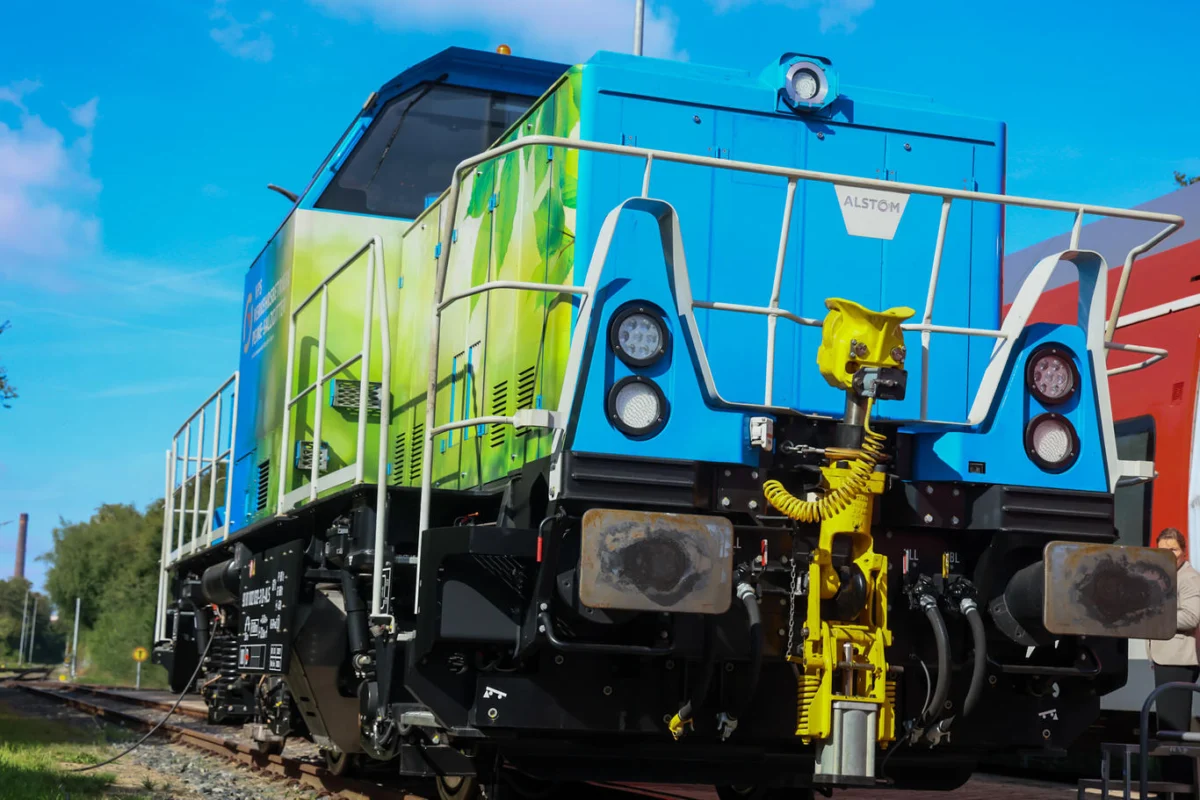
SALZGITTER, GERMANY — In a landmark development for the European rail sector, global rail leader Alstom has successfully completed the world’s inaugural test run of a shunting locomotive converted entirely from diesel to hydrogen power. Conducted at the company’s innovation hub in Salzgitter, Germany, this historic milestone represents a pivotal leap forward in the decarbonization of freight logistics, yard operations, and heavy industrial rail transport.
The breakthrough is not merely a technical novelty; it offers a viable, scalable blueprint for retrofitting the thousands of aging diesel-powered shunting locomotives currently operating across Europe. By breathing new life into existing rolling stock through zero-emission hydrogen combustion, Alstom and its esteemed consortium of academic, industrial, and municipal partners are redefining how the rail industry approaches fleet sustainability.
Main Facts
The successful test run at Salzgitter marks the culmination of intensive research, engineering, and collaborative development. At its core, the project demonstrates that traditional diesel engines can be successfully adapted to run on direct, $textCO_2$-free hydrogen combustion, bypassing the need for complex, cost-prohibitive full fleet replacements.
Key parameters of the initiative include:
- The Technology: Conversion of a conventional diesel shunting locomotive to operate on direct hydrogen combustion, drastically reducing greenhouse gas emissions while retaining the robust mechanical performance required for heavy industrial shunting.
- The Testing Phase: Following its successful maiden run, the locomotive is currently undergoing rigorous industrial testing within the demanding environment of the Salzgitter Group’s steel production facilities. This trial phase is scheduled to run through October 2025.
- Environmental Impact: A single retrofitted locomotive can save up to 150 tonnes of $textCO_2$ annually. Over an estimated remaining service life of 15 to 20 years, this translates to a cumulative reduction of up to 3,000 tonnes of carbon dioxide—comparable to the emissions of roughly 650 passenger cars or the environmental absorption equivalent of planting 200,000 trees.
- The Market Potential: Germany currently relies on approximately 1,000 diesel shunting locomotives, with an estimated 4,000 similar units active across the broader European rail network. The Alstom-led retrofit solution opens an immediate, highly scalable pathway to greening this critical segment of transport infrastructure.
- Consortium and Funding: The project is a collaborative triumph involving Alstom, transport operator VPS Verkehrsbetriebe Peine-Salzgitter, research engine developer WTZ Roßlau gGmbH, the Technische Universität Braunschweig (TU Braunschweig), and the Fraunhofer Institute for Surface Engineering and Thin Films. Financially, the initiative is heavily backed by the city of Salzgitter, which contributed €1.5 million sourced from Lower Saxony’s €50 million structural aid package.
Chronology of a Milestone: From Concept to Track
The journey toward realizing the world’s first hydrogen-retrofitted shunting locomotive has been methodical, driven by rigorous academic research, public-private cooperation, and meticulous engineering phases.
Phase 1: Conceptualization and Consortium Formation (2021–2023)
Recognizing that shunting operations—characterized by constant start-stop cycles, heavy loads, and prolonged idling—represent one of the most stubborn sectors to decarbonize, Alstom partnered with regional stakeholders in Lower Saxony. The objective was clear: develop a sustainable, cost-effective retrofit solution that avoids the enormous capital expenditure associated with purchasing brand-new alternative-fuel locomotives.
Phase 2: Engineering and Test Bench Validation (2023–Early 2024)
Engineering teams from Alstom, WTZ Roßlau, and TU Braunschweig set to work on adapting internal combustion engine principles for hydrogen fuel. One of the primary engineering hurdles was managing hydrogen’s unique combustion properties, particularly dealing with high excess air ratios. Under the leadership of Prof. Dr. Peter Eilts, TU Braunschweig intensively redesigned the exhaust gas turbocharging systems to ensure optimal efficiency and emissions control on the test bench.
Phase 3: Assembly and Static Testing in Salzgitter (Mid–Late 2024)
The converted engine and auxiliary systems were integrated into the locomotive chassis at Alstom’s Salzgitter facility. Static trials validated fuel delivery systems, safety protocols, and thermal management. Concurrently, the city of Salzgitter cemented its financial commitment, allocating €1.5 million from Lower Saxony’s structural transformation funds to accelerate the project.
Phase 4: The Historic Maiden Run and Industrial Trials (Early 2025–October 2025)
In early 2025, the retrofitted locomotive achieved its historic first dynamic test run on the tracks in Salzgitter, proving the viability of hydrogen combustion in a live railway environment. The vehicle has now transitioned to active industrial testing within the Salzgitter Group’s steel mill railway network, managed by logistics subsidiary VPS. These trials, set to conclude in October 2025, will provide vital operational data before the locomotive is eventually returned to its baseline configuration.
Supporting Data and Economic Scope
To fully grasp the significance of the Salzgitter project, one must examine the broader operational landscape of European rail logistics. While mainline passenger and freight corridors have increasingly turned to electrification or hydrogen fuel cells, yard operations—known as shunting—have remained heavily dependent on diesel. Electrifying entire rail yards with overhead catenary wires is often economically unfeasible and physically impractical due to the constant movement of cranes, loading equipment, and rolling stock.
| Metric | Project Data / Regional Context |
|---|---|
| Active Diesel Shunters (Germany) | ~1,000 units |
| Active Diesel Shunters (Europe) | ~4,000 units |
| $textCO_2$ Savings per Locomotive/Year | Up to 150 tonnes |
| $textCO_2$ Savings over 20-Year Lifespan | Up to 3,000 tonnes per locomotive |
| Equivalent Car Emissions Offset | ~650 passenger cars |
| Equivalent Reforestation Impact | ~200,000 mature trees |
| Municipal Financial Contribution | €1.5 million (from Lower Saxony structural aid) |
| VPS Fleet Size at Salzgitter | 42 shunting locomotives |
The financial model underpinning the retrofit is particularly attractive to rail operators. Purchasing a brand-new hydrogen or battery-electric shunting locomotive requires massive upfront capital. By contrast, a retrofit package allows fleet managers to convert their existing, structurally sound diesel locomotives midway through their operational lifecycle. This doubly sustainable approach minimizes industrial waste, preserves capital, and delivers immediate environmental returns.
Official Responses and Stakeholder Perspectives
The successful demonstration of the hydrogen shunting locomotive has drawn widespread acclaim from industry leaders, municipal authorities, and academic partners alike.
François Muller, Vice President Services for Central and Northern Europe at Alstom:
"With this research project, we are once again pioneering the use of hydrogen in rail transport. We are expanding the spectrum of vehicle modernisation with a doubly sustainable approach—thanks to this solution, our customers can switch to emission-free operation without having to replace their existing fleet."
Frank Klingebiel, Mayor of the City of Salzgitter:
"At our Hydrogen Campus, we are developing the technologies of tomorrow in the areas of factory transformation, green hydrogen and hydrogen storage. In the joint project to decarbonise shunting traffic, the city is not only on the sidelines but is also an active player with a financial contribution of EUR 1.5 million."
Dr. Johannes Dreier, Managing Director of VPS Verkehrsbetriebe Peine-Salzgitter:
"Integrating this hydrogen-powered locomotive into our rigorous steel mill logistics network provides the ultimate real-world stress test. This trial fits perfectly into our group’s overarching transition plans, demonstrating that heavy industrial rail logistics can indeed transition away from fossil fuels without sacrificing operational readiness."
Dr. Christian Reiser, Managing Director of WTZ Roßlau:
"Our primary engineering objective was the seamless transfer of hydrogen combustion technology from the controlled environment of the test bench directly onto the real track. Achieving this milestone validates years of collaborative research and proves the immense reliability of modernized hydrogen engines."
Prof. Dr. Peter Eilts, TU Braunschweig:
"We have worked intensively on the design of the exhaust gas turbocharging, as the high excess air poses a particular challenge here. With success! Hydrogen’s unique combustion properties allow us to push thermodynamic efficiency higher while systematically engineering out harmful emissions."
Astrid Paus, Braunschweig Regional Development Office:
"This initiative is a stellar example of well-invested regional funding. It bridges cutting-edge academic research with practical industrial application, driving tangible innovation, significant $textCO_2$ savings, and long-term climate protection."
Implications for European Rail and Heavy Industry
The successful completion of the Salzgitter shunting locomotive trials holds far-reaching implications that extend well beyond Lower Saxony. If the industrial testing phase through October 2025 meets performance expectations, the project could establish a standardized, highly scalable series-production retrofit solution for the European market.
1. Accelerating Industrial Decarbonization
For heavy industries like steel manufacturing, logistics decarbonization must encompass every tier of operations. At Salzgitter AG, the hydrogen shunting project neatly complements the broader SALCOS (Salzgitter Low $textCO_2$ Steelmaking) programme, which aims to systematically transition steel production away from traditional coal-fired blast furnaces toward hydrogen-based direct reduction. By aligning internal rail logistics with green steel production, Salzgitter is positioning itself as an integrated blueprint for sustainable heavy manufacturing.
2. A Cost-Effective Compliance Pathway for Rail Operators
European rail freight and shunting operators face mounting regulatory pressures to eliminate fossil fuels. However, profit margins in rail logistics are notoriously tight. The ability to convert existing diesel engines into hydrogen-combustion units via aftermarket retrofitting provides a financially palatable alternative to fleet renewal. Operators can meet corporate and national net-zero targets without writing off millions of euros in unamortized diesel locomotive assets.
3. Maturing the Hydrogen Ecosystem
The project also stimulates the local and regional hydrogen economy. By creating guaranteed, localized demand for green hydrogen within heavy industrial hubs like Salzgitter, such initiatives justify investments in regional hydrogen production, storage, and refueling infrastructure. As more industrial locomotives and regional fleets adopt hydrogen combustion or fuel-cell technologies, the supply chain matures, driving down costs and improving technological resilience.
Looking Ahead
As the retrofitted locomotive logs its final months of industrial testing under the demanding conditions of Salzgitter’s steel mills, all eyes in the European rail sector remain fixed on Lower Saxony. Should the data continue to validate the efficiency, durability, and emissions reductions observed during the maiden run, the industry may soon witness the widespread commercial rollout of hydrogen retrofits—turning a bold research experiment into a cornerstone of sustainable European rail transport.

