

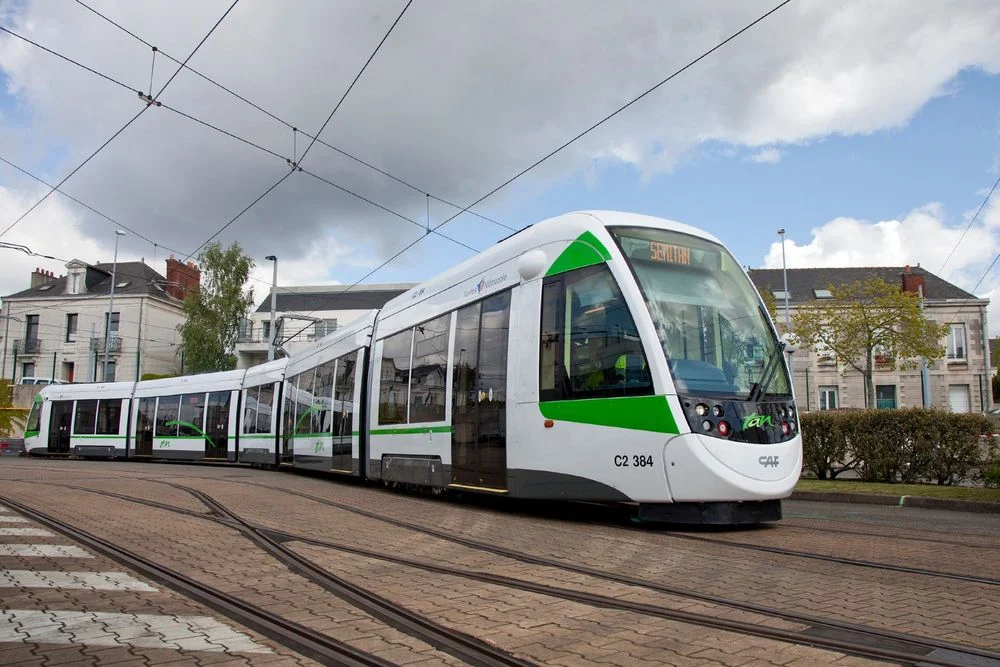
TOURS, FRANCE — In a landmark development for sustainable French public transportation, rolling stock manufacturer CAF (Construcciones y Auxiliar de Ferrocarriles) has officially finalized a high-profile contract with the Syndicat des Mobilités de Touraine. The comprehensive agreement mandates the delivery of 19 state-of-the-art Urbos trams destined to serve the metropolitan area’s ambitious new tramway Line 2.
Beyond the manufacture and supply of the modern fleet, the contract encompasses an array of essential lifecycle provisions, including associated fleet spare parts and specialized maintenance tools designed to guarantee seamless long-term operations. This pivotal acquisition marks another major milestone in the ongoing modernization of Tours’ public transit network, reinforcing the city’s commitment to cutting-edge, environmentally friendly mobility solutions.
1. Main Facts: Fleet Specifications and Technical Innovations
The centerpiece of the agreement is the delivery of 19 high-capacity, highly adaptable CAF Urbos tram units. Engineered to integrate effortlessly into the existing urban fabric while setting new standards for passenger comfort, the new vehicles share strong design synergies with the trams currently operating on Tours’ established Line 1.
Passenger Capacity and Accessibility
Accessibility and inclusivity stand at the forefront of the design. The new fleet features a fully low-floor architecture, eliminating interior steps and ensuring barrier-free boarding for all passengers, particularly individuals with reduced mobility, the elderly, and families with young children.
Key technical and spatial highlights of the 19 Urbos trams include:
- Generous Length: Each tram measures an impressive 42 meters in length, maximizing passenger capacity per run to alleviate peak-hour congestion.
- High Occupancy: The vehicles are engineered to comfortably accommodate up to 280 passengers simultaneously.
- Multipurpose Zones: To support intermodal travel and modern urban lifestyles, the interior layout incorporates dedicated multipurpose areas equipped to securely house strollers, bicycles, and wheelchairs.
Catenary-Free Technology for Historic Preservation
One of the most notable engineering features of the new fleet is its operational flexibility. The CAF Urbos trams are fully certified and equipped to run on both the upcoming Line 2 and the pre-existing Line 1 network.
Crucially, the vehicles will integrate advanced onboard energy storage modules. This innovative technology allows the trams to navigate specific portions of the route entirely free of traditional overhead catenary wires. Specifically, the trams will traverse a critical 2-kilometer stretch between the Tours central railway station and Place Choiseul in the historic city center running on stored energy alone.
This catenary-free solution serves a dual purpose:
- Urban Preservation: It protects the visual integrity and architectural heritage of Tours’ historic quarters, avoiding an unsightly web of overhead cables.
- Economic Efficiency: It minimizes the need for complex, costly overhead electrical infrastructure installation in densely built heritage zones.
2. Chronology: The Evolution of Tours’ Transit Vision
The journey toward the realization of Line 2 and the procurement of the CAF Urbos fleet represents years of urban planning, political consensus, and infrastructural preparation within the Touraine region.
The Foundation: Line 1 and Early Success
Tours took its first major leap into modern modern light rail transit with the inauguration of its first tramway line. Proving immensely popular and transformative for urban mobility, Line 1 established a high baseline for public expectations regarding speed, punctuality, and comfort. Building on this success, local authorities recognized that a single line was insufficient to support the growing metropolitan region’s long-term economic and demographic trajectories.
Planning and Route Conception (2020–2024)
Conceived to address cross-metropolitan transit demands, plans for Line 2 took shape through extensive public consultations managed by the Syndicat des Mobilités de Touraine. The designated 12.5-kilometer route was mapped out to connect La Riche in the west to Chambray-lès-Tours in the south, slicing through the heart of the urban agglomeration. During this period, environmental assessments, financial structuring, and preliminary engineering studies were completed to clear the path for large-scale construction.
Construction Launch and the CAF Agreement (Late 2024–Early 2025)
Official construction works for the 12.5 km Line 2 officially commenced, signaling the physical transformation of the city streets. The project blueprint outlines the integration of 22 modern stations along the corridor. Concurrently, rigorous procurement evaluations led to the selection of CAF as the rolling stock provider, culminating in the formal signing of the 19-tram contract in early 2025.
Toward In-Service Operation (2025–2028)
With the manufacturing contract secured, the timeline now looks toward rolling stock production, infrastructure completion, and rigorous testing phases.
- 2025–2027: Manufacture of the Urbos tram fleet, depot adaptations, and continuous civil engineering works along the Line 2 alignment.
- Late 2027 / Early 2028: Dynamic testing of the new vehicles on the tracks, crew training, and safety certification.
- 2028: Official commercial launch and opening of Line 2 to the general public.
3. Supporting Data: Demographics, Route Geography, and Economic Impact
The implementation of Tours Line 2 is underpinned by robust data regarding urban geography, commuter habits, and regional socio-economic needs.
Geographic Alignment and Infrastructure
- Total Route Length: 12.5 kilometers connecting La Riche to Chambray-lès-Tours.
- Station Count: 22 modern, accessible stations strategically positioned to capture high-density passenger flows.
- Catenary-Free Stretch: 2 kilometers traversing the historic city center between Tours train station and Place Choiseul.
- Fleet Size: 19 CAF Urbos tram units, each 42 meters long with a 280-passenger capacity.
Serving Key Educational, Medical, and Cultural Hubs
The route selection was meticulously engineered to maximize societal utility. Line 2 is not merely a transit corridor; it is an economic and social spine designed to link vital regional anchors:
- Healthcare Infrastructure: Direct service to major metropolitan hospitals, ensuring reliable access for patients, medical professionals, and support staff.
- Higher Education: Seamless connectivity to academic institutions serving nearly 30,000 students, significantly reducing student reliance on private automobiles.
- Leisure and Culture: Direct access to diverse cultural venues, sports complexes, and recreational facilities across the metropolitan territory.
Intermodality and Active Mobility
The tram expansion is part of a broader holistic transport strategy. The project directly aims to improve intermodality—the smooth transition between different modes of transport—by integrating tram stops directly with existing urban bus networks. Furthermore, the corridor redesign promotes active mobility, incorporating dedicated infrastructure designed to encourage walking and cycling alongside the new transit line.
4. Official Responses and Industry Perspectives
The partnership between the Syndicat des Mobilités de Touraine and CAF has drawn positive reactions from civic leaders and corporate executives alike, emphasizing the project’s transformative regional impact and strategic importance.
Municipal and Transit Authority Vision
Representatives from the Syndicat des Mobilités de Touraine emphasized that the choice of CAF and the Urbos platform was driven by a rigorous evaluation of technical excellence, aesthetic sensitivity, and financial prudence. Local leaders noted that the integration of catenary-free technology through the historic core demonstrates a profound respect for Tours’ architectural heritage—most notably its renowned Gothic architecture and its status as the gateway to the Loire Valley.
CAF’s Expanding French Footprint
For CAF, securing the Tours contract represents another major victory in the highly competitive French railway market. Over recent years, the Spanish rolling stock manufacturer has steadily solidified its presence across France, securing high-profile supply agreements with major metropolitan areas such as Montpellier and Marseille.
Industry analysts point out that CAF’s ability to offer customizable, technologically advanced platforms like the Urbos—complete with sophisticated energy storage capabilities for historic city centers—has positioned the company as a preferred partner for European cities modernizing their transit grids while safeguarding urban aesthetics.
5. Implications: Urban Transformation, Environmental Goals, and Future Outlook
The introduction of Tours Line 2 and the deployment of the 19 CAF Urbos trams carry profound implications for the region’s environmental sustainability, economic vitality, and long-term urban planning.
Environmental Stewardship and Decarbonization
As European cities face mounting pressure to curb carbon emissions and combat urban air pollution, high-capacity electric light rail remains one of the most effective tools in the municipal arsenal. By offering a clean, reliable, and attractive alternative to private car ownership, the new tram line is projected to significantly lower the metropolitan area’s transport-related carbon footprint. The use of onboard energy storage modules further enhances environmental credentials by optimizing power consumption and eliminating the visual pollution of overhead wires in sensitive heritage zones.
Catalyst for Economic Growth and Real Estate Development
Historically, the introduction of modern tramway infrastructure acts as a powerful catalyst for urban regeneration. Line 2 is expected to spur commercial investment, residential development, and public space revitalization along its 12.5-kilometer corridor. By tying together residential zones, employment centers, student hubs, and medical facilities, the line will streamline commuting patterns, boost local productivity, and enhance the overall quality of life for residents across the Touraine region.
Looking Ahead to 2028 and Beyond
With construction well underway and the rolling stock procurement securely in place, Tours is firmly on track to realize its next-generation transit network by 2028. As the city prepares for the arrival of the first CAF Urbos trams, the project stands as a model of how modern urban centers can successfully balance technological innovation, historical preservation, and sustainable mobility principles to build resilient cities for the future.

