

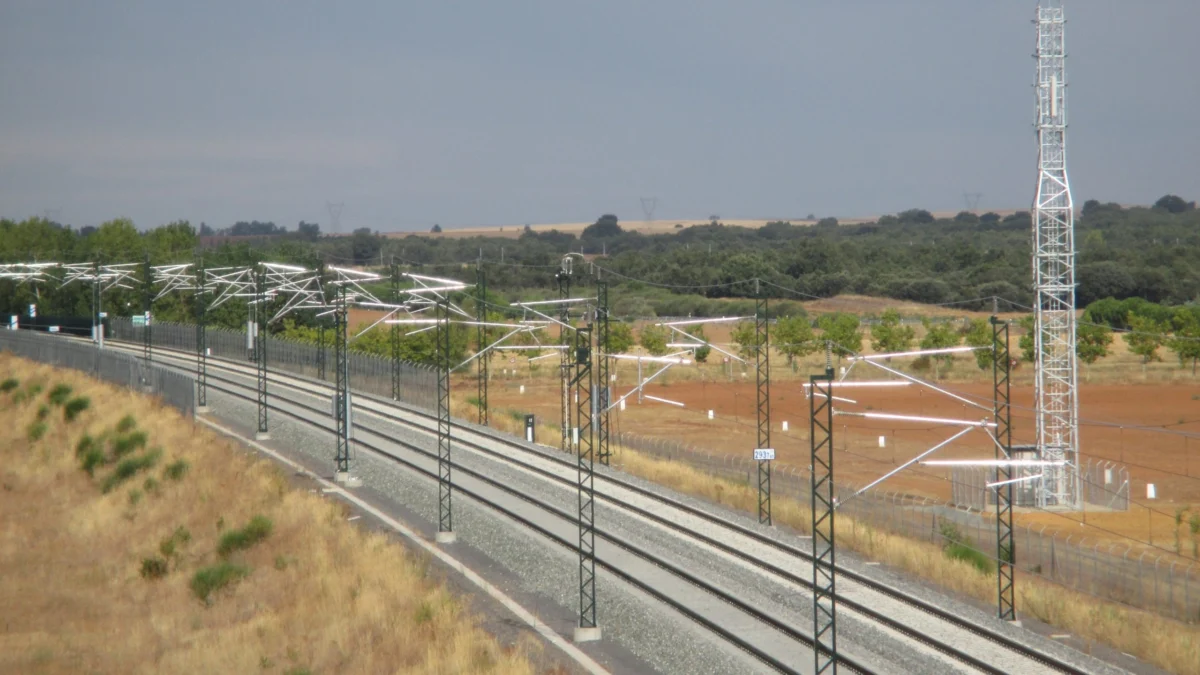
MADRID, SPAIN — In a major push to future-proof one of the world’s most advanced rail networks, Spain’s railway infrastructure manager, Adif (Administrador de Infraestructuras Ferroviarias), has officially launched a high-stakes public tender. Valued at nearly €175.5 million, the comprehensive 48-month contract is engineered to oversee the operation, maintenance, and technological modernisation of mission-critical telecommunications and power control systems across Spain’s expansive high-speed rail (HSR) corridors.
As rail transit increasingly positions itself as the backbone of sustainable European mobility—outpacing aviation on numerous domestic and cross-border routes—the reliability of underlying digital architecture has never been more paramount. This multi-million-euro investment underscores Adif’s proactive stance on network resilience, passenger safety, and operational efficiency.
1. Main Facts: The Scope of the €175.5 Million Overhaul
The newly announced tender is comprehensive, sweeping across the digital and electrical nervous system of Spain’s high-speed arteries. Operating over a mandatory 48-month (four-year) term, the contract aims to safeguard the continuous availability, safety, and high-performance standards expected of a network that carries tens of millions of passengers annually.
At the core of the project is the integration and upkeep of the GSM-R (Global System for Mobile Communications – Railway) network. GSM-R is the international wireless communications standard designed for railway communication and traffic control, allowing seamless, secure, and uninterrupted voice and data exchanges between train drivers and traffic dispatchers.
However, the tender extends far beyond basic radio communications. The selected contractor or consortium will be responsible for a vast array of interconnected sub-systems, including:
- Fixed Telecommunications Networks: High-capacity fibre-optic backbones, voice channels, and data transmission systems.
- Security and Surveillance Infrastructure: Advanced closed-circuit television (CCTV) video surveillance, access control, and intrusion detection systems deployed along tracks, stations, and tunnel complexes.
- Centralised Energy Remote Control Systems: Real-time monitoring and operational control platforms regulating the high-voltage electrical infrastructure that powers Spain’s electric high-speed fleets.
- Public Information Systems: Public address systems, emergency intercoms, and passenger interface nodes.
- Commercial Telecom Infrastructure: Supporting structures and facilities utilised by commercial mobile network operators within rail environments.
Geographic Reach Across Key Corridors
The massive modernization initiative is not confined to a single region; it encompasses the vast majority of Spain’s flagship high-speed rail lines. The geographical scope spans:
- The Madrid–Valladolid corridor.
- The vital economic artery connecting Madrid to Barcelona and onward to the French border.
- The Zaragoza–Huesca and Camp de Tarragona–La Boella branches.
- The southern and eastern vectors, including Madrid–Valencia, Madrid–Seville, and the Córdoba–Málaga lines.
- Regional connectors such as La Sagra–Toledo and the Albacete–Bifurcación Albacete sections.
2. Chronology: The Evolution of Spain’s High-Speed Digital Backbone
To understand the significance of this €175.5 million tender, it is necessary to examine the chronological evolution of Spain’s high-speed rail network—the largest in Europe and second only to China globally.
- 1992 (The Genesis): Spain inaugurated its first high-speed rail line, the Madrid–Seville corridor, just in time for the Seville Expo ’92. At the time, telecommunications were heavily siloed, relying on analog systems and early digital iterations that required frequent manual interventions.
- Early 2000s (Expansion Era): As lines to Barcelona, Valladolid, and Málaga began construction, Adif recognized the need for a unified, interoperable radio standard across Europe. Spain began integrating the GSM-R standard, aligning with European Rail Traffic Management System (ERTMS) directives.
- 2010s (Digital Consolidation): High-speed corridors expanded rapidly, making Spain a global benchmark in civil engineering and high-speed rail deployment. Telecommunications maintenance was increasingly outsourced through specialised, segmented service contracts, leading to fragmented operational models across different lines.
- 2020–2024 (Post-Pandemic Resurgence & Smart Rail): Passenger volumes rebounded aggressively, outstripping pre-pandemic highs. The increasing frequency of trains and the integration of low-cost high-speed operators (such as Ouigo and Iryo alongside state-owned Renfe’s Avlo) placed unprecedented demands on network capacity and telecom bandwidth.
- August 2026 (Current Tender): Adif initiates the unified 48-month framework tender. By consolidating maintenance, operation, and modernisation into a single, massive multi-million-euro package, Adif aims to eliminate historical fragmentation, streamline response times, and introduce cutting-edge predictive maintenance methodologies.
3. Supporting Data: Maintenance Methodologies and Technological Upgrades
Modern railways operate under razor-thin margins for error. A momentary telecommunications blackout or a failure in the energy remote-control system can cause cascading delays across hundreds of kilometres of track. To mitigate these risks, Adif’s new contract explicitly mandates a three-tiered maintenance architecture supported by advanced data analytics.
A Three-Pronged Maintenance Approach
- Preventive Maintenance: Routine, scheduled inspections and servicing of physical assets (cables, antennas, servers, power substations) to pre-empt wear and tear.
- Predictive Maintenance: Moving away from calendar-based fixes, this approach leverages continuous IoT monitoring, sensors, and telemetry data. Algorithms will analyse equipment performance parameters in real-time, detecting micro-anomalies (such as voltage drops in power control units or signal attenuation in fibre lines) before they result in outright failures.
- Corrective Maintenance: Rapid-response protocols designed to immediately isolate, troubleshoot, and resolve unexpected faults, restoring optimal system performance with minimal disruption to commercial schedules.
Driving Down Costs and Boosting Energy Efficiency
Beyond keeping trains running safely, the tender explicitly targets operational optimization. The modernization works include hardware and software upgrades designed to:
- Reduce Life-Cycle Costs: Deploying energy-efficient servers, modern IP-based switches, and modular telecom equipment that requires less physical intervention.
- Enhance Energy Efficiency: Integrating the energy remote-control systems with smart-grid analytics, allowing Adif to better manage the massive electrical loads required by accelerating high-speed trains, thereby lowering the network’s overall carbon footprint.
- Future-Proof Bandwidth: Upgrading fibre-optic backbones to handle future data demands, paving the way for potential integrations with 5G-R (the next-generation railway mobile communication system currently under development in Europe).
4. Official Responses and Industry Context
While Adif has not yet named the winning bidder—as the public tender process remains open for submissions and technical evaluations—industry stakeholders and infrastructure analysts have widely praised the scale and strategic vision of the project.
In previous policy statements regarding digital transformation, Adif executives have repeatedly emphasized that infrastructure management in the 21st century is as much about data and connectivity as it is about concrete, ballast, and steel rails.
Industry analysts point out that managing a network of this size requires balancing ultra-high reliability with cyber-security considerations. As railway operational technology (OT) converges with traditional information technology (IT), protecting critical assets from cyber threats becomes just as vital as preventing hardware degradation. Although Adif has kept specific cybersecurity parameters confidential within the tender documents, compliance with stringent European critical infrastructure protection directives is an implied baseline for any eligible bidder.
Major European engineering and telecommunications firms—including multinationals with established footprints in the Iberian Peninsula such as Telefónica, Indra, Thales, and Alstom—are widely expected to form consortiums to bid for the lucrative contract, given the immense technical complexity and prestige associated with Adif’s high-speed network.
5. Implications: What This Means for Passengers, Operators, and the European Rail Market
The launch of the €175.5 million telecommunications tender carries profound implications across multiple tiers of the transportation ecosystem:
For Passengers: Uncompromised Safety and Punctuality
For the everyday commuter or leisure traveler, the direct benefits of this tender are felt in the realm of reliability. By ensuring that voice communications between drivers and dispatchers remain crystal-clear and uninterrupted, and that video surveillance and intrusion detection systems operate without blind spots, passenger safety is significantly enhanced. Furthermore, predictive maintenance reduces the likelihood of catastrophic signaling or power failures that trigger severe delays, protecting Spain’s hard-earned reputation for punctual high-speed rail service.
For Rail Operators (Renfe, Ouigo, Iryo)
Liberalisation of the Spanish rail market has introduced intense competition among multiple high-speed operators sharing the same tracks. A neutral, highly efficient infrastructure manager like Adif is essential to guarantee fair, safe, and equal access. A robust, modernised GSM-R and energy control network ensures that all operators can run their fleets smoothly without facing capacity bottlenecks caused by legacy infrastructure limitations.
For Spain’s Position as a Global Rail Pioneer
Spain continues to export its high-speed railway expertise to international markets, securing major high-speed and infrastructure contracts in the Middle East, Latin America, and across Europe. By continually modernising its domestic network with state-of-the-art telecommunications and energy control systems, Adif maintains a living laboratory for advanced railway technologies. Successful execution of this 48-month contract will serve as a vital reference case for Spanish engineering firms competing on the global stage.
Conclusion
Adif’s €175.5 million tender is far more than a routine maintenance contract; it is a vital strategic investment in the digital future of Spain’s high-speed railway network. By integrating predictive maintenance, modernising critical GSM-R voice architecture, upgrading fibre-optic backbones, and enhancing energy remote-control systems across its primary corridors, Adif is ensuring that Spanish rail infrastructure remains secure, highly efficient, and fully prepared for the mobility demands of tomorrow. As bids are evaluated over the coming months, the successful contractor will shoulder the responsibility of keeping the digital pulse of Europe’s largest high-speed rail network beating without missing a beat.

