
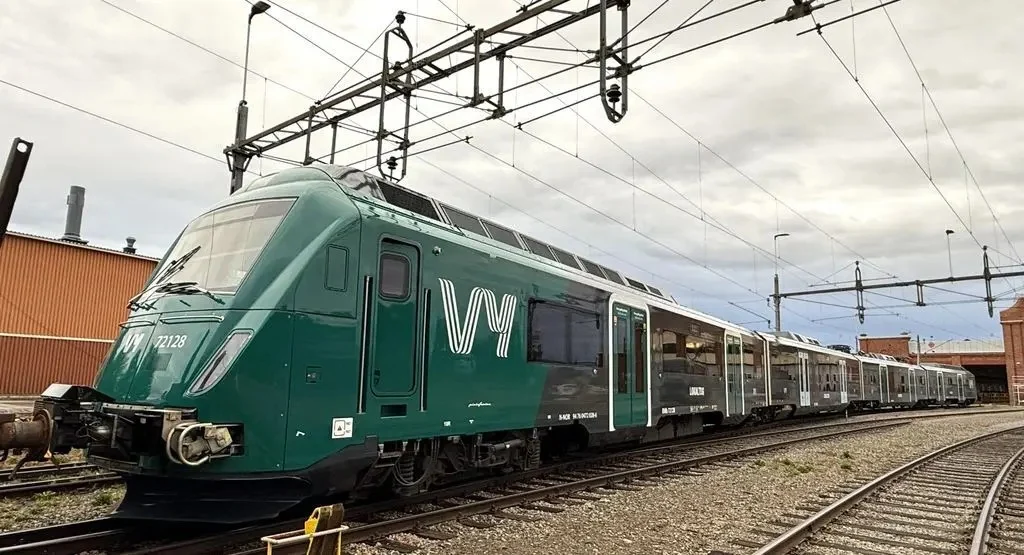
The landscape of Nordic railway maintenance is undergoing a significant transformation as the Finnish industrial powerhouse, VR FleetCare, marks a major milestone in its international expansion strategy. The company has officially commenced its first-ever rolling stock modernization project on Swedish soil, a strategic move that underscores the growing integration of rail infrastructure services across the Nordic region. This ambitious undertaking, commissioned by the Norwegian state-owned rolling stock company Norske Tog, involves the comprehensive refurbishment of 34 Class 72 electric multiple units (EMUs), which serve as the backbone of Norway’s suburban passenger network.
The project, which has already seen the successful completion of the first unit at the Tillberga facility in Sweden, represents more than just a technical upgrade; it serves as a testament to the cross-border logistical capabilities of VR FleetCare. As the company looks to solidify its reputation as a leading provider of rolling stock lifecycle management, this project sets a new benchmark for how regional rail operators can leverage shared Nordic industrial capacity to extend the service life of vital infrastructure.
Main Facts: The Scope of the Modernization Program
At the heart of this international cooperation is the Class 72 fleet. These electric multiple units have been integral to Norway’s suburban rail services, providing reliable transportation for thousands of commuters daily. However, as the fleet ages, the demand for increased passenger comfort, modern amenities, and extended operational longevity has become paramount.
Under the terms of the agreement, VR FleetCare is tasked with a multi-year program to modernize all 34 units. While technical specifications remain proprietary, the scope of the project focuses on two primary objectives:
- Life-Extension Engineering: Ensuring the structural and mechanical integrity of the trains allows for continued safe operation for years to come.
- Passenger Experience Enhancement: Implementing upgrades that align with the contemporary expectations of Norwegian commuters, including improvements to interior ergonomics, digital connectivity, and ambient comfort.
The project is strategically staged, with the work occurring at the Tillberga site in Sweden. This choice of location is highly deliberate, utilizing Sweden’s established railway maintenance ecosystem to provide a centralized hub for the Norwegian fleet. By moving operations outside of its traditional Finnish base, VR FleetCare is demonstrating a flexible, "plug-and-play" model of maintenance that could redefine how the company approaches future international contracts.
Chronology: A Roadmap to 2029
The timeline for this initiative is carefully structured to ensure minimal disruption to Norwegian suburban services while maintaining a consistent output of modernized rolling stock.
- Project Inception and Strategic Planning: Discussions between Norske Tog and VR FleetCare began with a focus on addressing the long-term needs of the Class 72 fleet. The selection of the Tillberga facility was finalized to bridge the geographical gap between the Finnish service provider and the Norwegian fleet owner.
- Pilot Phase and First Delivery: The current phase has seen the successful completion of the first Class 72 unit. This pilot unit serves as the "golden master" for the remaining 33 trains, establishing the standardized processes for electrical, mechanical, and interior work.
- The Rollout (2025–2028): Following the successful pilot, the project will move into a high-cadence production phase. Units will be cycled through the Tillberga facility in waves, ensuring that Norske Tog retains sufficient operational capacity across its suburban lines at all times.
- Completion (2029): The target for the final handover of the modernized fleet is set for 2029. By this date, the entire Class 72 series will have undergone a mid-life refresh, effectively resetting their operational lifecycle.
Supporting Data: Why the Class 72 Matters
The Class 72 EMUs are not merely incidental to the Norwegian rail network; they are critical assets. Operating primarily on high-traffic suburban routes, these trains are subjected to intense daily usage cycles. The wear and tear associated with constant stopping, starting, and heavy passenger boarding necessitates a robust maintenance cycle.
The decision by Norske Tog to invest in modernization rather than complete fleet replacement is a growing trend in European rail. By upgrading existing chassis and mechanical systems, operators can:
- Reduce Capital Expenditure: Refurbishment typically costs a fraction of procuring brand-new rolling stock.
- Sustainability Impacts: Modernization has a significantly lower carbon footprint compared to the manufacturing and recycling processes involved in replacing a 34-train fleet.
- Maintain Interoperability: Keeping the existing fleet platform ensures that maintenance staff and drivers remain familiar with the technology, reducing the need for extensive retraining programs.
VR FleetCare’s expertise in this area—leveraging decades of experience maintaining the Finnish VR Group fleet—provides Norske Tog with a partner that understands the harsh environmental conditions characteristic of Nordic winters. This expertise is a significant value-add, as the upgrades must withstand extreme temperature fluctuations and heavy snow loads common in Norwegian rail corridors.
Official Responses: A Strategic Milestone
The significance of this project is not lost on the leadership at VR FleetCare. Peter Guldbrand, Director of Sales and Projects, emphasized that this contract is a pivotal moment for the company’s international ambitions.

"It is excellent that we are able to carry out this project together with Norske Tog," Guldbrand stated. "The contract demonstrates our ability to deliver complex rolling stock projects at an international level."
Guldbrand noted that the timely completion of the first unit was not just a win for the project schedule, but a proof-of-concept for VR FleetCare’s new, agile business model. By demonstrating the ability to set up and execute high-level engineering work at a third-party location in Sweden, the company has effectively "de-risked" its international expansion. This capability positions VR FleetCare to bid on similar projects across the Baltic and Nordic regions, where aging fleets are in constant need of mid-life upgrades but where local facilities may be over-capacity or lack the specialized experience required for such extensive overhauls.
Implications: The Future of Nordic Rail Maintenance
The collaboration between a Finnish provider, a Swedish facility, and a Norwegian client is a microcosm of the "One Nordic" rail strategy that many industry experts are advocating for. As the rail industry shifts toward higher levels of cross-border cooperation, this project holds several important implications:
1. Standardization of Maintenance Standards
By working across borders, VR FleetCare is contributing to a more standardized approach to rolling stock maintenance in the Nordic region. This harmonization could eventually lead to shared spare parts inventories, shared training programs, and a more resilient supply chain that can better withstand market shocks.
2. The Rise of Agile Maintenance Hubs
The "Tillberga Model" serves as a blueprint for the future. Instead of relying solely on massive, centralized heavy-maintenance depots, companies like VR FleetCare are proving that they can deploy specialized teams and management processes to existing facilities near the client’s operations. This reduces the costs and carbon emissions associated with transporting trains over long distances.
3. Sustainability and the Circular Economy
The rail industry is under increasing pressure to demonstrate its commitment to the green transition. Beyond the trains themselves being electric, the lifecycle management of these assets is becoming a key metric. By extending the life of the Class 72 units by another decade or more, Norske Tog and VR FleetCare are making a clear statement about the importance of circularity in heavy industry.
4. Competitive Dynamics
This project places VR FleetCare in a stronger position to compete with larger European multinational rail service providers. By proving that it can successfully operate in Sweden—a highly competitive market with its own established players—VR FleetCare has signaled that it is no longer just a national champion, but a regional contender.
Conclusion: A Blueprint for Success
As the project moves into its full-scale phase, all eyes will be on the Tillberga facility to see if the efficiency of the first unit can be maintained throughout the 34-train series. The successful delivery of the first unit provides a strong foundation of trust between the Finnish service provider and the Norwegian operator.
For the passenger, the results will be felt in the coming years as they board modernized suburban trains that offer a higher standard of comfort and reliability. For the industry, the project serves as a compelling case study on how to effectively manage the lifecycle of aging assets through international collaboration.
As the 2029 deadline approaches, the successful modernization of the Class 72 fleet will likely be remembered not just as a routine maintenance contract, but as the moment when the Nordic rail maintenance market truly became a unified, cross-border endeavor. VR FleetCare has taken a bold step, and as the trains continue to roll out of the Tillberga workshops, the company is effectively paving the way for a more integrated, efficient, and sustainable future for rail travel in the North.

