

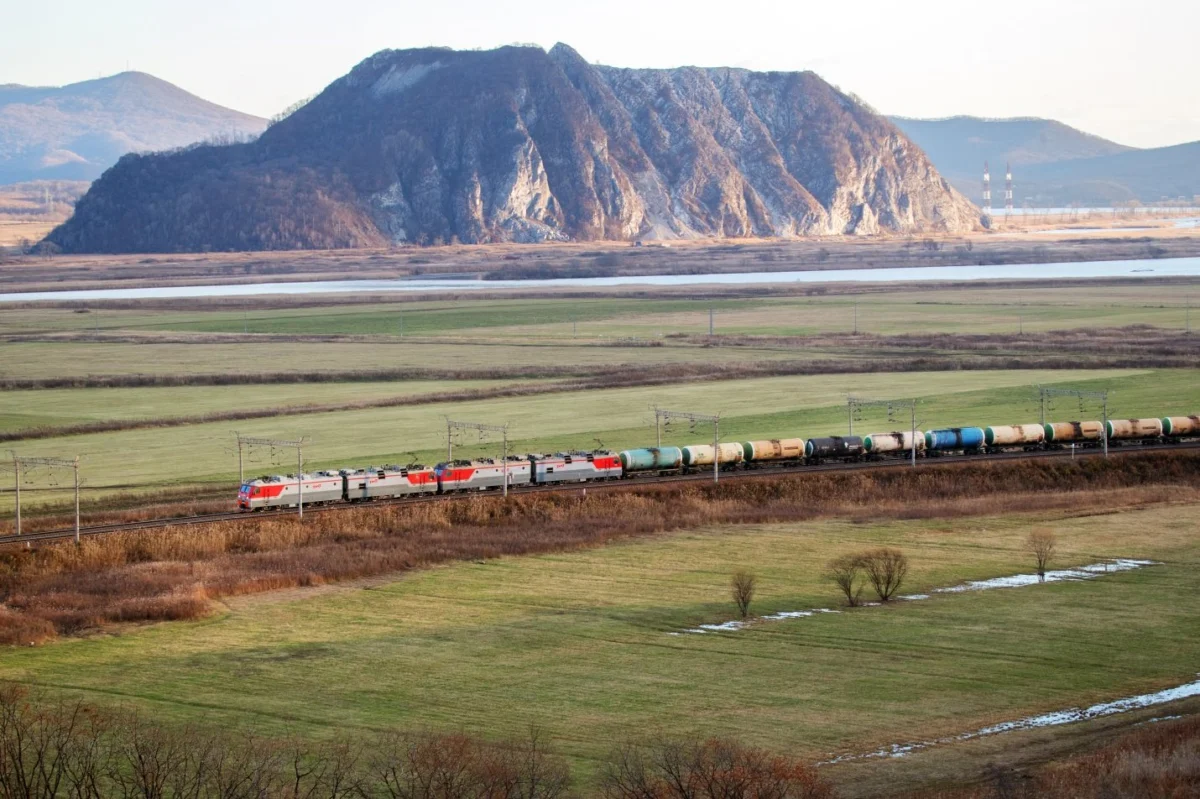
MOSCOW — In a decisive push toward decarbonization and sustainable heavy industry, Russian Railways (RZD) is aggressively expanding its portfolio of eco-friendly rolling stock. Speaking at the prestigious PRO//Motion.Expo in the Shcherbinka district of Moscow Oblast, Vladimir Andreev, Acting Deputy General Director and Chief Engineer of Russian Railways, outlined the company’s ambitious roadmap for hydrogen-powered and alternative-energy traction units.
As global logistics networks face mounting pressure to eliminate carbon footprints, RZD is positioning itself at the forefront of the Eurasian green rail revolution. By leveraging hydrogen fuel cells, liquefied natural gas (LNG), and hybrid lithium-ion storage systems, the Russian rail giant aims to drastically cut atmospheric emissions, curb noise pollution, and optimize long-term operational expenditures.
Main Facts: The Blueprint for a Zero-Emission Rail Network
The strategic overhaul of Russia’s locomotive fleet hinges on a multi-pronged approach combining hydrogen energy, gas-diesel retrofits, and advanced hybrid storage technologies.
- The Hydrogen Shift: RZD is prioritizing hydrogen fuel cell technology for both passenger and freight applications. A flagship pilot project is already underway on Sakhalin Island, serving as a blueprint for nationwide deployment.
- Cost Parity Projections: According to Andreev, rapid advancements in hydrogen tech and falling fuel cell manufacturing costs mean that hydrogen energy could soon achieve cost parity with traditional natural gas transitions.
- Gas-Diesel and Gas-Electric Conversions: RZD is actively retrofitting existing mainline freight and shunting locomotives to run on gas-diesel configurations, with comprehensive design documentation slated for finalization.
- Target Deployment Zones: Alternative-energy rolling stock is earmarked for deployment in ecologically sensitive tourist regions, dense urban metropolitan areas, and the ecologically fragile territories of the Russian Far East.
- Environmental Impact: Transitioning to these alternative energy sources promises a 100% reduction in direct harmful exhaust emissions, alongside a substantial decrease in acoustic pollution—a critical factor for urban shunting yards.
- Strategic Partnerships: Collaborations with industry leaders such as Rusnano, Sinara Group, TMH-Energy Solutions, and Rusatom Overseas are accelerating the design, prototyping, and testing phases of hydrogen and battery-electric locomotives.
Chronology of Green Innovation: A Timeline of Strategic Milestones
The pivot toward alternative traction is not an overnight development; it is the culmination of years of targeted research, inter-industry partnerships, and regulatory alignments.
April: The Sakhalin Hydrogen Initiative
The groundwork for commercial hydrogen passenger operations was laid in the spring when TMH-Energy Solutions and Rusatom Overseas (a subsidiary of Russia’s state atomic energy corporation, Rosatom) formally agreed to establish a joint venture. This partnership was mandated to develop and deploy hydrogen fuel cell trains tailored for the unique topography and climatic conditions of the Sakhalin Region.
June: Forging the Freight Alliance
Recognizing that freight transport accounts for the lion’s share of railway emissions, a high-profile tripartite partnership was forged in June between Rusnano, Russian Railways, and the Sinara Group. This alliance was specifically tasked with engineering heavy-duty hydrogen freight locomotives. The design integrates electrochemical hydrogen fuel cells with high-capacity lithium-ion batteries. As part of this agreement, a pilot batch of five lithium-ion battery-powered locomotives was scheduled for rigorous track testing.
August: The PRO//Motion.Expo Vision
Addressing industry stakeholders, engineers, and international observers at the PRO//Motion.Expo, Vladimir Andreev crystallized RZD’s broader environmental strategy. He highlighted how technological maturation is shortening the gap between experimental alternative traction and commercially viable mainline operations.
2022 and Beyond: Design Finalization and Testing
RZD, working alongside specialized scientific bodies, established aggressive timelines. Design documentation for the massive conversion of diesel freight and shunting units to gas-diesel propulsion is targeted for completion. Concurrently, hybrid mainline locomotives equipped with gas turbines, internal combustion engines, and energy-storage cells are moving from computer-aided design to physical prototyping.
Supporting Data and Technical Architecture: Engineering the Future of Traction
To understand the magnitude of RZD’s transition, one must examine the engineering mechanics driving these next-generation locomotives. The shift away from traditional diesel-electric propulsion requires sophisticated hybridization and alternative fuel storage.
The Power Plant Dynamics
Traditional diesel locomotives rely entirely on internal combustion engines burning petroleum distillates, producing significant nitrogen oxides ($NO_x$), carbon monoxide ($CO$), and particulate matter ($PM$). RZD’s new generation of rolling stock replaces or supplements these internal combustion units with:
- Hydrogen Fuel Cells: Operating via electrochemical reactions that combine hydrogen and ambient oxygen, these cells generate electricity with water vapor as the only byproduct. When paired with supercapacitors or lithium-ion batteries, they can handle the massive torque requirements demanded by heavy freight loads.
- Gas-Diesel and LNG Hybrids: In the interim phase, RZD is modifying existing heavy-duty locomotives to run primarily on liquefied natural gas (LNG) supplemented by small amounts of diesel fuel for ignition. This reduces sulfur dioxide emissions to near zero and cuts greenhouse gas outputs significantly.
- Lithium-Ion Battery Storage: For shunting operations—where locomotives spend hours starting, stopping, and moving cars within marshaling yards—pure battery-electric or hybrid battery-fuel cell systems eliminate idling emissions entirely.
Research and Development Backbone
The technical heavy lifting is being handled by Russia’s premier rail research institutions:
- VNIKTI (All-Russia Research and Technological Institute of Rolling Stock)
- VNIIZHT (Railway Research Institute)
These institutions are working in tandem with RZD’s engineering corps to solve the complex thermodynamic, structural, and safety challenges associated with storing cryogenic liquefied gas and pressurized hydrogen aboard heavy commercial rolling stock.

Official Responses and Industry Perspectives
The transition has garnered strong support from both corporate leadership and governmental stakeholders, who view green logistics as an economic imperative as well as an environmental obligation.
Speaking at the PRO//Motion.Expo, Vladimir Andreev emphasized the economic viability of the transition:
"Hydrogen technologies are developing rapidly and the cost of fuel cells is decreasing, so we expect and hope that the real cost of introducing hydrogen energy in the near future will be commensurate in cost with the transition to natural gas."
Highlighting the step-by-step methodology RZD is employing, Andreev added:
"The design documentation is expected to be completed in 2022. As we gain experience in this area, we will consider the possibility of switching diesel locomotives over to hydrogen technology."
Industry analysts point out that RZD’s strategy of simultaneous development—pursuing gas-diesel, gas-electric hybrids, and pure hydrogen fuel cells at the same time—mitigates the risk of supply chain bottlenecks. By building domestic competence through joint ventures with Rosatom and Rusnano, Russia is insulating its critical transport infrastructure from external technological embargoes while establishing self-reliant supply chains for green energy components.
Implications: Economic, Environmental, and Geopolitical Ramifications
The large-scale adoption of hydrogen and alternative-energy locomotives by Russian Railways carries profound implications across multiple sectors.
Environmental Transformation
The immediate beneficiary is the biosphere. By targeting a 100% reduction in direct emissions across pilot routes, RZD is addressing localized pollution in densely populated urban centers and pristine tourist zones (such as Lake Baikal and parts of the Caucasus and Far East). Furthermore, the reduction in acoustic signature—particularly from battery-powered shunting engines—drastically improves the quality of life for communities living adjacent to major railway junctions and freight yards.
Operational Cost Optimization
While initial capital expenditures for hydrogen fuel cells and cryogenic storage are high, the long-term operational math favors alternative fuels. Volatility in global petroleum markets makes diesel fuel an unpredictable operational expense. By transitioning toward domestically abundant natural gas and developing localized green hydrogen production infrastructure, RZD can stabilize its long-term energy budgets. Moreover, regenerative braking systems integrated into hybrid battery locomotives recycle kinetic energy that would otherwise be lost as heat during deceleration.
Geopolitical and Industrial Positioning
By fostering domestic public-private partnerships involving tech giants like Rusnano and nuclear conglomerates like Rosatom, Russia is positioning itself as a competitive player in the emerging global hydrogen economy. Sakhalin Island, designated as a carbon-neutral testing ground, serves as a living laboratory. If successful, the technological frameworks developed for Sakhalin’s harsh winters and remote expanses can be exported to other vast rail networks around the world seeking cold-weather zero-emission solutions.
Challenges on the Horizon
Despite the optimistic outlook, significant hurdles remain. Establishing a robust refuelling infrastructure for hydrogen along thousands of kilometers of mainline track requires massive capital investment. Safety protocols for handling high-pressure cryogenic hydrogen and LNG in extreme sub-zero Siberian temperatures demand rigorous testing and certification.
Nevertheless, with regulatory backing, deep-pocketed industrial partners, and a clear phased timeline, Russian Railways is steadily turning the vision of zero-emission transcontinental freight and passenger travel into a tangible reality.

