

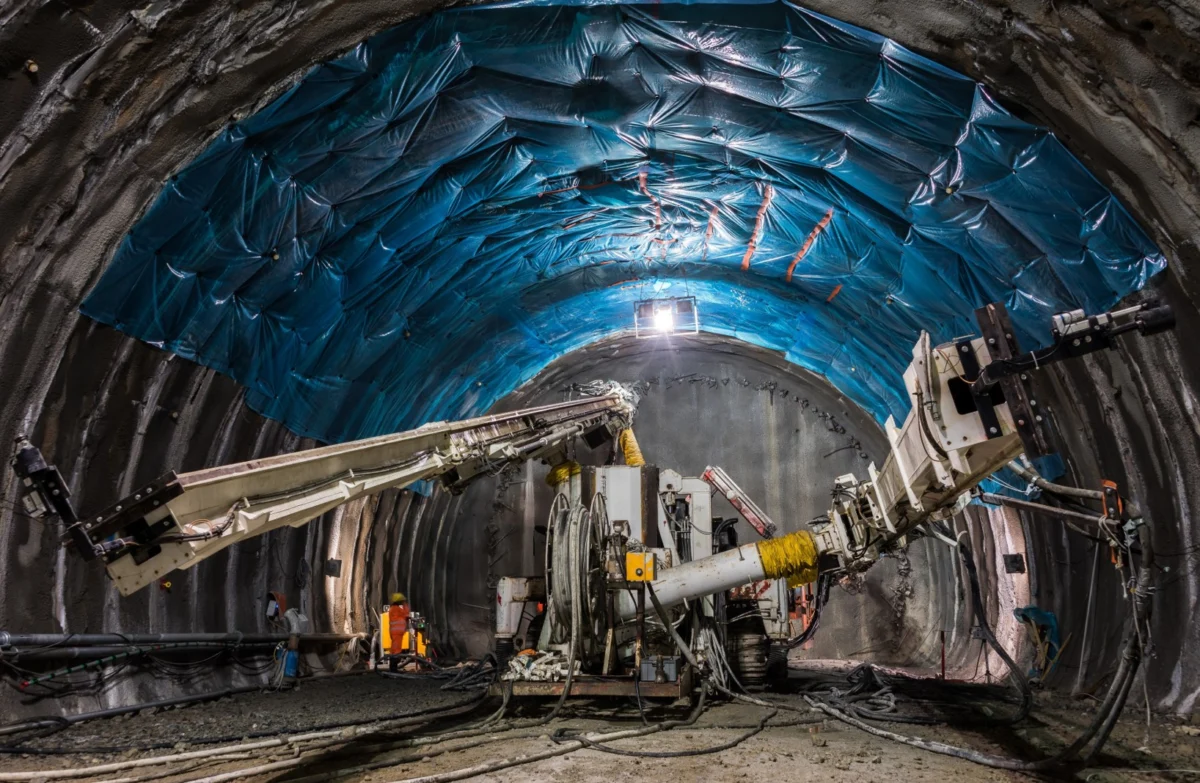
The landscape of European transit is on the precipice of a monumental transformation. Rete Ferroviaria Italiana (RFI), the state-owned infrastructure manager responsible for Italy’s rail network, has officially launched a landmark tender worth €1.5 billion. This procurement process marks the commencement of the design and construction phase for the southern access route of the Brenner Base Tunnel (BBT), connecting Fortezza to Ponte Gardena. As the cornerstone of the Scandinavian-Mediterranean TEN-T corridor, this project represents more than just steel and concrete; it is the vital link in a high-speed logistical chain intended to redefine North-South transit across the European continent.
Main Facts: A Gateway Through the Alps
The proposed 22.5-kilometer railway connection is a masterwork of modern civil engineering. Designed to act as the primary southern artery for the BBT, the project entails the construction of two twin-bored tunnels that will pierce the rugged Alpine terrain. The structural composition of this extension includes the 15.4-kilometer Scaleres tunnel and the 6.3-kilometer Gardena tunnel, linked seamlessly by a bridge spanning the Isarco River.
The financial scope of the project is as significant as its engineering requirements. With a total investment valuation of €1.52 billion, the tender specifically earmarks €1.15 billion for the rigorous demands of design and construction. Funding for this endeavor is secured through a comprehensive planning agreement between RFI and the Italian Ministry of Transport, reflecting the government’s long-term commitment to infrastructure modernization.
The tender process is currently moving at an accelerated pace, with the deadline for submission set for October 12, 2020, and the formal opening of bids scheduled for the following day. This rapid timeline underscores the urgency of the project, which is strategically slated for completion in 2025 to coincide with the opening of the main Brenner Base Tunnel.
Chronology: A Decade of Planning and Compliance
The road to this tender has been paved with years of meticulous bureaucratic and diplomatic maneuvering. The genesis of the current project can be traced back to 2017, when the Inter-ministerial Committee for Economic Planning (CIPE) officially granted approval for the development.
However, the project’s legitimacy relies heavily on local consensus. Following the 2017 approval, RFI engaged in an extensive series of negotiations with the Bolzano Province and eight specific municipalities—Fortezza, Velturno, Bressanone, Varna, Chiusa, Laion, Ponte Gardena, and Funes. These agreements ensured that the project not only met national transport goals but also addressed local environmental and social concerns.
Furthermore, the project has established a rigorous framework for transparency and integrity. In October 2018, RFI solidified a "legality protocol" with the Government Commissariat for the Province of Bolzano. This agreement was specifically crafted to prevent the infiltration of organized crime into the construction supply chain, ensuring that every euro spent is subject to strict anti-corruption oversight. Additionally, the Environmental Observatory Consortium, which has monitored the development from its inception, has expanded its operational scope to oversee the technical and ecological impacts of this specific access section.
Supporting Data: The Scale of the Scandinavian-Mediterranean Corridor
To understand the importance of the Fortezza-Ponte Gardena connection, one must view it within the broader context of the Scandinavian-Mediterranean TEN-T (Trans-European Transport Network) corridor. This corridor is one of the most critical logistical arteries in Europe, stretching from the northern ports of Finland down to the Mediterranean shores of Italy.
The Brenner Base Tunnel itself is a feat of unparalleled magnitude. Once completed, it will stretch 64 kilometers between Tulfes/Innsbruck and Fortezza. By removing the steep gradients of the existing historical Brenner line, the new infrastructure will allow for significantly heavier freight trains and increased passenger speeds.
Key performance indicators for the project include:
- Total Tunnel Length (Southern Extension): 22.5 km.
- Tunnel Components: Scaleres (15.4 km) and Gardena (6.3 km).
- Total Investment: €1.52 billion.
- Target Completion: 2025 (synchronized with the BBT).
- Strategic Impact: Enhancement of the Munich-Verona rail axis, facilitating a shift from road to rail freight.
By lowering the peak altitude of the Brenner crossing, the project drastically reduces the energy required for freight locomotives to traverse the Alps, effectively lowering the carbon footprint of European logistics.

Official Responses and Stakeholder Alignment
The project enjoys strong support from both central and regional authorities. The Italian Ministry of Transport has framed this investment as an essential component of the "Green Deal" for European transport, emphasizing the transition from heavy road haulage to electrified rail transit.
Local stakeholders in Bolzano have highlighted the importance of the Environmental Observatory Consortium. By involving local municipalities in the governance of the construction process, RFI has managed to mitigate the traditional resistance often encountered in large-scale Alpine infrastructure projects. The mayors of the eight involved municipalities have expressed that while the construction period will be challenging, the long-term noise reduction and the environmental benefits of shifting thousands of trucks off the Brenner Pass highway justify the temporary disruption.
The RFI has repeatedly stated that its primary objective—beyond the physical construction—is the "guarantee of legal and ethical integrity." By proactively addressing the potential for organized crime through the 2018 protocol, the infrastructure manager has set a benchmark for future public-private works in the region.
Implications: A New Era for European Transit
The implications of the Fortezza-Ponte Gardena tender reach far beyond the borders of Italy.
Economic Implications
For the European Union, the completion of the southern extension is a prerequisite for realizing the full economic benefit of the Brenner Base Tunnel. Currently, the "bottleneck" effect at the Alpine crossing restricts the volume of goods that can flow between the industrial heartlands of Germany and the Mediterranean hubs of Italy. Once operational, the increased capacity will significantly reduce transit times, lowering logistical costs for manufacturers across the continent.
Environmental Implications
The environmental mandate is clear. The Alpine region is ecologically sensitive, and the constant flow of heavy-duty vehicles across the Brenner Pass has been a source of air pollution and noise for decades. By providing a high-capacity, low-gradient rail alternative, the project is expected to divert a substantial percentage of freight traffic from road to rail, contributing directly to Italy’s and the EU’s climate goals.
Geopolitical Implications
The project strengthens the integration of the European rail market. By harmonizing technical standards and infrastructure capacity between Austria and Italy, the BBT and its southern extension serve as a physical manifestation of European unity. It transforms the Alps from a formidable natural barrier into a manageable and efficient passage.
Conclusion: Looking Ahead to 2025
As the October 2020 deadline for tender submissions approaches, the international engineering and construction community is watching closely. The project represents a rare convergence of long-term strategic vision, massive public investment, and a rigid commitment to legal and environmental standards.
The successful bidder will not merely be constructing a tunnel; they will be tasked with executing one of the most complex infrastructure projects of the early 21st century. The synchronization of the Fortezza-Ponte Gardena section with the opening of the main Brenner Base Tunnel in 2025 will signal a new chapter in European mobility. When the first train travels through the new tunnels, it will mark the end of a decades-long struggle to modernize one of the most critical transit points in the world.
For the residents of the Bolzano province, the transport industry, and the European Union at large, the next five years of construction will be a rigorous test of logistical prowess. However, the reward—a faster, cleaner, and more efficient corridor connecting the heart of Europe to the Mediterranean—is a prize that promises to pay dividends for generations to come. The tender launched by RFI is the first step in realizing this ambitious future, turning a vision of alpine transit into a concrete, steel-bound reality.

