

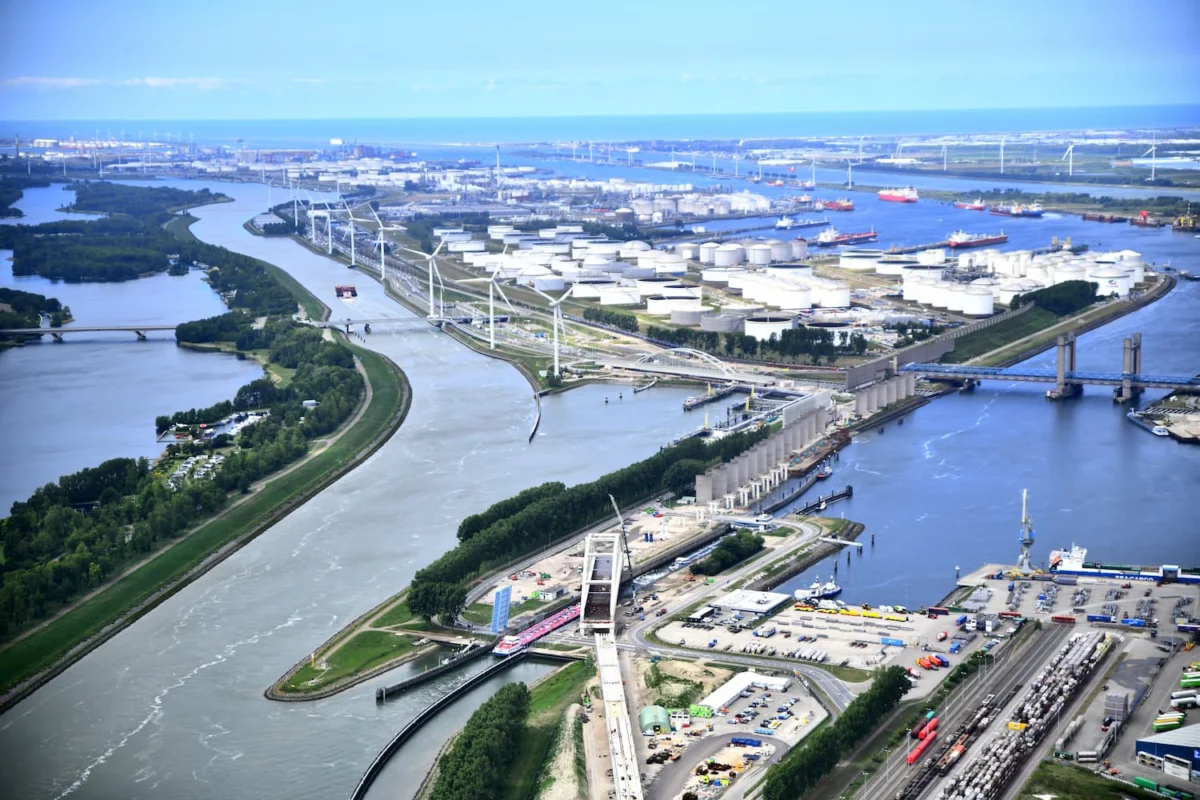
BRUSSELS / ROTTERDAM — In a monumental step toward achieving Europe’s ambitious climate neutrality goals, the European Commission has awarded a substantial EUR 25 million grant to the Port of Rotterdam Authority and a formidable international alliance. Comprising 45 entities—including major port authorities, industry-leading companies, and premier knowledge institutes—the consortium is set to roll out 10 targeted pilot and demonstration projects. These initiatives are specifically designed to revolutionize port operations through sustainable, smart, and multimodal logistics.
The multi-year initiative, officially designated under the acronym MAGPIE (sMArt Green Ports as Integrated Efficient multimodal hubs), is slated to run for five years. Funded through the European Commission’s Horizon 2020 Green Deal program, the project addresses the urgent need to decarbonize Europe’s critical transport gateways, ensuring that sea ports and their surrounding ecosystems evolve into zero-emission powerhouses.
Main Facts
The MAGPIE initiative represents one of the most comprehensive cross-border collaborations in European maritime and logistics history. At its core, the project seeks to bridge the gap between theoretical green energy concepts and practical, large-scale industrial deployment.
Key elements of the MAGPIE initiative include:
- The Funding: A EUR 25 million grant provided by the European Commission under the Horizon 2020 Green Deal framework, which earmarks funds specifically for research into increasing the sustainability of logistics operations in sea ports and airports.
- The Consortium: A powerhouse alliance of 45 partners, spearheaded by the port authorities of Rotterdam (Netherlands), DeltaPort (Germany), Haropa Port (France—encompassing Le Havre, Rouen, and Paris), and Sines (Portugal). This leadership is backed by 10 research institutes and over 30 private companies spanning six European nations: the Netherlands, Germany, France, Portugal, Denmark, and Sweden.
- The Master Plan: A central output of the consortium will be the development of a comprehensive master plan. This strategic roadmap will dictate how transport within, to, and from European ports can achieve absolute carbon neutrality by 2050, complete with mandatory milestones and actionable steps for 2030 and 2040.
- Alternative Energy Vectors: The project will test, refine, and scale multiple renewable fuels and energy carriers, including green hydrogen, large-scale electric battery systems, ammonia, and bio-LNG.
- Operational Pilots: Ten distinct pilot and demonstration projects will tackle untested links in the energy supply chain, focusing on production, transport, storage, fuel distribution, and electrical charging infrastructure.
Chronology: The Pathway to MAGPIE
The genesis of the MAGPIE project is the result of years of escalating climate commitments, strategic networking, and rigorous proposal development across Western Europe’s industrial corridors.
- Pre-2020: The Foundation of Green Port Strategies: Individual European ports, most notably Rotterdam, Haropa, and Sines, began implementing localized carbon-reduction strategies. Recognizing that ports are complex ecosystems involving maritime shipping, rail, road transport, and heavy industry, authorities realized that isolated efforts would yield limited results.
- Late 2019 / Early 2020: Introduction of the European Green Deal: The European Commission launched the European Green Deal, aiming to make Europe the world’s first climate-neutral continent by 2050. Within this framework, specialized calls for proposals were established under Horizon 2020 to focus on greening European transport and logistics hubs.
- 2020–2021: Consortium Formation: Recognizing the scale of the challenge, port authorities in the Netherlands, Germany, France, and Portugal joined forces with academic heavyweights and industry pioneers. They pooled their expertise to craft a unified research proposal that would address the entire multimodal chain rather than isolated port segments.
- Mid-2021: Grant Award and Formal Launch: The European Commission formally evaluated and approved the proposal, awarding the EUR 25 million budget under the Horizon 2020 Green Deal program. The MAGPIE project officially kicked off its five-year timeline, setting the stage for collaborative engineering and testing.
- 2021–2026 (The Project Lifecycle): The five-year execution phase is divided into iterative testing phases. Early years focus on baseline analysis and launching the initial pilot projects—such as advanced rail logistics and shore-power solutions—culminating in the finalization of the 2050 decarbonization master plan toward the end of the decade.
Supporting Data and Technical Scope
The transition to zero-emission port operations requires a nuanced understanding of energy carriers, as no single fuel is a silver bullet for all modes of transport. The MAGPIE research program acknowledges this diversity by focusing on four primary renewable energy vectors: green hydrogen, ammonia, bio-LNG, and advanced electric battery systems.
Addressing the Energy Matrix
Each energy carrier presents unique advantages and operational challenges:
- Green Hydrogen: Highly promising for heavy-duty hinterland transport and industrial feedstock, though large-scale bunkering, storage infrastructure, and high-purity production chains require further field testing.
- Ammonia: Gaining traction as a dense maritime fuel, but demands rigorous safety protocols regarding toxicity, handling, and bunkering technologies.
- Bio-LNG: Offers an immediate drop-in solution for transitional maritime shipping to reduce greenhouse gas emissions, though long-term availability of sustainable biomass remains a bottleneck.
- Electric Batteries: Ideal for port-internal vehicles, tugboats, and hybrid or fully electric locomotives, provided charging networks and grid capacities are sufficiently robust.
Unexplored Links in the Chain
While certain segments of these energy supply chains have been tested in controlled environments, many practical links from production to consumption remain unproven at an industrial scale. The MAGPIE consortium’s broad research program targets these exact blind spots, examining:
- Production and Sourcing: Ensuring that renewable energy inputs are truly green and scalable.
- Transport and Distribution: Moving volatile fuels safely across port zones and into hinterland corridors.
- Storage: Developing regulatory-compliant, large-scale storage facilities within densely populated industrial port areas.
- Bunkering and Charging: Implementing efficient physical infrastructure for refueling ships and recharging heavy land transport.
Spotlight on Innovative Pilot Projects
Among the 10 core demonstrations, several stand out for their technical ingenuity and direct application to railway and maritime logistics:

- The Hybrid-Electric Locomotive: The consortium is deploying an advanced electric battery-powered locomotive capable of drawing power from overhead catenary lines for primary motive power while simultaneously recharging its onboard high-capacity batteries. This dual-capability allows the locomotive to seamlessly transition away from electrified corridors to operate autonomously in non-electrified zones, such as complex railway marshalling yards, entirely eliminating local diesel emissions.
- Ammonia Bunkering: Exploring the technical and safety parameters required to safely transfer ammonia as a marine fuel to ocean-going vessels.
- Offshore Shore Power: Implementing high-capacity electrical power delivery from shore to ships moored offshore at specialized mooring buoys, allowing vessels to shut down auxiliary diesel generators while waiting outside the immediate berth.
- Digitalization and Automation: Integrating smart algorithms, automated data-sharing platforms, and artificial intelligence to optimize traffic flows, reduce idling times, and manage dynamic energy loads across the port grid.
Official Responses and Stakeholder Perspectives
The announcement of the EUR 25 million grant has been met with widespread enthusiasm from municipal leaders, corporate executives, and European policy-makers alike, underscoring the collaborative spirit of the MAGPIE alliance.
Representatives from the leading port authorities have emphasized that the climate crisis cannot be solved in a vacuum. By uniting North Sea, Atlantic, and Mediterranean gateways, the alliance bridges differing regional challenges—from the heavy industrial clusters of Rotterdam and the Rhine-Ruhr valley (DeltaPort) to the Atlantic maritime trade routes of Sines and the vital Seine axis managed by Haropa Port.
Industry partners within the consortium have pointed out that private-sector innovation thrives when backed by robust public funding mechanisms like Horizon 2020. Companies are increasingly eager to transition toward sustainable operations, but the commercial risks associated with unproven technologies—such as commercial-scale ammonia bunkering or specialized dual-mode electric locomotives—often require de-risking through cooperative European research grants.
European Commission officials have repeatedly highlighted the Green Deal as a blueprint for transforming the European economy into a modern, resource-efficient, and competitive model. By targeting ports—which act as the literal and figurative hinges between global maritime shipping, inland waterways, rail networks, and road transport—the Commission views projects like MAGPIE as critical linchposts for continental decarbonization.
Implications for the Future of European Logistics
The implications of the MAGPIE project extend far beyond the borders of the participating ports. As global supply chains face mounting regulatory pressure and consumer demand for verified sustainability, the successes—and lessons learned—from these 10 pilot projects will serve as a template for ports worldwide.
Transforming Hinterland Connections
Ports are only as green as the transport networks that feed them. By developing locomotives that utilize overhead lines and onboard batteries, MAGPIE directly addresses the notoriously difficult task of decarbonizing rail freight marshalling yards. Furthermore, the integration of smart logistics and digital automation platforms will drastically reduce congestion, lower energy consumption per container moved, and streamline multimodal handovers between cargo ships, trains, and trucks.
The 2050 Roadmap
Perhaps the most enduring legacy of the five-year research project will be the 2050 Master Plan. By establishing concrete, data-driven benchmarks for 2030 and 2040, the consortium is removing ambiguity for investors, terminal operators, shipping lines, and railway companies. Stakeholders will know precisely what infrastructure must be built, what safety regulations must be updated, and what technologies will dominate the future market.
Ultimately, the MAGPIE initiative transforms the European port sector from a historical source of industrial emissions into a vanguard of the green transition. By uniting 45 diverse organizations under a shared vision of smart, multimodal, and carbon-free logistics, the Port of Rotterdam and its international partners are laying the indispensable groundwork for a sustainable economic future.

