

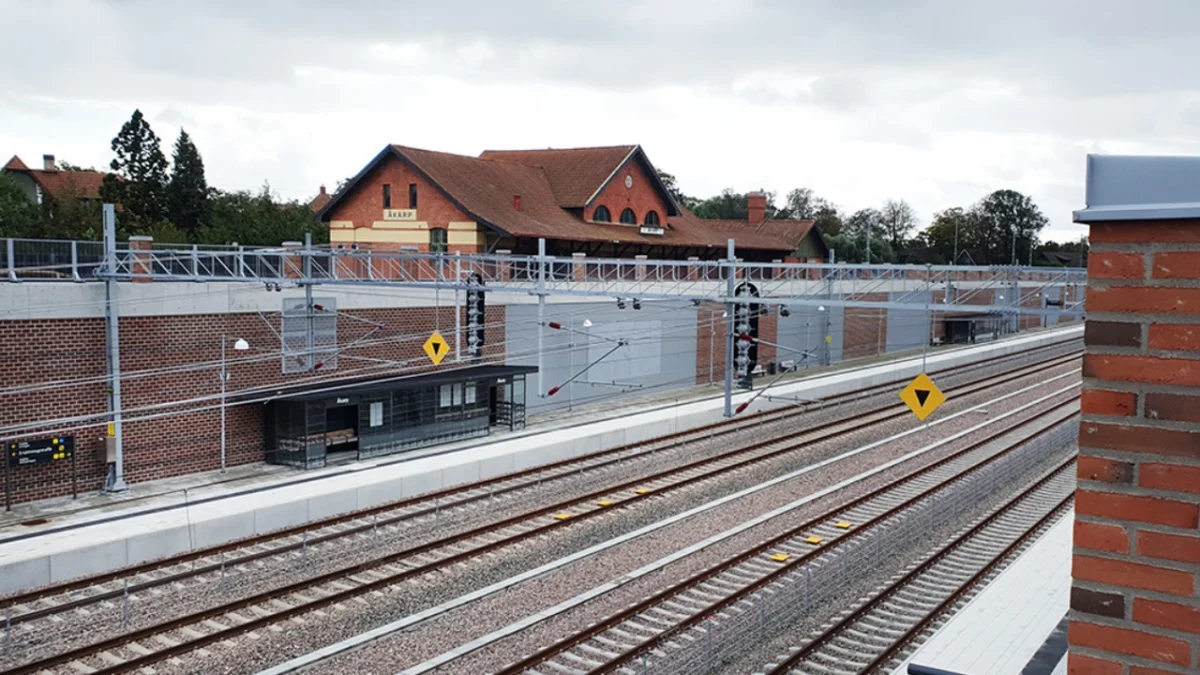
STOCKHOLM, SWEDEN — In what is widely regarded as one of the most technologically demanding and logistically intricate railway modernization initiatives in Scandinavian history, the Swedish Transport Administration (Trafikverket) has officially awarded Sibek a major, high-profile contract. Under this agreement, Sibek will spearhead the comprehensive implementation and commissioning of the European Rail Traffic Management System (ERTMS) across the bustling Malmö metropolitan area.
This landmark undertaking represents a decisive step forward in Sweden’s broader national strategy to harmonize its rail infrastructure with unified European standards, boost network capacity, enhance cross-border interoperability, and significantly elevate safety protocols. For Sibek, securing this multi-year mandate underscores its growing reputation as an elite partner for complex infrastructure engineering, cementing its role at the vanguard of Europe’s digital railway transformation.
Main Facts and Project Scope
The newly minted agreement places Sibek at the heart of a transformative technological shift. Spanning an execution window from late 2026 through 2031—with an embedded option for a two-year extension running up to 2033—the project will be delivered on a cost-reimbursable basis. Within Sibek’s corporate portfolio, this initiative stands out as one of its most financially substantial and operationally significant undertakings of the decade.
At its core, the project centers on the large-scale deployment of ERTMS Level 2 technology. Unlike legacy signaling systems that rely heavily on trackside physical light signals, ERTMS Level 2 utilizes continuous radio-based digital communication (via GSM-R and eventually Future Railway Mobile Communication System, or FRMCS) to transmit movement authorities and speed restrictions directly to a computerized driver machine interface inside the locomotive cab.
Key Project Parameters:
- Contractor: Sibek
- Client: Trafikverket (Swedish Transport Administration)
- Core Technology: European Rail Traffic Management System (ERTMS) Level 2
- Geographic Focus: Malmö metropolitan area and surrounding strategic sub-sections
- Timeline: Late 2026 to 2031 (with extension options through 2033)
- Contract Model: Cost-reimbursable
The geographical scope of the project encompasses six critical sub-areas within the Malmö region. Because Malmö serves as the bustling southern gateway of Sweden—connecting the domestic rail network directly to continental Europe via the iconic Øresund Bridge—maintaining seamless operational flow during the upgrade is a paramount concern for both the contractor and the transport authority.
Chronology and Implementation Roadmap
Given the sheer scale of the network transformations required, the project has been meticulously structured across three distinct operational phases. This phased approach is designed to mitigate risks, ensure rigorous testing cycles, and safeguard passenger and freight operations across one of Sweden’s busiest transit corridors.
Phase 1: Pre-Construction, Detailed Engineering, and Integration Design (2026–2027)
The initial phase will commence immediately upon the official project kick-off in late 2026. During this period, Sibek’s engineering teams will work hand-in-hand with Trafikverket to finalize detailed design specifications, conduct comprehensive site surveys, and map out the interface between the new digital technology and legacy interlockings. Because ERTMS Level 2 must interface seamlessly with existing rolling stock and adjacent rail sectors, this preparatory window will heavily feature digital simulations, laboratory testing of software logic, and rigorous risk assessments.
Phase 2: Staged Deployment and Infrastructure Integration (2028–2029)
The heart of the implementation phase will see physical and digital installation works ramp up across the six designated sub-areas of the Malmö metropolitan region. This phase will require delicate night-time engineering windows, weekend blockades, and carefully planned service diversions. Civil works, trackside equipment installation (such as balises and radio masts), and power supply upgrades will be executed concurrently with the reconfiguration of control center software.
Phase 3: Commissioning, Testing, and Final Handover (2030–2031)
The final phase focuses on rigorous trial runs, dynamic testing under live operating conditions, and the official phased cutover to the new signaling system. This stage culminates in the historic "first commissioning" of ERTMS within a major Swedish urban center. Following the successful switchover, a monitoring and stabilization period will extend through 2031, with client options extending support services through 2033 to ensure long-term reliability.
Supporting Data and Technical Complexity
Deploying advanced digital signaling in a densely populated metropolitan environment is vastly different from rolling out systems across rural or remote rail corridors. The Malmö region handles a dense mix of high-speed passenger trains, regional commuter services (Pågatåg and Öresundståg), and heavy international freight traffic moving between Sweden, Denmark, and the rest of mainland Europe.
Why Malmö Poses Unique Engineering Challenges:
- Urban Density and Space Constraints: Installing new cable routes, power cabinets, and balises within tight urban corridors requires precise spatial planning that avoids disrupting city utilities and urban spaces.
- High Traffic Volume: Every minute of track downtime carries heavy economic consequences. Minimizing service interruptions while executing heavy engineering works demands flawless logistical choreography.
- Multi-System Interoperability: Trains operating through Malmö frequently cross international borders, meaning the onboard and trackside systems must flawlessly communicate across different national variants of ERTMS.
According to industry analysts, the Malmö project acts as a vital bellwether for Trafikverket’s nationwide modernization timeline. Sweden, like many European Union member states, is legally bound under the EU’s deployment plan to transition its core network to ERTMS, moving away from fragmented, aging national legacy systems (such as the Swedish ATC system) toward a unified, interoperable European standard.
Official Responses and Stakeholder Perspectives
The significance of the contract has drawn prominent commentary from both corporate leadership and the broader rail sector, highlighting the transformative nature of the partnership between Sibek and Trafikverket.
David Berg, Chief Executive Officer of Sibek, expressed immense pride in securing the contract and emphasized its strategic value for the company’s future trajectory:
"This is an extremely interesting and important project for Sibek. We will be responsible for the first commissioning of the new ERTMS signalling system in a Swedish metropolitan area. In addition to the long-term employment impact, the experience gained is highly valuable for the company. Trafikverket has indicated that ERTMS implementation will proceed at a fast pace across the industry."
Berg’s remarks point to a broader industry reality: engineering firms that successfully master urban ERTMS deployments today will find themselves uniquely positioned to capture a lion’s share of upcoming European signaling contracts as nations race to meet EU rail digitalization deadlines.
Trafikverket representatives have similarly echoed the strategic urgency of the initiative. Speaking on the broader modernization rollout, transport officials noted that modernizing urban nodes like Malmö is essential for unlocking future capacity gains. By replacing physical line-side signals with dynamic cab-signaling, the rail network can safely support tighter headtimes between trains, effectively increasing the volume of passengers and freight that the existing rail tracks can handle without the need to lay expensive new parallel tracks.
Broader Implications for Sweden’s Rail Future
The ramifications of Sibek’s appointment extend far beyond the borders of Malmö. This project serves as a crucial testbed for urban digital signaling deployment in the Nordic region.
1. Catalyst for National ERTMS Acceleration
Because Malmö is Sweden’s first major metropolitan area to undergo a full ERTMS transition, the lessons learned, methodologies perfected, and operational bottlenecks resolved by Sibek and Trafikverket will form a vital blueprint for subsequent urban rollouts in Gothenburg, Stockholm, and other regional hubs.
2. Enhanced Safety and Operational Efficiency
The integration of ERTMS Level 2 fundamentally upgrades the safety architecture of the railway. Continuous supervision of train speeds by computer algorithms drastically reduces the risk of human error, such as Signal Passed at Danger (SPAD) incidents. Furthermore, smoother acceleration and deceleration profiles enabled by continuous data streams lead to lower energy consumption and reduced wear and tear on both rolling stock and track infrastructure.
3. Boosting Cross-Border Mobility
As a key node on the Scandinavian-Mediterranean TEN-T Core Network Corridor, Malmö’s transition to standard European signaling removes technical friction at the border with Denmark. Freight operators and international passenger services will no longer face costly locomotive changeovers or delays caused by incompatible signaling technologies, directly supporting the European Union’s climate goals of shifting freight and passenger transport from highways to railways.
Looking Ahead
As preparations ramp up toward the official start date in late 2026, all eyes will be on Sibek and Trafikverket. The success of this complex undertaking will not only redefine the skyline and subterranean infrastructure of southern Sweden but will also set a benchmark for modern railway engineering across Europe for decades to come.

