

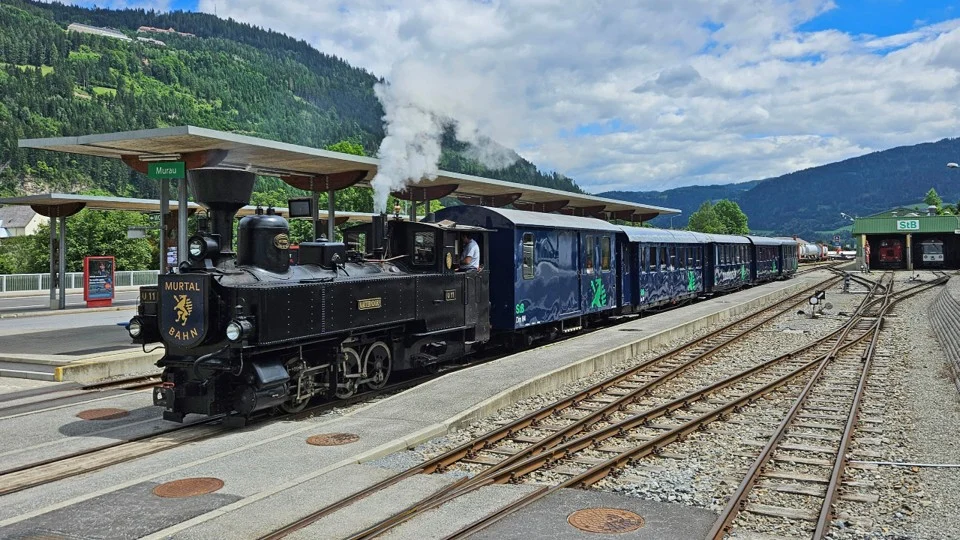
VIENNA, AUSTRIA — In a landmark decision for regional alpine mobility, the government of the Austrian state of Styria has formally committed to the comprehensive modernization and electrification of the historic Murtalbahn narrow-gauge railway. Stretching across picturesque mountain valleys between Unzmarkt and Tamsweg, this vital piece of regional infrastructure is preparing to leap into a sustainable future.
The ambitious modernization roadmap involves transitioning the 760 mm narrow-gauge line from legacy operations to modern electric traction, alongside a massive cross-regional cooperative procurement initiative for new Electric Multiple Units (EMUs). This strategic move aims to safeguard the line’s long-term viability, significantly cut down travel times, and align regional rail transit with Austria’s broader national climate and decarbonization objectives. However, the realization of this grand vision hinges on robust financial collaboration between the federal government and neighboring federal states.
Main Facts
The Murtalbahn revitalization project is a sweeping infrastructure and rolling stock overhaul designed to secure the line’s future well into the 21st century.
- Geographical Scope: The Murtalbahn operates across the Austrian states of Styria and Salzburg, traversing a scenic narrow-gauge route between the towns of Unzmarkt, Murau, Predlitz, and Tamsweg.
- Track Gauge: The railway utilizes the rare 760 mm (Bosnian gauge) standard, a historic track width shared by only a select few remaining narrow-gauge lines in Austria.
- Infrastructure Upgrades: The project entails full electrification of the route, comprehensive track modernization, depot and workshop adaptations to accommodate electric stock, and significant civil engineering enhancements to optimize the alignment.
- Fleet Modernization: To replace the aging fleet—which is projected to reach the end of its technical lifecycle by the mid-2030s despite recent comprehensive overhauls—the state plans to procure five new state-of-the-art electric railcars for the Murtalbahn.
- Joint Procurement Working Group: Because the 760 mm gauge is rare globally, a standalone vehicle order would be economically unviable. To solve this, the operators of the Murtalbahn, Zillertalbahn, and Pinzgauer Lokalbahn have formed a joint working group to collectively procure 17 EMUs.
- Financial Scale: The total cost for Styria’s share of the Murtalbahn infrastructure overhaul and vehicle procurement amounts to EUR 169 million. The green light from the Styrian state government remains strictly contingent upon securing proportional co-financing from the Austrian federal government and the state of Salzburg.
- Operational Performance Improvements: Once modern electric trains are deployed and route upgrades are completed, the travel time between Unzmarkt and Murau is expected to plummet dramatically from 36 minutes down to just 24 minutes.
- Service Continuity: The current ten-year public transport service contract for the Murtalbahn, operated by Steiermarkbahn und Bus GmbH (StB), remains valid until 2030 and serves as the baseline for future operations under the modernized system.
Chronology of the Murtalbahn Modernization
The path toward electrifying and modernizing the Murtalbahn is the culmination of years of strategic transport planning, technical evaluations, and evolving regional cooperation models.
Roots and Historic Operations
Opened in the late 19th century under the Austro-Hungarian Empire, the Murtalbahn was originally constructed to open up the economically vital Mur Valley, supporting local forestry, agriculture, and industrial transport. Over the decades, as road networks expanded, the line transitioned primarily into a vital commuter route and a beloved tourist attraction, drawing rail enthusiasts from around the globe to its classic alpine vistas.
The Looming Technical Cliff (Early 2020s)
By the early 2020s, operators and regional transport planners recognized a looming operational crisis. Although the existing diesel rolling stock had undergone comprehensive mid-life overhauls and technical maintenance, age and wear meant they would inevitably reach the absolute end of their technical service lives by the mid-2030s. Operating diesel trains long-term was also increasingly at odds with Styria’s strict environmental targets.
The Gauge Dilemma and Collaborative Breakthrough (2023–2025)
A major roadblock facing narrow-gauge operators in Austria has always been the unique 760 mm track gauge. With mainstream European rail manufacturing heavily focused on standard gauge (1,435 mm), placing a small, isolated order for just five specialized railcars would result in exorbitant per-unit manufacturing costs that no regional budget could sustain.
Recognizing this market failure, transport authorities and railway operators across Austria’s remaining 760 mm networks—specifically the Zillertalbahn in Tyrol, the Pinzgauer Lokalbahn in Salzburg, and the Murtalbahn in Styria—began exploring structural cooperation. By pooling their fleet requirements into a single, unified order for 17 EMUs, the operators successfully manufactured a synthetic market demand.
The Strategic Decision (Mid-2026)
In June 2026, the state of Styria officially crossed the Rubicon. The regional government formally decided to back the electrification of the Murtalbahn and committed to participating in the joint EMU procurement framework. This decision laid the groundwork for the finalization of tender documents by the inter-state working group.
Supporting Data and Technical Scope
Transforming a heritage-infused, diesel-operated mountain railway into a modern, high-capacity electric transit corridor requires a deep dive into engineering, logistics, and economic planning.
The Economics of Joint Procurement
The decision to bundle orders across three distinct federal states is a masterclass in public sector procurement efficiency. By aggregating the demand to 17 total units:
- Unit Cost Reduction: Economies of scale allow manufacturers to amortize engineering and tooling costs across a larger production run, significantly lowering the purchase price per individual train.
- Standardized Maintenance: Future spare parts inventories, mechanic training regimes, and software updates can be shared or standardized across the participating lines, reducing long-term operational expenditures.
- Market Stimulus: Instead of receiving zero bids due to custom engineering constraints for a tiny fleet, rolling stock manufacturers now see a commercially viable tender worth competing for.
Infrastructure and Civil Engineering Requirements
Electrification is far more than simply stringing overhead catenary wires along existing tracks. The Murtalbahn modernization project encompasses a massive suite of interdependent upgrades:

- Power Supply Grid: Constructing sub-stations, transformers, and distribution grids capable of delivering reliable electric traction power through rugged, remote alpine terrain susceptible to extreme weather conditions.
- Track Geometry and Civil Works: Upgrading track beds, strengthening bridges, and optimizing curve radii to safely support faster running speeds without compromising passenger comfort.
- Signalling and Safety Systems: Integrating modern electronic interlocking, digital dispatch systems, and automated level crossing protections to comply with contemporary European safety standards.
- Depots and Workshops: Redesigning maintenance facilities in Murau and other hubs. Servicing high-voltage electric trainsets requires entirely different safety protocols, lifting equipment, and diagnostic tools compared to traditional diesel maintenance bays.
Financial Breakdown
Styria’s internal financial commitment stands at EUR 174 million (frequently cited around the EUR 169 million core infrastructure/vehicle split). However, because regional budgets are inherently limited, this investment strategy relies entirely on a tripartite funding model involving:
- The Austrian Federal Government (via national transit and infrastructure funds).
- The State of Styria.
- The State of Salzburg (owing to the cross-border nature of the route’s upper segments).
Official Responses and Stakeholder Perspectives
The announcement has elicited widespread enthusiasm from regional leaders, public transport advocates, and infrastructure planners, tempered by clear fiscal pragmatism regarding federal co-financing.
Claudia Holzer, Regional Councilor for Transportation and Infrastructure in the State of Styria, emphasized the collaborative nature and necessity of the project during her official policy briefing:
"The joint procurement initiative creates a real market where none previously existed, drastically reduces the price per unit, and generates invaluable future synergies across our narrow-gauge networks. The working group is currently in the final stages of finalizing the comprehensive tender documentation."
Holzer was careful, however, to contextualize the regional government’s approval within strict financial guardrails. The formal release of Styria’s EUR 169 million funding share is explicitly contingent upon matching co-financing commitments from the Austrian federal government and the neighboring state of Salzburg, adhering strictly to established national public transport funding guidelines.
Industry analysts and passenger advocacy groups have similarly praised the initiative. Representatives from Steiermarkbahn und Bus GmbH (StB)—which holds the current ten-year public transport operations contract on the Murtalbahn through 2030—noted that the transition to electric traction provides absolute clarity for long-term service planning. With the operating framework locked in until the end of the decade, StB can seamlessly transition its workforce and operational logistics to prepare for the arrival of the new EMUs in the 2030s.
Implications for Regional Development, Tourism, and Climate Goals
The modernization and electrification of the Murtalbahn carry profound implications that extend far beyond simple passenger transit metrics.
1. Decarbonization and Climate Targets
Austria has set aggressive national targets to achieve climate neutrality, with public transport playing a starring role in shifting modal splits away from private automobiles. Replacing aging diesel railcars with zero-emission electric rail units powered by renewable alpine hydroelectricity and solar energy eliminates thousands of tons of greenhouse gas emissions annually.
2. Economic Competitiveness and Commuter Mobility
Time is the ultimate currency for daily commuters. Slicing the travel time between Unzmarkt and Murau from 36 minutes down to 24 minutes represents a 33% reduction in travel time. This dramatic acceleration transforms the Murtalbahn from a slow legacy novelty into a fast, competitive, and reliable backbone for regional commuting, education access, and job mobility within the Mur Valley. Seamless schedule synchronization with mainline Austrian Federal Railways (ÖBB) at Unzmarkt will further integrate rural Styria into the national transit grid.
3. Boosting Sustainable Tourism
The Murtalbahn is not just a commuter line; it is a world-renowned scenic heritage railway that brings vital tourist revenue to local guesthouses, restaurants, and cultural sites. Modernizing the fleet ensures that visitors can continue to experience the breathtaking beauty of the Styrian and Salzburg Alps in comfort, while simultaneouslyBurnishing the region’s credentials as a leader in sustainable, low-impact alpine tourism.
4. A Blueprint for Other Narrow-Gauge Networks
The collaborative procurement model engineered by Styria, Salzburg, and Tyrol for the Murtalbahn, Zillertalbahn, and Pinzgauer Lokalbahn serves as an innovative blueprint for niche rail infrastructure across Europe. By proving that small-gauge operators can band together to achieve economies of scale, this project establishes a replicable framework for other specialized or historic rail networks facing similar fleet obsolescence crises in the modern era.
Conclusion
As the inter-state working group puts the finishing touches on the tender documentation, the Murtalbahn stands on the threshold of a golden new era. Backed by regional political will, innovative inter-state cooperation, and cutting-edge electric rail technology, this historic alpine railway is poised to shed its diesel past and steam confidently into a clean, fast, and sustainable future.

