

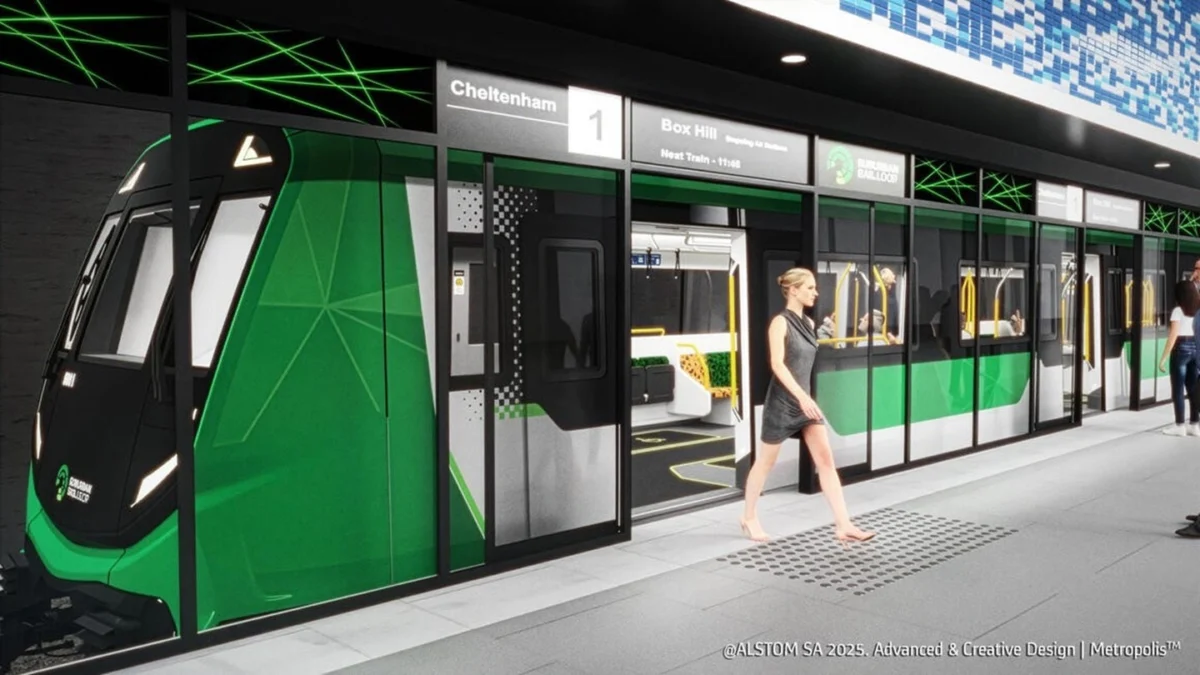
In a landmark development for Australia’s urban infrastructure, French rail giant Alstom has cemented its position as a cornerstone partner in the Suburban Rail Loop (SRL) East project in Melbourne. The company has secured a €1 billion ($1.17 billion) share of a broader €4.9 billion contract awarded to the TransitLinX Alliance. This ambitious project, spearheaded by the Suburban Rail Loop Authority (SRLA), represents one of the most significant investments in public transport history in the state of Victoria, promising to redefine how Melbourne’s middle suburbs connect to the city’s heart and surrounding regions.
The TransitLinX Alliance—a consortium featuring Alstom alongside industry leaders John Holland, KBR, WSP, and RATP Dev—has been tasked with delivering the technological and operational backbone of the SRL East. For Alstom, this win is not merely a commercial success but a strategic expansion of its footprint in the Asia-Pacific region, reaffirming its expertise in delivering high-capacity, automated, and sustainable transit solutions.
The Scope of Work: A Turnkey Technological Marvel
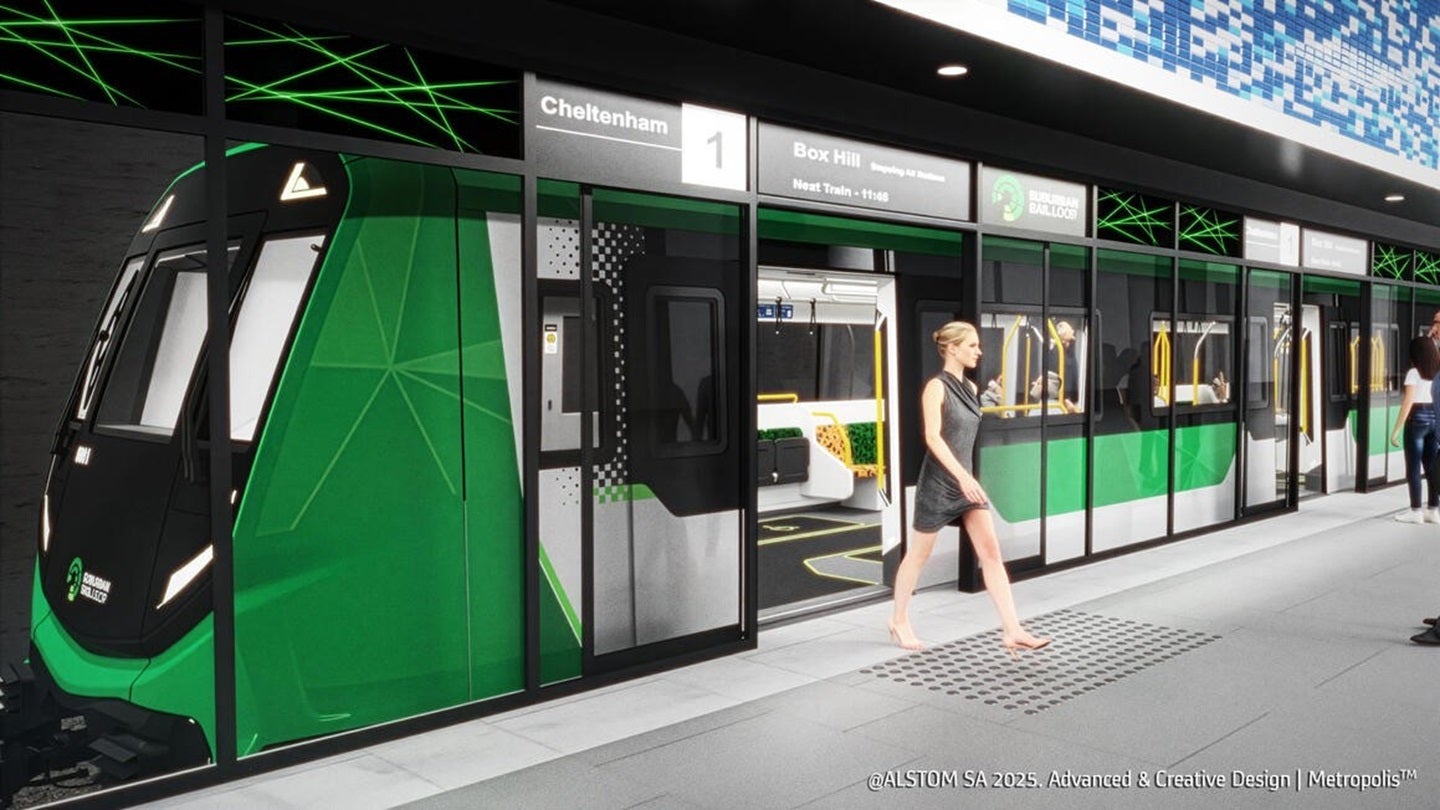
Alstom’s contribution to the SRL East project is comprehensive, spanning the entire lifecycle of the rolling stock and associated digital infrastructure. Under the terms of the agreement, the company is responsible for the design, manufacture, and delivery of 13 four-car automated Metropolis metro trains. These are not standard commuter vehicles; they represent the pinnacle of modern rail engineering.
Manufacturing and Local Integration
The Metropolis trains will be manufactured at Alstom’s Dandenong facility in Victoria. This commitment to local manufacturing serves as a vital economic engine for the region, preserving high-skill engineering jobs and fostering a robust domestic supply chain. By leveraging local know-how alongside its global technological portfolio, Alstom ensures that the trains are perfectly calibrated for the unique operational requirements of Melbourne’s climate and commuter patterns.
Digital Infrastructure and Signalling
At the heart of the SRL East will be Alstom’s advanced Urbalis Forward Communications-Based Train Control (CBTC) system. This technology allows for Grade of Automation 4 (GoA4)—the highest level of automation in the rail industry. In this mode, the trains operate without human intervention, allowing for high-frequency service and optimized energy efficiency. By removing the need for a driver on board, the system enables significantly tighter headways, which is critical for meeting the projected passenger demand of the 90km orbital railway.
Long-Term Maintenance: FlexCare Perform
Beyond construction, Alstom will provide its FlexCare Perform maintenance solution for a 15-year term. This comprehensive package covers the entire train fleet, signalling systems, and essential infrastructure. To facilitate this, a new, state-of-the-art maintenance facility is slated for development in Heatherton, Melbourne. This site will serve as the hub for all maintenance operations, ensuring that the SRL fleet remains in peak condition throughout its operational life.
Project Chronology: Building the Orbital Future
The SRL East project is the first phase of an ambitious 90km orbital rail line. While the project is currently in the early stages of its delivery phase, the roadmap toward its 2035 commissioning is meticulously planned:
- Project Inception: The Suburban Rail Loop was conceptualized as a solution to Melbourne’s growing congestion, aiming to connect major rail lines through the middle suburbs.
- Consortium Selection: Following an extensive international bidding process, the TransitLinX Alliance was selected by the Suburban Rail Loop Authority to undertake the design, construction, and operation of the East section.
- Contract Award (Present): The formalization of the €4.9 billion contract, including Alstom’s €1 billion package, marks the transition from planning to execution.
- Manufacturing Phase (2025–2030): Construction of the Metropolis trains will occur at the Dandenong facility, with rigorous testing protocols to follow.
- Infrastructure Development (2026–2033): The construction of the 26km tunnel and the six underground stations will run in parallel with the rolling stock development.
- Commissioning and Testing (2034): Full-scale integration testing of the signalling and trains will commence.
- In-Service Date (2035): The official launch of the SRL East, with the first Metropolis trains carrying passengers across the new line.
Supporting Data and Technical Specifications
The SRL East is a 26km subterranean link featuring six underground stations situated near major employment, education, and health hubs. The decision to adopt the Metropolis platform is driven by data:
- Train Configuration: Four-car automated sets, designed for high-density urban transit.
- Automation Level: Grade of Automation 4 (GoA4), allowing for driverless operation.
- Core Technology: Urbalis Forward CBTC, ensuring real-time monitoring, precision braking, and optimized scheduling.
- Operational Lifespan: 15-year guaranteed service period under the FlexCare Perform agreement.
- National Context: This project will deliver Australia’s second driverless train fleet, following the success of the Sydney Metro, which launched in 2019 and serves as a blueprint for the reliability and efficiency of Alstom’s automated systems.
Official Responses: Strengthening the Partnership
The announcement has been met with enthusiasm from both Victorian government officials and Alstom’s leadership, who view the project as a milestone in the state’s transport history.
Pascal Dupond, Managing Director of Alstom Australia and New Zealand, highlighted the synergistic nature of the deal:
"This contract award further deepens our partnership with the Victorian Government to deliver the rail transport priorities of the state. The Suburban Rail Loop solutions Alstom will provide draw from a range of our leading global technologies across rolling stock, signalling, and services, complemented by our local know-how in Victoria, which we uniquely bring to our customers."
Ling Fang, Alstom’s President for the Asia-Pacific region, emphasized the global scale and significance of the project:
"As the world’s leading pure rail player, we bring comprehensive turnkey solutions to meet the needs of our customers in Australia and the wider Asia-Pacific region. This project is of global significance in its ambition and scale, and Melbourne joins the ranks of other leading global cities in deploying Alstom solutions to enable advanced rail passenger solutions."
Implications for Melbourne and the Rail Industry
The impact of the SRL East on Melbourne cannot be overstated. By creating an orbital link, the project will fundamentally alter the "hub-and-spoke" nature of the existing network, which currently forces many commuters to travel into the city centre just to reach another suburb.
Economic and Urban Development
The six underground stations will act as catalysts for urban renewal. By concentrating transit-oriented development around these stations, the Victorian government expects to stimulate significant economic growth, housing development, and accessibility to essential services. For residents in the middle suburbs, the project represents a massive reduction in travel times and a viable alternative to car-centric commuting.
Industry Leadership
For the rail industry, the project serves as a proving ground for the integration of driverless technology in Australian cities. The success of the Sydney Metro provided the confidence required for this larger-scale deployment in Melbourne. If the SRL East meets its targets, it will likely accelerate the adoption of automated rail solutions in other Australian capital cities, setting a new standard for performance, safety, and reliability.
Environmental Sustainability
Aligned with global net-zero goals, the fully electric Metropolis trains will significantly reduce the carbon footprint of Melbourne’s public transport sector. By shifting thousands of daily car trips to an efficient, high-frequency rail network, the SRL East is a critical component of Victoria’s broader strategy to combat climate change and improve air quality in the metropolitan area.
A Turnkey Future
Alstom’s role as both manufacturer and maintainer illustrates a broader trend in the rail industry: the shift toward "turnkey" contracts. By holding responsibility for the entire system—from the software in the signalling room to the mechanical health of the bogies—Alstom can ensure seamless integration and accountability. This holistic approach minimizes the "finger-pointing" that often occurs when different vendors manage separate aspects of a rail system, ultimately resulting in a more reliable experience for the passenger.
Conclusion
The €1 billion contract for the Suburban Rail Loop East is more than just a procurement deal; it is a long-term commitment to the future of Melbourne’s urban mobility. As Alstom gears up at its Dandenong facility, the eyes of the global transport community remain fixed on this project. With a blend of international technological prowess and deep-rooted local expertise, the project is poised to deliver a world-class transit experience, transforming the daily lives of millions of Melburnians and setting the benchmark for 21st-century rail infrastructure. As 2035 approaches, the promise of a connected, automated, and efficient Melbourne draws ever closer to reality.

