

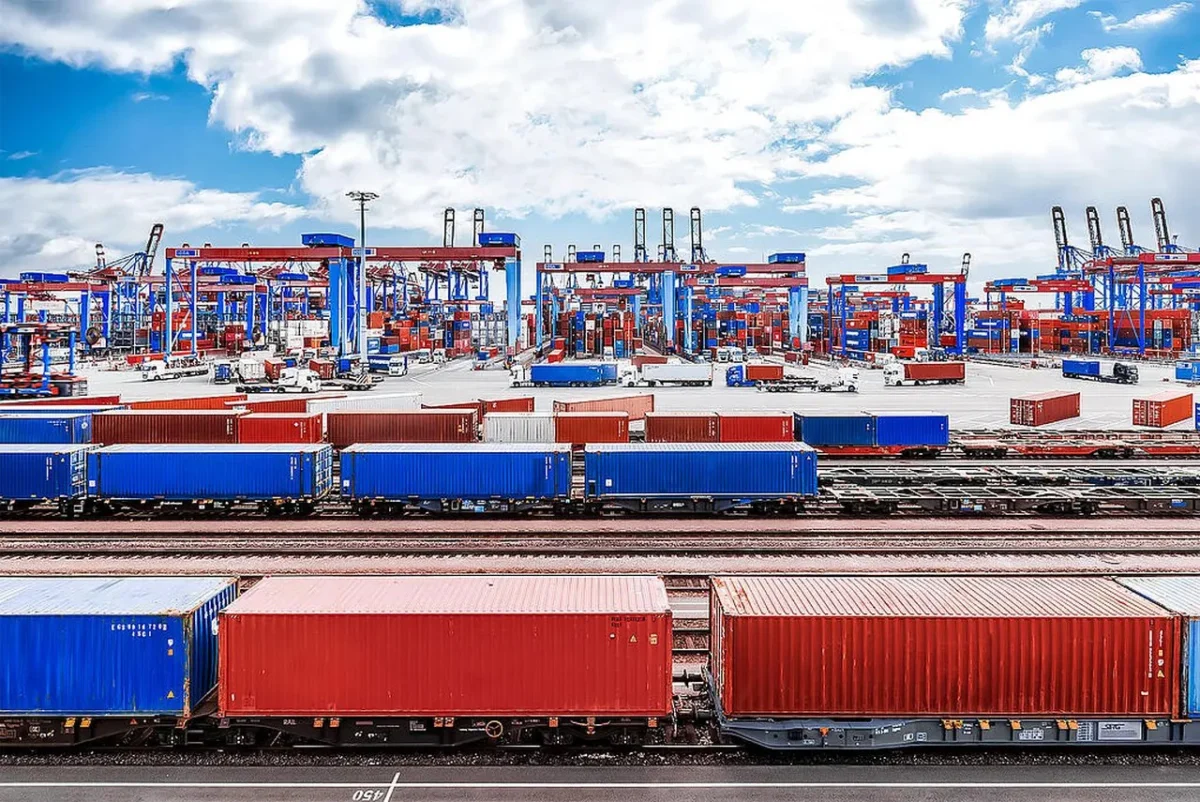
HAMBURG, Germany — Persistently low water levels along the Rhine River are wreaking havoc on European logistics networks, severely constraining inland waterway navigation and driving up shipping costs for cargo owners across the continent. In response to this unfolding crisis, the Port of Hamburg has stepped forward to actively promote its established, regular rail connections linking its maritime terminals with the vital western German logistics hubs of Cologne and Duisburg.
As barge operators grapple with draft restrictions that limit vessel payloads, extend transit times, and necessitate costly operational workarounds, Hamburg’s robust rail infrastructure offers a reliable, predictable, and environmentally sustainable alternative. While the disruption is rippling across major ports in Northwest Europe—most notably Rotterdam and Antwerp—Hamburg is positioning its existing intermodal rail services as an operational lifeline to maintain unbroken freight flows for both imports and exports.
Main Facts
The core of the current logistical challenge lies in the vulnerability of inland waterway transport to meteorological conditions. The Rhine River serves as the economic artery connecting the industrial heartland of western Germany to the North Sea ports. When prolonged dry spells cause water levels to plummet, river barges cannot carry full loads. To compensate, operators are forced to lighten vessel drafts, deploy additional barges for the same volume of freight, or scramble to shift containers onto already stretched road and rail networks.
To mitigate these pressures, the Port of Hamburg is highlighting robust, high-frequency combined transport services operated by prominent German logistics specialists:
- HGK Logistics and Intermodal: A leading player specializing in European rail and intermodal freight solutions.
- IGS Intermodal Container Logistics: An established logistics operator managing seamless container flows between maritime gateways and inland terminals.
These existing rail corridors bypass river navigation constraints entirely. Export containers originating in Cologne and Duisburg can be railed directly to Hamburg’s advanced maritime terminals for immediate loading onto deep-sea vessels. Conversely, imports unloaded in Hamburg can be efficiently moved westward via rail directly to Cologne and Duisburg for regional distribution.
Beyond avoiding the immediate bottlenecks of the Rhine, the Port of Hamburg emphasizes that rail transport delivers superior schedule predictability, shields supply chains from seasonal weather anomalies, provides a cost-effective alternative to fragmented barge operations, and significantly lowers the carbon footprint of inland freight distribution.
Chronology of the Rhine Low-Water Crisis and Modal Shift
The vulnerability of the Rhine corridor is not a novel phenomenon, but the frequency and severity of low-water episodes have escalated significantly in recent years due to changing climatic patterns.
- Early Summer: Unusually low precipitation and high temperatures across Central Europe begin to steadily depress water levels along key gauges of the Rhine, particularly at critical bottlenecks such as Kaub.
- Mid-Summer: Water levels drop below critical thresholds, forcing barge operators to implement low-water surcharges and enforce strict draft limits. Operators find themselves forced to shed up to 30% to 50% of a vessel’s normal cargo capacity.
- Late Summer to Present: As transit times lengthen and spot-market barge capacity tightens, supply chain delays compound across western German industrial zones. Shippers face escalating logistics costs and mounting uncertainty regarding delivery schedules.
- Current Phase: Recognizing the sustained nature of the disruption, the Port of Hamburg steps up communications with cargo owners, logistics managers, and freight forwarders. Rather than introducing unproven emergency services, port authorities actively promote the immediate utilization of already-operational, regular rail link schedules managed by HGK and IGS to absorb the displaced volumes.
Supporting Data and Infrastructural Capacity
The viability of Hamburg’s proposal rests upon the sheer scale and efficiency of its port rail network, which is widely recognized as one of the largest and most advanced in Europe.
Key Infrastructural Metrics:
- Daily Train Movements: Approximately 200 freight trains traverse the Port of Hamburg’s internal rail network every single day.
- Railcar Volume: More than 5,500 railcars are processed daily within the port area, ensuring continuous fluidity between maritime berths and inland rail corridors.
- Intercontinental Connectivity: The port’s extensive rail infrastructure provides direct, uninterrupted links to numerous industrial and logistics centers not only in Germany but across Central and Eastern Europe.
By leveraging this massive capacity, the rail corridors to Cologne and Duisburg absorb significant container surges without requiring new capital expenditures or prolonged network integration phases. While port authorities have not released precise figures detailing the exact margin of spare rail capacity currently available—nor ventured a prediction on when autumn rainfall might permanently normalize Rhine water levels—the existing infrastructure is fully equipped to scale operations in response to shifting market demand.
Official Responses and Industry Stakeholder Perspectives
Port authorities, logistics operators, and industry associations are closely monitoring the modal shift from water to rail.

Management at the Port of Hamburg has been careful to frame the current campaign not as a opportunistic marketing push for brand-new services, but as an educational and advisory initiative. Port officials stress that the primary objective is to direct cargo owners toward resilient, pre-existing solutions that can protect their supply chains from external shocks.
HGK Logistics and Intermodal and IGS Intermodal Container Logistics have both confirmed their readiness to absorb freight volumes diverted away from inland waterways. Representatives from both companies noted that their intermodal networks are flexible enough to tailor solutions to individual client requirements, ensuring that containers—whether carrying automotive parts, chemical products, or consumer goods—continue to move seamlessly between western industrial clusters and Hamburg’s deep-water quays.
Cargo owners and industrial shippers in the Ruhr Valley and the Cologne-Duisburg regions have expressed cautious optimism regarding the rail alternative. While rail freight generally incurs a higher baseline cost than a fully loaded barge during optimal weather conditions, the predictability and avoidance of severe delay penalties make scheduled rail services an increasingly attractive economic proposition during prolonged environmental crises.
Broader Economic and Logistical Implications
The current operational bottlenecks on the Rhine extend far beyond the immediate banks of the river, reshaping competitive dynamics across the entire North European port range.
Impact on Competitive Port Ranges
Ports such as Rotterdam and Antwerp traditionally handle the lion’s share of containerized cargo moving to and from the industrial powerhouse of western Germany via the Rhine corridor. When river levels drop, these ports face severe friction. The diminished capacity of river vessels forces logistics operators to either commission additional barges—driving up congestion and costs—or execute complex modal shifts to road and rail transport within heavily trafficked Dutch and Belgian transport corridors.
For the Port of Hamburg, this systemic vulnerability in the Benelux port region presents a strategic opportunity. By actively promoting its reliable rail links to Cologne and Duisburg, Hamburg can attract freight volumes that might otherwise experience chronic delays or capacity lock-outs in Rotterdam and Antwerp. This dynamic highlights the growing strategic importance of rail interoperability as a competitive differentiator for North Sea maritime gateways.
Long-Term Supply Chain Adaptability
The recurrent nature of low-water events on European rivers is forcing a permanent psychological and structural shift among supply chain managers. Heavy reliance on a single mode of transport—such as inland waterway navigation—is increasingly viewed as an unacceptable enterprise risk.
As a result, logistics strategies are rapidly evolving toward multimodal resilience. Companies are learning to build flexible routing frameworks that can dynamically switch cargo between barges, railcars, and trucks depending on real-time environmental and economic indicators.
Recommendations for Cargo Owners
In light of the ongoing uncertainty, the Port of Hamburg has issued clear operational guidance for businesses dependent on the western German logistics corridor:
- Advance Booking: Cargo owners and freight forwarders are strongly urged to book alternative rail capacity well in advance. As navigation restrictions persist, demand for slots on the Cologne-Duisburg-Hamburg rail corridors is expected to intensify.
- Proactive Supply Chain Planning: Shippers should audit their inventory buffers and collaborate closely with intermodal providers like HGK and IGS to design customized routing contingency plans.
- Embracing Multimodality: Businesses must view rail not merely as a temporary emergency patch for low-water seasons, but as a core component of a diversified, future-proof logistics strategy designed to withstand climate volatility and infrastructure bottlenecks across Europe.

