

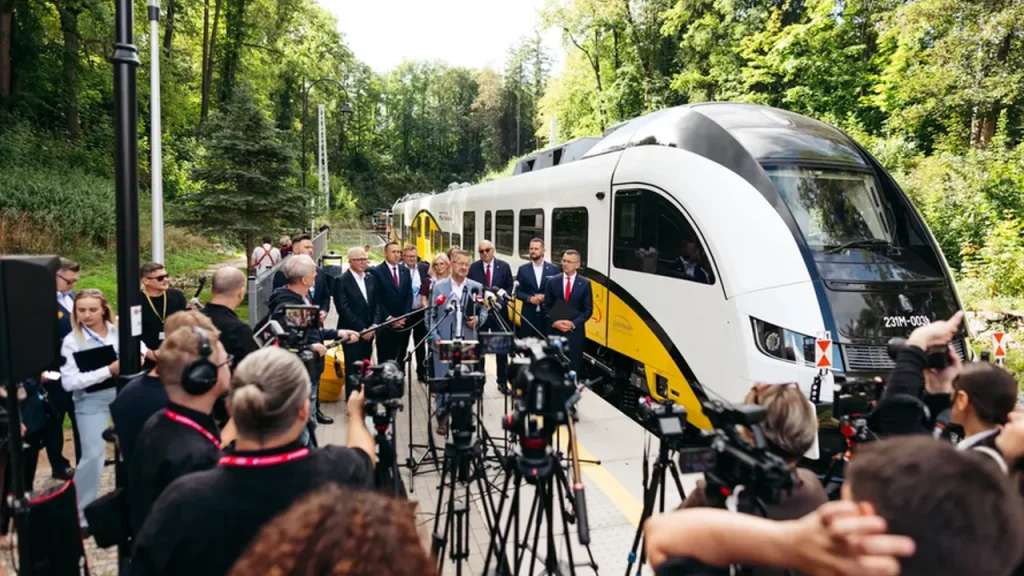
In a strategic move to solidify its position as a leader in regional rail transformation, Koleje Dolnośląskie (KD), the regional rail operator for Poland’s Lower Silesian Voivodeship, has exercised an option to acquire an additional 10 eco-diesel trainsets from the Bydgoszcz-based manufacturer, Pesa. This expansion brings the total commitment of the operator to 20 state-of-the-art hybrid and diesel-combustion units, marking a pivotal chapter in the region’s long-term infrastructure modernization strategy.
As Poland continues to integrate its regional transport networks into the broader European rail framework, this procurement underscores a dual focus: revitalizing dormant infrastructure and enhancing the passenger experience on non-electrified secondary routes.
Main Facts: Strengthening the Non-Electrified Network
The order for these 10 additional eco-diesel units is not merely an increase in inventory; it is a calculated effort to bridge the service gap between the electrified mainlines and the region’s rural hinterlands. The first of these new trains are slated to enter service starting in June 2027.
The technical specifications of these units are designed to meet the rigorous demands of the Lower Silesian landscape. By providing modern, low-emission propulsion, Koleje Dolnośląskie aims to phase out aging, less efficient diesel rolling stock. The current fleet, which has served the region faithfully, suffers from capacity constraints that hinder the operator’s ability to handle rising ridership. The new Pesa-built trains offer roughly double the capacity of the older units, and critically, they are engineered for multiple-unit operation. By coupling two of these trains together, KD can achieve a passenger capacity comparable to that of their high-frequency electric multiple units (EMUs), ensuring that rural passengers no longer feel like “second-class” commuters.
Chronology of Expansion
The path to this significant expansion has been paved with systematic investment and long-term planning.
- 2023–2024: The Lower Silesian government identifies the “de-marginalization” of regional rail as a key political and economic priority. Preliminary contracts are signed with Pesa for the initial batch of eco-diesel units.
- August 2026: A major milestone is reached as the operator takes delivery of the final unit of a 20-train order of Pesa "Elf" electric multiple units, largely funded by the European Union.
- Early September 2026: Koleje Dolnośląskie announces that it has secured an additional €35 million (150 million PLN) in European funding to procure further Elf electric trains, signaling that the momentum of fleet renewal is not slowing down.
- Late 2026: The operator exercises the option for 10 additional eco-diesel trains, bringing the total order to 20 units.
- June 2027 (Scheduled): The deployment of the new eco-diesel fleet begins, focusing on lines such as the Podsudecka Main Line.
Supporting Data: Ridership and Investment
The scale of this project is supported by impressive growth metrics. In the first half of 2026 alone, Koleje Dolnośląskie transported over 14 million passengers. This surge in ridership validates the region’s “three-pillar” strategy: reopening historical lines, investing in modern rolling stock, and increasing the total kilometer coverage of the network.
The Financial Engine
The funding structure for these acquisitions is a testament to the effective use of EU resources. The initial purchase of 20 Elf electric trains was supported by a €145 million (618 million PLN) injection from the National Recovery and Resilience Plan (KPO). By leveraging these funds, the regional government has been able to accelerate the delivery timeline, avoiding the pitfalls of budgetary stagnation that often plague regional infrastructure projects in Central Europe.
Capacity and Demographics
The impact of this investment is best illustrated by the Podsudecka Main Line (Legnica – Świdnica – Kamieniec Ząbkowicki). This corridor serves a population of approximately 145,000 people. Currently, the capacity constraints on this route mean that during peak hours, passengers often face overcrowding. By transitioning to the new Pesa units—which feature modern amenities, accessibility features for disabled passengers, and higher speed thresholds—the region is effectively creating a "mainline" experience on a secondary route.
Official Responses and Strategic Implications
The regional government of Lower Silesia views the rail network as the backbone of the region’s social and economic integration. Regional authorities have frequently cited the “re-opening of lines” as a primary goal. For decades, many of these lines were considered non-viable, leading to the isolation of several towns and villages.
The strategy is clear: when you provide high-quality, reliable rolling stock, the passengers will return. By coupling the new diesel units, the operator ensures that even on non-electrified tracks, the capacity is high enough to support potential growth in suburban commuter traffic.
Sustainability and the Future
While the focus remains on diesel-based solutions for non-electrified segments, the overall strategy of Koleje Dolnośląskie is heavily tilted toward sustainability. The shift from older, high-emission diesel engines to the modern, efficient Pesa eco-diesel platforms represents a significant reduction in the carbon footprint per passenger kilometer. Furthermore, the reliance on the Elf EMUs for the electrified sections of the network demonstrates a commitment to the EU’s “Green Deal” objectives.
Implications: A Model for Regional Development
The ongoing partnership between Koleje Dolnośląskie and Pesa Bydgoszcz serves as a blueprint for other Polish regions.
1. Social Mobility and Connectivity
By increasing train frequencies and ensuring that rural lines are serviced by the same quality of equipment found on major routes, the regional government is directly combating social exclusion. Reliable rail access allows residents in smaller towns to work in major economic hubs like Legnica or Wrocław without the need for private car ownership, thus reducing road congestion and air pollution.
2. Industrial Synergies
The success of Pesa Bydgoszcz in securing these contracts highlights the strength of the Polish rail manufacturing sector. By keeping the manufacturing process domestic, the investment in rolling stock creates a virtuous cycle: European funds flow into the region, stimulate high-tech manufacturing in Bydgoszcz, and provide top-tier infrastructure for the residents of Lower Silesia.
3. The Challenges Ahead
Despite the success, the challenge remains in the long-term maintenance of this expanded network. As the number of kilometers covered increases, so too does the need for maintenance facilities, qualified personnel, and operational efficiency. The operator will need to ensure that the rapid expansion of the fleet is matched by an equally robust expansion of its technical and administrative capabilities.
Conclusion
The decision to order an additional 10 eco-diesel trains from Pesa is a decisive move that reflects the maturity and ambition of Koleje Dolnośląskie. By balancing the aggressive procurement of electric units for major corridors with specialized, high-capacity hybrid/diesel solutions for rural lines, the operator is ensuring that the Lower Silesian rail network remains modern, equitable, and sustainable.
As the June 2027 deadline approaches, the region stands on the cusp of a major transformation. For the 145,000 residents along the Podsudecka Main Line and the millions of commuters across the region, the future of travel is not just about getting from point A to point B—it is about the reliability, comfort, and frequency that define a modern, 21st-century rail network. With continued European support and a clear vision for the future, Lower Silesia is setting a high bar for regional rail operators across the continent.

