

SAN FRANCISCO, CALIFORNIA — The signature modernization initiative of the San Francisco Peninsula’s commuter rail system—the Caltrain Electrification Project—has encountered a significant financial recalibration. Project administrators announced that the total estimated cost for the transition from diesel to electric operations has climbed to $2.44 billion, representing a $462 million increase over the initial baseline estimate of $1.98 billion, and sitting $129 million above projections issued earlier this year by the Federal Transit Administration (FTA).
Despite these fiscal headwinds, agency leadership, state legislators, and federal partners remain resolute in their commitment to completing a project designed to fundamentally reshape mass transit along one of Northern California’s most vital economic corridors. The modernization effort promises not only to drastically curb greenhouse gas emissions along the historic rail route but also to triple passenger capacity by the year 2040.
Main Facts
The Caltrain Electrification Project represents the first major operational transformation of the commuter rail line since public agencies assumed control of the right-of-way from private freight operators decades ago. The core of the initiative involves the electrification of the 51-mile rail corridor stretching from San Francisco’s 4th and King Street Station down to the Tamien Station in San Jose.
Key elements of the initiative include:
- Budget Revisions: The total project cost has escalated to $2.44 billion, requiring an additional $462 million in funding above the original projections.
- Funding Gap Mitigation: To cover the shortfall, Caltrain has secured $52.4 million in additional federal allocations, accessed a $150 million financing credit, and drawn upon $60 million from the Measure RR capital reserve fund. Additional capital is being sought through federal and state legislative channels, including provisions within the Infrastructure Investment and Jobs Act (IIJA) and upcoming state transportation budgets.
- Contractor Settlement: The budgetary increase directly stems from protracted negotiations and a comprehensive settlement with Balfour Beatty, the primary infrastructure contractor. This agreement resolves legacy commercial disputes, addresses cost overruns tied to a project schedule extension pushed out to 2024, and establishes a collaborative risk-sharing pool alongside financial incentives for meeting early project milestones.
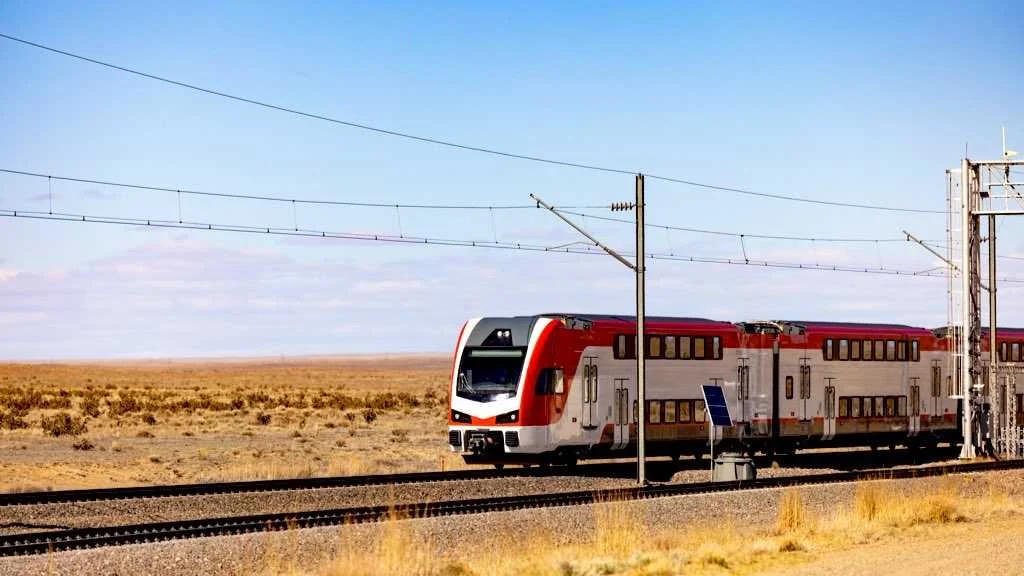
- Physical Scope and Modernization: The upgrade includes the installation of an overhead catenary system (OCS), the construction of ten traction power facilities, comprehensive signaling and system integration updates, and the replacement of aging diesel locomotives with high-performance electric multiple unit (EMU) trainsets.
Chronology of the Project
The path toward a modernized Caltrain system has been a complex, multi-decade endeavor marked by visionary planning, rigorous engineering challenges, and unforeseen global disruptions.
Early Inception and Planning (2000–2016)
Discussions surrounding the electrification of the Caltrain corridor began in earnest during the early 2000s, driven by local air quality concerns, traffic congestion along the parallel U.S. Route 101, and the long-term vision for California’s high-speed rail network, which intends to share portions of the Peninsula right-of-way. Environmental reviews, preliminary engineering designs, and funding commitments coalesced throughout the early 2010s, leading to the formal approval of the project baseline.
Construction Kickoff and Civil Works (2017–2019)
Groundbreaking for the electrification project officially took place in the summer of 2017. Contractors immediately initiated heavy civil engineering works, which included site preparations, utility relocations, and the commencement of foundation drilling along a historic, 150-year-old railway corridor.
The Pandemic Disruption and Schedule Adjustments (2020–2021)
Like nearly all major infrastructure projects worldwide, the Caltrain modernization effort faced severe disruptions with the onset of the COVID-19 pandemic in 2020. Supply chain bottlenecks, labor availability constraints, and stringent public health mandates significantly impacted work schedules. These hurdles necessitated a comprehensive schedule extension, pushing the anticipated completion date of the project out to 2024. Consequently, commercial discussions with lead contractor Balfour Beatty intensified, laying the groundwork for the recent financial and operational reset.
Recent Milestones and Looking Ahead (2022 and Beyond)
By early 2022, civil construction and foundation installation reached near-completion, effectively mitigating one of the project’s most unpredictable engineering risks. Traction power facilities marched steadily toward completion, while the physical installation of the overhead catenary system progressed rapidly toward a summer 2022 completion target. The arrival of the first electric trainsets and the commencement of integrated testing via specialized electric locomotives marked a decisive shift from heavy construction to systems integration and operational readiness.
Supporting Data and Financial Breakdown
Understanding the sheer scale of the Caltrain Electrification Project requires a closer examination of the numbers that define its engineering and financial realities.
The Budget Shift
When the project baseline was first established, the projected cost stood at $1.98 billion. The recent comprehensive project budget review—which accounted for pandemic-related delays, complex underground utility relocations, and extensive real estate coordination—pushed the total figure to $2.44 billion. This leaves a funding gap of $462 million above the initial estimates, and $129 million above assessments conducted earlier in the year by the Federal Transit Administration.
Engineering Metrics
The physical challenges of stringing a modern electrical grid along a 150-year-old rail alignment are reflected in the project’s construction metrics:
- Foundations: More than 3,000 deep foundations were required to support the overhead catenary system poles. Drilling into the historic right-of-way exposed numerous unmapped underground obstructions and legacy utilities, presenting persistent engineering hurdles. Currently, over 95% of these foundations have been successfully installed, with fewer than 60 remaining.
- Traction Power: Ten dedicated traction power facilities have been constructed along the corridor to convert utility power into the specific voltage required by the electric trains. All ten facilities were scheduled for functional completion in early 2022.
- Catenary System: The overhead wire network designed to power the trains has seen rapid deployment, with full installation slated for completion across the corridor by the summer of 2022.
- Rolling Stock: The introduction of modern electric trainsets will fundamentally change the passenger experience, offering faster acceleration, smoother braking, reduced noise pollution, and significantly increased seating capacity.
Funding Sources and Remediation
To close the $462 million deficit, Caltrain has aggressively pursued diversified financial instruments:

- Federal Allocations: An immediate injection of $52.4 million secured from federal sources.
- Credit Facilities: Access to a structured $150 million financing credit line.
- Local Reserves: The utilization of $60 million from the Measure RR capital reserve fund, demonstrating regional commitment to the project’s completion.
- Legislative Pipelines: Ongoing lobbying efforts aimed at securing additional discretionary grants from the federal Infrastructure Investment and Jobs Act (IIJA), alongside targeted appropriations within upcoming California state transportation budgets.
Official Responses and Stakeholder Perspectives
The announcement of a multi-million-dollar budget adjustment naturally elicited rigorous scrutiny from public officials, funding agencies, and project leadership. However, the overarching consensus among stakeholders is that abandoning or stalling the project is not an option; the long-term benefits far outweigh the short-term financial adjustments.
Caltrain Leadership and Management
Representatives for Caltrain emphasized that the updated budget and finalized contractor agreement were subjected to exhaustive independent reviews by outside engineering and financial experts. By settling outstanding commercial claims with Balfour Beatty, the agency has effectively drawn a line under past disputes and established a predictable framework for the remainder of the construction phase.
Furthermore, leadership highlighted the establishment of a shared risk pool within the new contract terms. This mechanism is designed to incentivize the contractor to achieve early completion milestones—particularly regarding revenue service—while providing a buffer against future unforeseen site conditions or macroeconomic shocks.
Federal and State Partners
Federal transit authorities, who maintain oversight of the project due to substantial capital investment grants, have worked collaboratively with Caltrain to evaluate the updated cost structures. While the FTA’s internal estimates earlier in the year were slightly lower than the newly finalized $2.44 billion figure, federal lawmakers have expressed willingness to evaluate additional funding requests, particularly under the umbrella of national infrastructure renewal priorities championed in recent federal legislative packages.
State-level legislators have similarly underscored the importance of the Caltrain corridor to California’s broader climate goals. Because the Peninsula rail line serves as a critical backbone for the Northern California megaregion, state transportation planners view the electrification effort as a mandatory prerequisite for the successful integration of statewide high-speed rail services.
Implications for the Region
The completion of the Caltrain Electrification Project carries profound implications for the economy, environment, and daily mobility of the San Francisco Bay Area.
Environmental Impact and Sustainability
The transition from diesel locomotives to electric multiple units will eradicate a major source of localized air pollution along the densely populated Peninsula corridor. Diesel particulate matter, nitrogen oxides, and greenhouse gas emissions will be slashed immediately upon the launch of electric revenue service. This reduction aligns directly with aggressive municipal, state, and federal climate action targets aimed at achieving carbon neutrality in the transportation sector.
Capacity, Speed, and Reliability
Beyond environmental metrics, the modernization project is engineered to deliver a quantum leap in transit performance. Electric trains possess superior acceleration and deceleration capabilities compared to their legacy diesel counterparts. This operational agility enables tighter headways, reduced travel times between San Francisco and San Jose, and greater schedule reliability.
Crucially, the new electric fleet will enable Caltrain to triple its passenger transport capacity by the year 2040. This expansion is vital for accommodating anticipated population growth, alleviating chronic highway congestion on the Peninsula, and providing a seamless, high-capacity transit alternative for the region’s workforce.
Integration with Future Rail Networks
The electrification of the Caltrain corridor is not an isolated project; it serves as the foundational infrastructure upon which future regional and statewide transit visions depend. By standardizing the electrification architecture, the corridor will be fully prepared to accommodate California High-Speed Rail operations when the statewide system eventually connects Northern and Southern California. Additionally, improved physical and scheduling integration with regional transit providers—such as BART, VTA, and local bus networks—will create a more cohesive, user-friendly public transit ecosystem across the entire Bay Area.
Conclusion
While the Caltrain Electrification Project has faced undeniable financial hurdles, schedule adjustments, and complex engineering obstacles along its historic 150-year-old right-of-way, the initiative remains on a firm trajectory toward completion. Through strategic financial maneuvers, federal and state legislative backing, and a restructured contractor agreement designed to encourage efficiency and shared accountability, the project is well-positioned to navigate its final phases.
As civil works wind down, overhead catenary systems near completion, and system integration testing ramps up, the San Francisco Bay Area stands on the threshold of a new era in commuter rail. The impending arrival of modern electric trains promises to deliver a cleaner, faster, and vastly more capable transit system that will serve the Peninsula for generations to come.

