

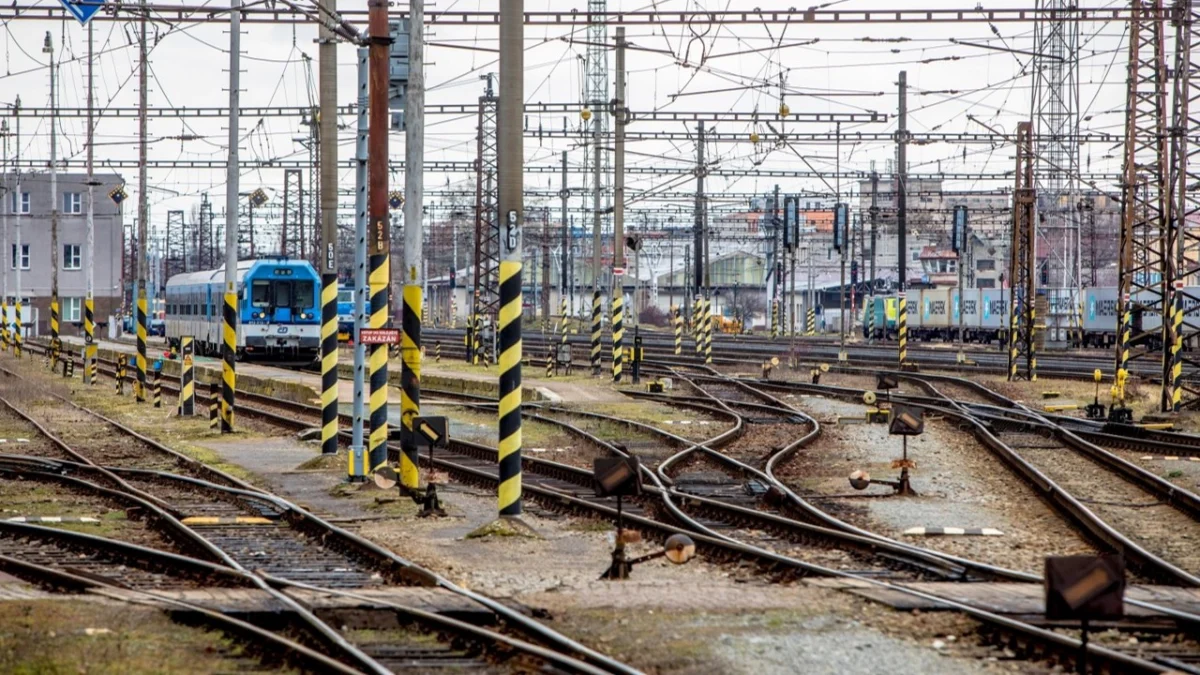
BRUSSELS — The ambitious vision of a unified, borderless, and digitally integrated European railway network is facing a stark reality check. The European Coordinator for the European Rail Traffic Management System (ERTMS) has released its third comprehensive work plan detailing the current state of deployment across Member States. While the report acknowledges renewed political momentum and steady technical progress in modernizing the continent’s rail infrastructure and rolling stock, it issues an unambiguous warning: the rollout is unacceptably uneven, significantly slower than required, and currently on track to miss critical legislative deadlines.
At the heart of Europe’s rail modernization strategy, ERTMS is designed to replace a fragmented patchwork of more than 30 incompatible national legacy signalling systems with a single, interoperable standard. Yet, as the latest work plan reveals, the pace of implementation leaves a massive gap between EU policy ambitions and on-the-ground execution. Without a drastic acceleration, Europe risks failing to meet the binding milestones mandated by the Trans-European Transport Network (TEN-T) Regulation, threatening the long-term competitiveness and efficiency of the rail sector.
Main Facts: The Current State of ERTMS Deployment
The release of the third ERTMS Work Plan paints a sobering statistical picture of Europe’s railway digital transition. Despite years of strategic planning, funding allocations, and regulatory pressure from Brussels, the physical rollout of both trackside infrastructure and onboard equipment lags far behind initial projections.
Trackside Implementation Deficits
According to the report, by the close of 2024, ERTMS was actively installed and operational across approximately 12,400 kilometres of railway lines. This figure accounts for a mere 10% of the broader TEN-T network. When looking specifically at the high-priority TEN-T core network—the backbone of European freight and passenger corridors—the statistics improve only marginally: 10,600 kilometres are equipped, representing 17% of the core network.
Looking ahead, national infrastructure managers have scheduled the installation of ERTMS on an additional 28,000 kilometres of the TEN-T network by 2030, which includes 22,000 kilometres along the core corridors. However, the work plan’s predictive modeling exposes a major shortfall. Based on current construction rates, planning pipelines, and budgetary commitments, Europe will achieve only about 50% of its core network deployment target by the 2030 deadline.
Onboard Rolling Stock Bottlenecks
Infrastructure is only half the equation. For ERTMS to function seamlessly, trains must be equipped with the European Train Control System (ETCS) onboard. By the end of 2024, a total of 8,730 rail vehicles were fitted with ETCS, representing roughly 19% of the existing European rolling stock fleet.
While upcoming procurement pipelines show that approximately 13,600 additional vehicles are either contracted or officially planned to be equipped—significantly outpacing the annual conversion rates recorded over the preceding four years—this momentum is still deemed inadequate.
"While this demonstrates progress, in many cases it remains insufficient to allow the gradual phase-out of national, so-called ‘Class B’ systems," the report emphasizes. "It is now widely accepted that ERTMS roll-out must be a synchronised process involving both trackside equipment and rolling stock."
Without synchronisation, operators face a frustrating operational paradox: infrastructure managers install expensive trackside digital systems that local rolling stock cannot read, or alternatively, railway operators invest in expensive onboard units that have no continuous trackside corridors to traverse.
Chronology: The Long and Winding Road to Railway Interoperability
To understand the gravity of the current delays, it is essential to trace the historical timeline of the European rail signalling initiative. The journey toward a unified rail management system has been marked by ambitious policy goals repeatedly colliding with technical complexities, high costs, and fragmented national governance.
- The Late 1980s and 1990s: Recognizing that differing national signalling systems—such as TVM in France, PZB in Germany, and ETCS precursors elsewhere—acted as non-tariff trade barriers that paralyzed cross-border freight and passenger traffic, the European Commission initiated discussions on a common European standard.
- 1996: The European Union formally adopted the interoperability directive, laying the groundwork for the development of ERTMS, which combines ETCS (for signalling) and GSM-R (for railway radio communications).
- The 2000s: Initial pilot projects and technical specifications for interoperability (TSIs) were established. However, early deployments suffered from proprietary interpretations of standards, leading to interoperability bugs that eroded early industry confidence.
- 2009–2016: The EU appointed the first European ERTMS Coordinators to streamline deployment. The adoption of the first legally binding European Deployment Plan (EDP) in 2017 set mandatory deadlines for equipping specific corridors, yet many Member States treated these targets as aspirational rather than binding.
- 2021–2024: The European Green Deal and the revision of the TEN-T Regulation placed rail at the center of EU decarbonization strategies. The revised TEN-T regulation tightened the screws, setting a hard core network deadline of 2030 and an extended comprehensive network deadline of 2050.
- Present Day (2025–2026): The publication of the third ERTMS Work Plan marks a moment of intense reckoning. With the 2030 deadline now less than five years away, the 50% projected completion rate for the core network has triggered alarm bells across EU institutions and rail stakeholder organizations.
Supporting Data and Technical Realities
The challenges facing ERTMS deployment are deeply rooted in the complex engineering, financial outlays, and operational disruptions inherent in modernizing live railway networks.
The Financial Burden
Equipping a locomotive with ETCS can cost anywhere from €300,000 to over €1 million per vehicle, depending on the age, type, and cross-border capabilities required. For smaller freight operators operating on tight profit margins, these capital expenditures represent a massive barrier to entry. Similarly, trackside modernization requires stripping out decades-old electromechanical or relay-based interlocking systems and replacing them with digital interlockings, radio masts, and balises—all while attempting to maintain daily passenger and freight timetables.
The Migration Phase Complexity
Rail networks cannot simply be shut down for months to install digital signalling. The transition requires a delicate "migration phase," during which locomotives must carry dual systems—retaining legacy Class B equipment alongside the new ETCS units. This dual-system requirement increases maintenance costs, adds weight to trains, and creates complex cockpit environments for train drivers.
Geographic Disparities
Data from the third work plan highlights a stark digital divide between Western, Central, and Eastern European networks. While countries with high-speed rail pioneers (such as Spain, France, and parts of Italy and Germany) have made notable strides on specific corridors, other Member States struggle with underfunded rail infrastructure, aging assets, and competing national investment priorities that relegate digital signalling down the political agenda.
Official Responses and Stakeholder Perspectives
The release of the third work plan has prompted sharp reactions from European officials, infrastructure managers, railway undertakings, and supply industry leaders.
European ERTMS Coordinator Matthias Ruete has taken an uncompromising stance, stressing that incremental progress is no longer an option. Ruete has repeatedly emphasized the urgent need to transition from piecemeal pilot projects to industrial-scale implementation.
"We have reached a critical juncture in Europe’s rail history," policy analysts note in response to the coordinator’s findings. "Political declarations of support are no longer sufficient. What we need is rigorous enforcement, pooled financial instruments, and a binding commitment from Member States to align their national rail budgets with EU TEN-T timelines."
Rail industry associations, representing equipment manufacturers and rolling stock suppliers, have pointed out that manufacturing capacity is ready to scale, but order books remain erratic. Suppliers argue that without predictable, long-term procurement pipelines from national rail operators, factories cannot optimize production lines, leading to inflated equipment costs and prolonged delivery lead times.
Meanwhile, railway freight operators have expressed deep frustration over the lack of synchronized cross-border rollouts. A freight train equipped with state-of-the-art ETCS is severely limited in its operational utility if it crosses an international border into a neighboring country where the trackside infrastructure still relies on mid-20th-century analogue signalling, forcing the locomotive to switch back to legacy systems or swap engines entirely.
Implications for the Future of European Rail
The failure to meet ERTMS targets carries profound implications that extend far beyond technical compliance; it threatens the core pillars of European transport, economic, and environmental policy.
1. Compromised Decarbonization Goals
The European Green Deal relies heavily on shifting a significant share of road freight and short-haul aviation traffic onto the rail network. Rail is inherently more energy-efficient and produces lower greenhouse gas emissions per passenger-kilometer or ton-kilometer. However, if the rail network remains fragmented, congested, and slowed down by incompatible national signalling systems, rail will struggle to compete with the speed and reliability of road transport.
2. Economic Competitiveness and Interoperability
A seamless European Single Market requires a seamless transport infrastructure. The persistence of national signalling barriers imposes billions of euros in annual friction costs on logistics providers, who must navigate complex regulatory approvals, train driver training across different systems, and operational delays at borders. Achieving full interoperability is essential to reducing logistics costs and bolstering the economic resilience of the European Union.
3. Safety and Capacity Enhancement
Beyond interoperability, ERTMS delivers critical safety upgrades. ETCS provides continuous automatic speed supervision and braking intervention, drastically reducing the risk of human-error accidents. Furthermore, ERTMS includes advanced functionalities such as Automatic Train Operation (ATO) and enhanced traffic management, which can increase track capacity by up to 40% without laying a single new kilometer of physical rail track. Missing deployment targets means sacrificing vital capacity gains at a time when European rail networks are experiencing rising passenger demand.
Pathways to Acceleration: What Needs to Happen Next?
To rescue the ERTMS rollout from its current trajectory and bridge the gap toward the 2030 and 2050 targets, the third work plan and industry experts recommend a series of decisive interventions:
- Synchronized Programming: Establishing mandatory, synchronized master plans between infrastructure managers and rolling stock owners within each Member State to eliminate the chicken-and-egg dilemma between trackside and onboard investments.
- Targeted EU Funding: Leveraging dedicated financial instruments, such as the Connecting Europe Facility (CEF) and Cohesion Funds, to co-finance up to higher percentages of ERTMS retrofits, particularly for smaller freight operators and less-resourced Member States.
- Standardization and Stability: Freezing baseline software specifications (such as Baseline 3 Release 2 and upcoming developments) to prevent costly mid-project redesigns and ensure plug-and-play compatibility across different supplier brands.
- Regulatory Enforcement: Strengthening governance mechanisms at the EU level to hold Member States accountable for delays in their national implementation plans, transforming soft recommendations into binding accountability metrics.
As Europe looks toward the critical 2030 milestone, the message from the European Coordinator is clear: the technical tools and political visions are in place, but the political will and implementation velocity must match the urgency of the challenge. Transforming Europe’s railways into a truly unified digital network is no longer just a regulatory preference—it is an absolute prerequisite for the continent’s sustainable and competitive future.

