

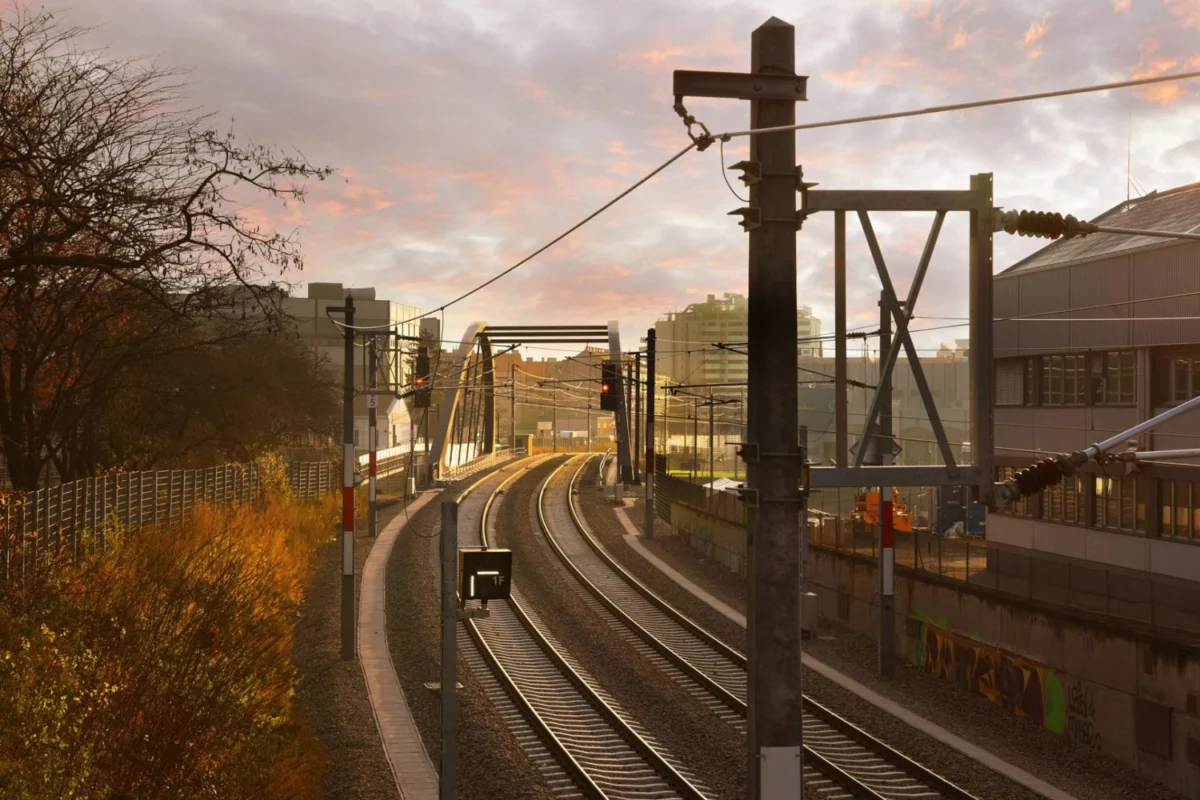
Global Industry Report Analysis — The global railway electrification market continues to demonstrate remarkable resilience in the face of unprecedented macroeconomic disruption, maintaining a robust market volume of EUR 9.6 billion. According to a comprehensive market study published by transport research consultancy SCI Verkehr, the sector is positioned for a steady compound annual growth rate (CAGR) of 0.7% through 2025.
While the COVID-19 pandemic severely strained public budgets and forced fiscal reassessments across international jurisdictions, governments have largely protected core green infrastructure funding. Although capital expenditure for entirely new railway line construction has faced temporary delays or downsizing, long-term decarbonization mandates have kept the market buoyant. Nations worldwide are aggressively prioritizing the conversion of legacy diesel-operated networks to electric systems to meet ambitious environmental commitments and accommodate rising operational passenger and freight demand.
Main Facts
The modern global rail network spans approximately 1.3 million kilometers of track. Of this vast expanse, roughly 375,000 kilometers—accounting for just under 30% of the total network—have been electrified. However, this global average obscures profound regional disparities in infrastructure development.
- Global Market Valuation: EUR 9.6 billion, growing at a 0.7% CAGR through 2025.
- Global Electrification Rate: Approximately 30% of the world’s 1.3 million track kilometers.
- Regional Disparities: Ranging from a meager 1% in North America to 57% in Western Europe, and soaring to 55% across Asia.
- Industry Structure: Dominated by a collection of specialized medium-sized national suppliers, alongside heavyweights like Siemens, Alstom, and Chinese state-backed industrial giants CREC and CRRC.
- Environmental Drivers: Aligning with the European Union’s tightened 2030 climate targets—aiming for at least a 55% reduction in greenhouse gas emissions compared to 1990 levels—and the ultimate 2050 net-zero mandate.
Chronology: The Evolution and Acceleration of Rail Electrification
Historical Foundations and Fragmented Systems
The trajectory of railway electrification spans well over a century, beginning with experimental urban transit lines in the late 19th century and scaling to major intercity networks by the mid-20th century. Because railway engineering evolved independently across sovereign borders, countries developed distinct electrical configurations. These variations include differing voltage frequencies (such as 15 kV AC at 16.7 Hz in several Central European nations versus 25 kV AC at 50 Hz elsewhere) and various direct current (DC) standards.
This historical fragmentation created isolated, highly regulated national markets. Specialized local suppliers grew alongside national railway operators, tailoring their engineering standards to strict, localized regulatory frameworks rather than global harmonization.
The 2010s: The Asian Turning Point
The decade leading up to 2020 marked a monumental shift in the geography of rail infrastructure investment. While European and North American networks experienced relatively stagnant growth in their overall electrification percentages, Asia underwent a staggering transformation.

- In 2013, Asia’s rail electrification rate stood at 34%.
- By 2017, aggressive investments—particularly in high-speed rail and trunk-line upgrades—pushed that figure to 47%.
- By 2020, Asia achieved an impressive 55% electrification rate, spearheaded by the massive expansion programs in China and India.
The 2020–2025 Horizon: Pandemic Pressures and Green Recovery
The onset of the COVID-19 pandemic in early 2020 threatened to stall capital-intensive infrastructure projects globally. Public funds were diverted toward immediate healthcare responses and macroeconomic stabilization packages.
However, rather than collapsing, the railway electrification sector pivoted. Governments recognized that transit modernization acts as a powerful economic stimulus while directly supporting climate objectives. The period from 2020 to 2025 has become characterized by strategic triage: pausing greenfield construction of entirely new routes while accelerating brownfield projects—specifically, replacing diesel locomotives on heavily trafficked existing corridors with overhead catenary or alternative electric systems.
Supporting Data: Regional Breakdown and Market Structure
Geographical Variations in Infrastructure
A closer look at SCI Verkehr’s regional data reveals stark operational contrasts across continents:
- North America (1% Electrification): North America remains heavily dependent on diesel-electric freight locomotives. Vast distances, private freight rail ownership models, and relatively low population densities outside major urban corridors have historically discouraged the massive capital investments required for overhead line electrification.
- Western Europe (57% Electrification): Western Europe boasts the highest regional concentration of electrified track. Driven by dense populations, integrated cross-border transit policies, and early governmental pushes for energy efficiency, European operators continue to systematically close the remaining gaps in their networks.
- Asia (55% Electrification): Propelled by exponential growth in China and India, Asia is the primary engine of the global electrification market. India’s aggressive national rail strategies have transformed it into a global growth driver, alongside China’s hyper-fast deployment of high-speed passenger networks.
- Eastern Europe and Central Asia: Development speeds vary widely, with many states undergoing gradual modernization phases constrained by historic underfunding.
+-------------------------------------------------------------+
|          Global Rail Electrification by Region              |
+-------------------------------------------------------------+
| Western Europe  | [█████████████████████████] 57%           |
| Asia            | [████████████████████████ ] 55%           |
| Global Average  | [█████████████            ] 30%           |
| North America   | [                         ]  1%           |
+-------------------------------------------------------------+
Market Competitors and Industrial Landscape
The structural idiosyncrasies of railway electrification—governed by diverse national safety standards, signaling interfaces, and power systems—have prevented total market consolidation.
- Niche and Medium-Sized Suppliers: A vast ecosystem of medium-sized regional suppliers thrives by navigating complex national compliance protocols. These niche players supply specialized components ranging from substation transformers to specialized catenary hardware.
- Western Multinationals: European giants Siemens and Alstom maintain a dominant international footprint outside of Asia, leveraging their extensive portfolios in rolling stock, signaling, and turnkey electrification packages.
- Chinese State-Owned Enterprises: CREC (China Railway Engineering Corporation) and CRRC (China Railway Rolling Stock Corporation) wield immense market power. Backed by domestic volume, these state-owned enterprises have increasingly captured lucrative international contracts across Africa, South America, and developing Asian nations through state-backed financing and rapid deployment capabilities.
Official Responses and Policy Frameworks
The European Green Deal and Revised 2030 Targets
Public policy serves as the primary catalyst for modern railway investments. In the European Union, the push toward complete decarbonization has shifted from a peripheral policy discussion to an existential economic framework.
In December 2020, EU member states formally updated their collective climate ambitions under the European Green Deal. The Union elevated its 2030 target: instead of reducing greenhouse gas emissions by "at least 40%" compared to 1990 levels, member states committed to a reduction of at least 55%.

Furthermore, the EU has set a binding long-term trajectory toward achieving net-zero greenhouse gas emissions by 2050. Transport ministries across the continent view the rapid electrification of secondary and regional diesel rail lines as an indispensable pillar of this strategy, ensuring that the entire modal chain—from high-speed passenger rail to freight logistics—operates with zero direct tailpipe emissions.
National Commitments in Asia
In parallel, ministries of railways in nations like India have framed electrification not merely as an environmental choice, but as an economic imperative to reduce national dependency on imported fossil fuels. Indian Railways has aggressively pursued 100% electrification of its broad-gauge routes, projecting massive savings in energy bills and insulating the national transit backbone from global oil price volatility.
Implications for the Future of Global Transport
Environmental and Operational Impact
The persistent growth of the railway electrification market—despite post-pandemic fiscal tightening—signals a permanent transition in global transport engineering. Electrified rail offers superior energy efficiency, higher acceleration rates, lower maintenance costs for rolling stock, and complete elimination of local air pollutants (such as NOx and particulate matter) along transit corridors.
While alternative propulsion technologies such as hydrogen fuel cells and battery-electric hybrid trains are gaining traction for low-density or short non-electrified spur lines, overhead catenary electrification remains the gold standard for high-capacity, heavy-haul, and high-speed rail corridors.
Strategic Outlook for Industry Stakeholders
For component manufacturers, engineering firms, and infrastructure developers, the coming years present a dual landscape of challenge and opportunity:
- Overcoming Fragmentation: Suppliers must innovate modular, interoperable technologies that can bridge historical national standard divides, reducing the engineering friction associated with cross-border rail projects.
- Capitalizing on Brownfield Upgrades: Because greenfield construction budgets remain vulnerable to macroeconomic tightening, companies specializing in upgrading, retrofitting, and modernizing existing brownfield networks will capture the lion’s share of near-term market value.
- Global Competition: Western suppliers will face mounting competitive pressure from state-backed Asian conglomerates expanding their international footprint, necessitating a strategic focus on technological superiority, lifecycle digital management (such as BIM and predictive maintenance for catenaries), and turnkey project delivery.
Ultimately, railway electrification remains a resilient, growing niche within the broader infrastructure sector—underpinned by unwavering global commitments to a sustainable, low-carbon future.

