

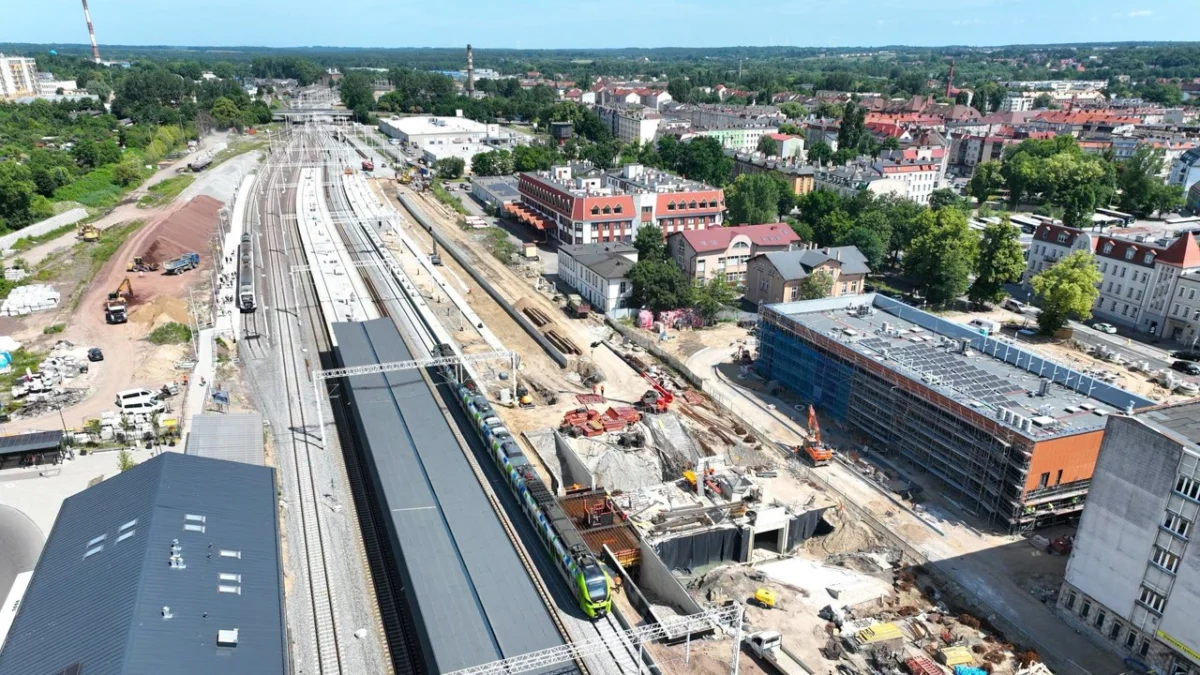
WARSAW — Poland is quietly orchestrating the most ambitious railway transformation in modern European history. Through a multi-decade strategy encompassing network expansion, rolling stock renewal, aggressive digitalisation, and universal accessibility, Polish Railways (Polskie Koleje Państwowe) is positioning itself as a continental leader. With state-of-the-art infrastructure designed to accommodate speeds of up to 350 km/h, record-shattering ridership numbers, and a massive boost to domestic industrial output, Poland is fast redefining what a 21st-century rail system can achieve.
Main Facts: The Anatomy of Poland’s Rail Modernisation
The transformation of Poland’s rail network is built on several foundational pillars: unprecedented capital expenditure, a comprehensive long-term blueprint, and a dramatic surge in passenger adoption.
At the heart of this strategy is the "Integrated Rail Network", a visionary planning document stretching out to 2050. For the first time in the nation’s history, a unified framework has been established to systematically bridge infrastructural gaps between major urban centres, regional hubs, and historically isolated rural communities. The strategy dictates the construction of 4,700 kilometres of brand-new rail lines—including 2,700 kilometres dedicated exclusively to high-speed rail (HSR)—alongside the revitalisation and upgrading of 5,600 kilometres of legacy tracks.
Simultaneously, the national infrastructure manager, PKP Polskie Linie Kolejowe (PKP PLK), is rolling out the largest capital investment programme in the country’s history. An initial financial injection of EUR 23.5 billion (PLN 100 billion) is currently being deployed to modernise existing corridors, construct state-of-the-art stations, and implement advanced digital signalling. Looking further ahead, total investments slated through 2032 will reach an unprecedented EUR 42.4 billion (PLN 180 billion), while the total cost of realizing the grand 2050 integrated network vision is estimated at EUR 143.5 billion.

The operational reality of these investments is already evident. The Polish network currently hosts the highest volume of daily train services in its history, exceeding 70,000 train movements per day.
Chronology: Milestones on the Track to 2050
The path to Poland’s current rail renaissance is the result of deliberate policy shifts, legislative planning, and accelerated infrastructural execution over the past decade, culminating in sweeping modernisations scheduled through the middle of the century.
- 2023–2026 (The Acceleration Phase): Following post-pandemic recovery, national leadership fast-tracked regional reintegration projects. Key milestones include the landmark restoration of direct rail services to Łomża in June 2026, marking the first time in 33 years that the major city has been connected to Warsaw by rail.
- 22 July 2026 (The "Our Railway" Conference): Held at the newly modernised Warsaw West station, Prime Minister Donald Tusk and Infrastructure Minister Dariusz Klimczak unveiled the updated scope of the 2050 Integrated Rail Network, cementing the commitment to 350 km/h operational speeds.
- Target: End of 2027: A wave of regional re-connections will be completed, returning passenger rail service to towns that have lacked train access for decades, including Police, Sokołów Podlaski, Połaniec, and Stronie Śląskie.
- Target: 2032: Completion window for the immediate EUR 42.4 billion national rail investment programme managed by PKP PLK.
- Target: 2050: Full realization of the Integrated Rail Network and the Centralny Port Komunikacyjny (CPK) Port Polska initiative. By this milestone, the network aims to integrate rural and small-town populations seamlessly into the national grid and carry an estimated 800 million passengers annually.
Supporting Data: Record-Breaking Numbers and Infrastructure Metrics
The quantitative success of Poland’s rail strategy is reflected in a series of historic statistical milestones spanning passenger volume, network density, and engineering benchmarks.
Ridership Surge
- 2025 Annual Total: The Polish rail network carried 438 million passengers, marking a robust 7.7 percent increase compared to the previous year.
- PKP Intercity Performance: In the first half of the year, national long-distance operator PKP Intercity transported 44.7 million passengers—an 11 percent increase year-on-year, a 21 percent jump over 2024 figures, and a staggering 45 percent surge compared to 2023.
- Daily Scale: Prime Minister Donald Tusk highlighted that the national network is now carrying an annual volume of passengers nearly equivalent to the entire population of the European Union.
- Future Projections: Infrastructure Minister Dariusz Klimczak announced that the network is on track to carry 470 million passengers in 2026, with projections to comfortably break the 500 million passenger mark in 2027, eventually scaling toward 800 million by 2050.
High-Speed Engineering & The "Y" Network
- Target Speeds: While current premier services run at maximum speeds of 200 km/h, new corridors are engineered for 350 km/h, positioning Poland alongside global leaders in high-speed rail technology like Japan and China.
- Active Corridors: Approximately 800 kilometres of high-speed lines are currently in various stages of development. This includes the Warsaw–Białystok–Ełk route, the extension toward the Lithuanian border as a critical component of the Rail Baltica project, and the legendary "Y" network connecting Warsaw, Łódź, Poznań, and Wrocław under the Centralny Port Komunikacyjny (CPK) umbrella.
- Future Planning (UIC 2024 Atlas Data): An additional 875 km of HSR lines are in the long-term planning pipeline. These include the Knapówka–Katowice/Kraków, Wrocław–Czech Border, Katowice–Czech Border, Poznań–German Border, and Warsaw–Toruń–Gdańsk links.
Official Responses: Voices from Warsaw
The transformation has been heavily championed by Poland’s political leadership, who view the railway system not merely as a mode of transport, but as a vital engine for social equity, economic growth, and national pride.

Speaking at the "Our Railway" conference at Warsaw West station on 22 July, Prime Minister Donald Tusk did not mince words regarding the nation’s ambitions:
"We are building the most modern rail network on the continent. Over the past two and a half years, we have launched new connections and stations and upgraded existing links… We will have the fastest railway in Europe, because Poles deserve to be able to travel just like the Japanese or the Chinese."
Tusk emphasized the sheer scale of the network’s user base, noting that current traffic numbers mean the railways are servicing a volume equivalent to the EU’s total demographic footprint.
Echoing these sentiments, Infrastructure Minister Dariusz Klimczak detailed the rapid operational expansion required to meet surging consumer demand:

"Over the last three years, the number of passengers travelling by train has increased by 100 million. In 2026, we will carry 470 million passengers, and next year we will break the 500 million passenger mark. PKP Intercity has increased the number of daily services by 130 and is carrying 30 per cent more passengers."
Implications: Industrial Renaissance and Territorial Cohesion
The ripple effects of Poland’s railway boom extend far beyond convenience for commuters; they represent a fundamental restructuring of the national economy and domestic manufacturing sectors.
Strengthening the Domestic Rail Industry
The Polish government has implemented a strict framework to ensure that state-backed capital investments directly benefit the domestic industrial base. Under the National Recovery and Resilience Plan (NRRP) and major procurement streams, PKP Intercity has awarded contracts exceeding EUR 4.24 billion (PLN 18 billion) almost exclusively to domestic enterprises and localized manufacturing plants.
Key beneficiaries include:

- FPS H. Cegielski (Poznań)
- Pesa Bydgoszcz and Pesa Mińsk Mazowiecki
- PKP Intercity Remtrak
- Newag
Furthermore, international rolling stock manufacturers operating within Poland’s borders have integrated deeply into the domestic supply chain. Alstom secured a major contract for the delivery of 42 double-decker trains—with options for 30 more—featuring design and assembly handled directly by Polish engineers at facilities in Chorzów and Nadarzyn. Similarly, Stadler Polska produces advanced regional trainsets like the FLIRT family at its Siedlce facility, while Greenbrier Poland manufactures and maintains freight rolling stock in Świdnica.
Territorial Cohesion and Economic Spillovers
By systematically re-establishing rail links to smaller towns and rural municipalities—such as the upcoming restorations in Police, Sokołów Podlaski, Połaniec, and Stronie Śląskie—the government is combating regional exclusion. Citizens in historically underserved areas are being granted rapid, reliable access to major metropolitan job markets, educational institutions, and cultural hubs.
Ultimately, Poland’s railway renaissance serves a dual purpose. By fusing ultra-fast, high-capacity infrastructure with a resilient, localized manufacturing ecosystem, the country is not only modernising its transit grid but establishing a blueprint for sustainable economic development and European territorial cohesion that will resonate well into the second half of the 21st century.

