

WASHINGTON, D.C. — In a monumental step toward revitalizing America’s passenger rail infrastructure, the federal government has announced a massive USD 4.7 billion investment dedicated entirely to the Northeast Corridor (NEC). As the busiest, most complex, and economically vital rail artery in the United States, the NEC connects major metropolitan areas, supporting millions of daily commuters, business travelers, and tourists.
The sweeping financial package, spearheaded by U.S. Secretary of Transportation Sean P. Duffy, aims to overhaul aging assets, modernize critical station infrastructure, streamline operational efficiency, and rebuild century-old bridges. At the heart of this funding initiative are two of the nation’s most iconic and heavily trafficked transit hubs: New York Penn Station and Washington Union Station.
By targeting the immense investment backlog that has plagued the corridor for decades, the federal administration hopes to usher in a new era of high-speed, reliable, and expanded intercity passenger rail service. With a strict application deadline set for May 5, 2026, transportation agencies, state authorities, and rail operators are already preparing to tap into a program designed to future-proof America’s most indispensable rail network.
Main Facts: Where the USD 4.7 Billion Will Be Deployed
The newly announced USD 4.7 billion federal injection is not a generalized subsidy; it is a strategically targeted capital program administered through federal grant schemes dedicated exclusively to intercity passenger rail transport. The funding targets three core pillars of modernization: station infrastructure enhancements, operational optimization, and structural asset renewal.
1. Revitalizing Iconic Hubs: New York Penn Station and Washington Union Station
The lion’s share of the initial funding wave focuses on transforming the corridor’s flagship stations.
- New York Penn Station: As the busiest passenger transportation facility in the Western Hemisphere, Penn Station handles hundreds of thousands of daily commuters traveling via Amtrak, the Long Island Rail Road (LIRR), and New Jersey Transit. Decades of overcrowding, confusing layouts, and constrained capacity have made its modernization an urgent national priority. The federal investment will support transformative redesigns aimed at improving passenger flow, enhancing safety, upgrading accessibility compliant with the Americans with Disabilities Act (ADA), and creating a more modern, airport-style passenger experience.
- Washington Union Station: Serving as the southern anchor of the Northeast Corridor and a vital gateway to the nation’s capital, Union Station is facing exponential growth in passenger demand. The funding will support ongoing and expansion projects designed to increase track capacity, modernize passenger concourses, preserve the historic Beaux-Arts architecture while integrating modern technology, and ensure seamless intermodal connectivity with regional transit and intercity buses.
2. Upgrading Critical Line-Side Infrastructure
Beyond the terminal buildings, the funding package addresses the spine of the corridor—the tracks, signals, catenary systems, and structural components that dictate daily reliability. Decades of deferred maintenance have left sections of the NEC vulnerable to weather-related disruptions, power outages, and mechanical failures. The grants will facilitate structural repairs and replacements for vital bridges and tunnels, many of which date back to the late 19th and early 20th centuries.
3. Expanding Service and Reducing the Backlog
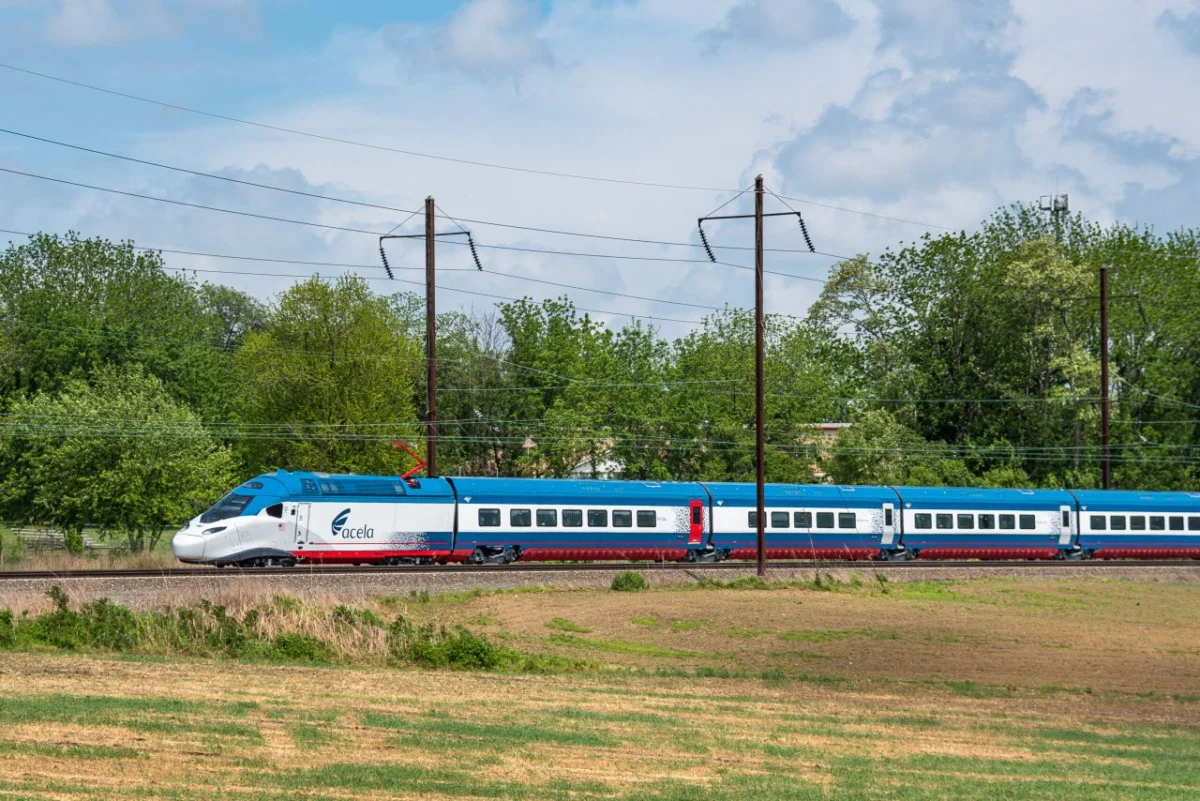
The overarching objective of the USD 4.7 billion allocation is to drastically reduce the multi-billion-dollar investment backlog that currently hampers the NEC. By addressing chokepoints and upgrading signaling systems, the program aims to improve on-time performance, accommodate higher train frequencies, and lay the groundwork for expanded intercity rail services—including the rollout and integration of next-generation high-speed trainsets, such as the new Acela fleet.
Chronology: Path to the USD 4.7 Billion Investment
The realization of this multi-billion-dollar funding package is the result of years of legislative planning, escalating infrastructure demands, and strategic policy shifts within the federal transportation sector.
- Late 20th Century – Early 2000s: The Northeast Corridor experiences a steady increase in ridership, outpacing the capacity of infrastructure built during the Victorian era. Maintenance costs skyrocket as agencies struggle to balance daily operations with necessary capital repairs.
- November 2021: The passage of the landmark Infrastructure Investment and Jobs Act (IIJA) unlocks historic funding levels for passenger rail, setting the stage for targeted grants across the national rail network and establishing long-term funding streams for the Northeast Corridor.
- Mid-2023 to 2025: As design and planning phases for major corridor projects mature, stakeholders across the NEC advocate for dedicated federal funding to tackle terminal congestion and structural bottlenecks at critical river crossings and tunnels.
- Early 2026: U.S. Secretary of Transportation Sean P. Duffy officially announces the USD 4.7 billion intercity passenger rail investment package. The announcement outlines the core focus areas, prioritizing major stations like New York Penn Station and Washington Union Station.
- April 2026: Formal guidelines, eligibility criteria, and inventory requirements are published, alerting regional stakeholders, state departments of transportation, and rail operators to prepare their submissions.
- May 5, 2026 (Upcoming Deadline): The strict deadline for submitting eligible project applications. To qualify for this round of funding, all proposed projects must be officially integrated into the 2026 version of the Northeast Corridor (NEC) inventory.
Supporting Data: The Economic and Operational Weight of the Northeast Corridor
To understand the magnitude of a USD 4.7 billion investment, one must examine the staggering economic and operational metrics that define the Northeast Corridor. Stretching from Washington, D.C., through Baltimore, Philadelphia, and New York City, all the way to Boston, the NEC is the economic engine of the United States.
- Economic Output: The states and metropolitan areas serviced by the Northeast Corridor generate roughly 20% of the United States Gross Domestic Product (GDP). If the NEC were an independent national economy, its economic output would rank among the largest in the world.
- Population Reach: More than 50 million people live within the NEC catchment area. The corridor links several of the nation’s most densely populated urban centers, making efficient mass transit an environmental and economic necessity.
- Daily Ridership: On an average pre-pandemic and recovering weekday, hundreds of thousands of passenger trips are completed along the corridor, utilizing services provided by Amtrak, various commuter rail agencies (such as MARC, SEPTA, NJ Transit, Metro-North, and LIRR), and freight operators who share portions of the right-of-way.
- Infrastructure Age: Portions of the NEC infrastructure—including critical tunnels under the Hudson River and the East River, as well as swing bridges crossing major waterways—are over a century old. Without constant capital injection, minor component failures risk cascading delays that can paralyze regional commerce.
- Investment Gap: Prior to recent federal legislative pushes, transportation analysts estimated the cumulative state-of-good-repair backlog on the NEC to exceed USD 30 billion. While the new USD 4.7 billion package does not entirely close this gap, it serves as a critical down payment on high-priority structural bottlenecks.
Official Responses and Stakeholder Perspectives
The announcement of the USD 4.7 billion funding package has drawn widespread attention and commentary from federal officials, transportation advocates, and rail industry leaders.

U.S. Secretary of Transportation Sean P. Duffy emphasized the administration’s commitment to modernizing the nation’s core transit arteries, presenting the package as a vital economic strategy. In official statements released by the Department of Transportation, Duffy noted that the investments are engineered to cut through bureaucratic red tape, revitalize major urban rail hubs, and streamline passenger experiences. The administration has framed the initiative not merely as a transportation upgrade, but as a crucial investment in American productivity, safety, and competitiveness.
Amtrak leadership has also welcomed the news, viewing the funding as a cornerstone for the future of the national passenger rail network. For Amtrak, the Northeast Corridor represents its most profitable and heavily utilized route, subsidizing much of the national long-distance network.
Industry analysts point out that upgrading stations like New York Penn Station and Washington Union Station is long overdue. For decades, commuters have navigated cramped platforms, confusing transfer paths, and aging concourses that failed to reflect the status of the world’s leading financial and political capitals. Local municipal leaders in New York and Washington, D.C., have expressed optimism that the federal grants will accelerate ongoing public-private partnerships and municipal redesign efforts.
However, transit watchdogs have emphasized that execution will be the true test. With the application deadline looming on May 5, 2026, and the strict requirement that projects must be listed in the 2026 NEC inventory, regional transit agencies face intense pressure to deliver shovel-ready proposals that can absorb capital efficiently without falling victim to cost overruns or administrative delays.
Implications: The Future of American Intercity Rail
The allocation of USD 4.7 billion carries profound long-term implications for the future of American transportation, urban planning, and environmental policy.
1. Enhancing Reliability and Capacity
For daily commuters and long-distance travelers alike, the most immediate impact of the funding will be felt in improved reliability. By modernizing signal systems, overhauling catenary lines, and replacing crumbling masonry and steel on bridges, the frequency of weather- and mechanical-related delays is expected to drop significantly. Furthermore, station expansions at Penn Station and Washington Union Station will alleviate structural bottlenecks, allowing for increased train frequencies during peak hours.
2. Integration with Next-Generation Rolling Stock
The timing of this infrastructure investment aligns closely with Amtrak’s broader fleet modernization initiatives. As Amtrak begins acquiring and testing its next-generation high-speed trainsets—such as the new Acela fleet capable of higher speeds and greater passenger capacities—the physical infrastructure of the track bed and stations must match these technological advancements. Pushing billions into station platforms, electrical grids, and track geometry ensures that these state-of-the-art trains can operate at their maximum design speeds safely and efficiently.
3. Environmental and Economic Benefits
Shifting travelers from highways and regional aviation to high-speed rail is a primary component of national carbon-reduction strategies. The Northeast Corridor is uniquely positioned to capture a larger share of regional travel, as rail offers a lower-emissions alternative to driving or flying between Boston, New York, Philadelphia, and Washington. By making rail travel faster, more comfortable, and exceptionally reliable, the federal government hopes to spur modal shift, easing highway congestion and reducing transportation-related greenhouse gas emissions.
4. A Model for Future Federal Infrastructure Spending
The execution of this funding round will likely serve as a blueprint for future federal investments in passenger rail. If the USD 4.7 billion program successfully accelerates project delivery, reduces backlogs, and visibly transforms passenger experiences at Penn Station and Union Station, it will build strong political and public consensus for continued funding rounds. Conversely, any systemic delays or mismanagement could invite heightened congressional scrutiny.
Conclusion
As the May 5, 2026 application deadline approaches, the U.S. rail sector stands at a critical juncture. The USD 4.7 billion investment package represents a historic opportunity to rescue America’s premier rail artery from decades of deferred maintenance. By focusing heavily on the operational lifelines of New York Penn Station, Washington Union Station, and the broader NEC network, the federal government is laying the foundational tracks for a faster, safer, and more economically resilient American future.

