

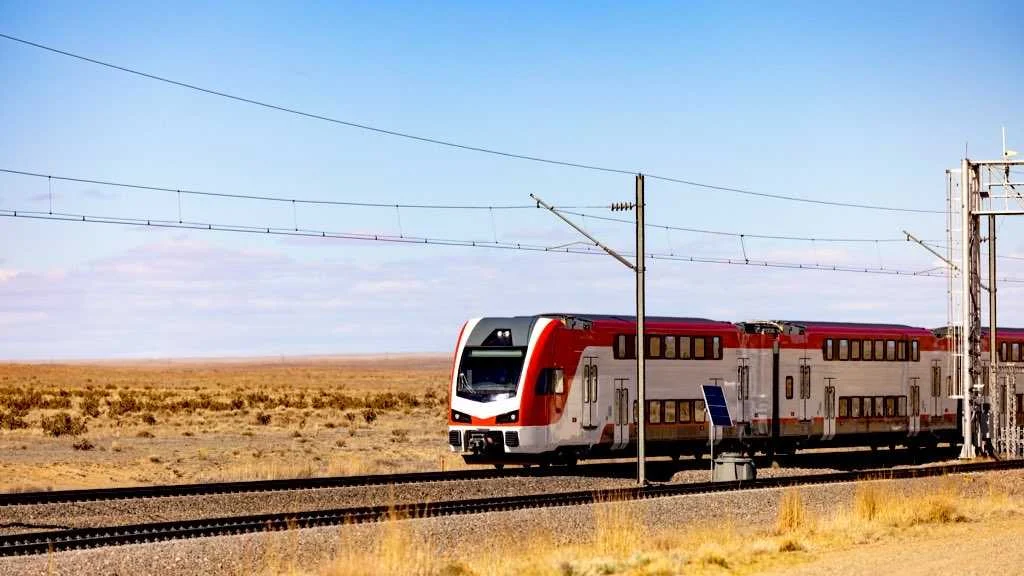
SAN FRANCISCO — The transformation of the historic San Francisco Bay Area commuter rail line into a modern, electrified corridor has hit significant financial and scheduling milestones. Caltrain’s flagship modernization initiative—the Caltrain Electrification Project—has experienced a substantial budget escalation, pushing its total cost to $2.44 billion, up from its initial baseline projection of $1.98 billion.
This financial adjustment represents a $462 million increase over the original estimate and exceeds the Federal Transit Administration’s (FTA) earlier projection made earlier in the year by $129 million. Despite these financial hurdles, project leadership, regional stakeholders, and transit authorities remain steadfast in their commitment to delivering a greener, faster, and higher-capacity transit system to the densely populated Peninsula corridor.
Main Facts
At its core, the Caltrain Electrification Project is designed to revolutionize regional transit along the 51-mile corridor stretching from San Francisco’s 4th and King Street Station down to the Tamien Station in San Jose. By replacing the aging fleet of diesel-powered locomotives with high-performance electric multiple units (EMUs), the initiative aims to drastically cut greenhouse gas emissions, improve air quality for communities along the right-of-way, and dramatically increase passenger capacity.
However, realizing this vision requires navigating complex engineering feats, supply chain disruptions, and shifting macroeconomic conditions. The updated $2.44 billion budget is the result of a comprehensive, line-by-line financial review and a critical settlement agreement with the project’s primary design-build contractor, Balfour Beatty (BBII).
Key drivers behind the increased budget include:
- Contractor Settlements: Resolving commercial disputes and mitigating delays stemming from the extension of the project timeline out to 2024.
- Unforeseen Subsurface Conditions: Navigating the unpredictable realities of drilling foundations into a historic 150-year-old railway right-of-way.
- Pandemic-Era Disruptions: Accounting for labor shortages, material cost inflation, and logistical bottlenecks caused by the COVID-19 pandemic.
- Utility and Real Estate Complexities: Managing extensive coordination with local utility providers and acquiring necessary right-of-way permissions.
To close the newly surfaced $462 million funding gap, Caltrain is actively collaborating with federal, state, and local funding partners. The agency has already secured substantial supplemental funds, including $52.4 million from federal allocations, access to a $150 million financing credit line, and $60 million drawn from Measure RR capital reserves. Additional relief may be found in major legislative packages, such as the federal Infrastructure Investment and Jobs Act (IIJA) and upcoming state transportation budgets.
Chronology of the Corridor Modernization
Understanding the trajectory of the Caltrain Electrification Project requires looking back at its historical milestones, the delays that reshaped its timeline, and the rigorous phases of engineering that brought the system to its current state of near-completion.
The Genesis and Early Construction (2017–2019)
The physical transformation of the corridor officially broke ground in July 2017. Initial years focused heavily on heavy civil engineering, utility relocation, and the grueling task of clearing the path for the overhead catenary system (OCS). Crews began drilling thousands of foundation holes along the tracks—a process heavily complicated by the century-and-a-half-old infrastructure buried beneath the surface.
The Pandemic and Schedule Revisions (2020–2021)
As the global COVID-19 pandemic swept across the globe in 2020, transit agencies faced unprecedented operational and financial challenges. Supply chains fractured, labor availability fluctuated, and social distancing protocols slowed down field operations. During this period, Caltrain and Balfour Beatty confronted various commercial disputes regarding schedule slippage and escalating costs. In response, project leadership authorized schedule adjustments, officially pushing the anticipated completion and revenue service window to 2024 to ensure the work could be executed safely and thoroughly without cutting corners.
The Turning Point and Settlement (2021–2022)
A crucial turning point occurred with the finalization of negotiations and a formal settlement with Balfour Beatty. Rather than devolving into prolonged litigation, the agreement successfully resolved past commercial friction and established a novel "shared risk pool." This collaborative financial mechanism is designed to handle unforeseen future hurdles while introducing performance incentives for the contractor to achieve critical milestones early, such as completing segments of revenue service ahead of schedule.
Independent, outside transit experts were brought in to vet both the settlement and the comprehensive budget update. Their mandate was clear: establish absolute cost certainty and lock in a realistic project schedule that the public and funding partners could trust.
Supporting Data and Technical Progress
While the financial metrics reflect a challenging fiscal environment, the physical engineering data tells a story of remarkable progress on the ground. The most labor-intensive and unpredictable civil risks of the project have largely been surmounted.
Foundation Work and Civil Infrastructure
Constructing the overhead electrical grid required drilling over 3,000 foundations along the entire 51-mile alignment. Because the corridor has served as a vital rail link for 150 years, engineers routinely encountered uncharted subterranean utilities, old structural remnants, and variable soil compositions. Despite these obstacles, civil work is now effectively complete, removing one of the project’s single greatest risk factors. As of recent updates:

- 95% of foundations have been successfully installed.
- Only 59 foundations remain to be drilled and poured.
Power Facilities and Catenary Systems
The electrical backbone of the new system is rapidly taking shape. Caltrain reported that all 10 traction power facilities—responsible for converting and supplying electricity to the overhead lines—are on track to reach completion. Concurrently, the installation of the overhead catenary system (OCS) has pressed forward aggressively, with full system installation slated for completion.
Rolling Stock and System Integration
With the physical infrastructure nearing its final configuration, the focus of the project has pivoted toward signaling, communication, and system integration.
- Spring 2022: The arrival of the very first state-of-the-art electric trains manufactured by Stadler marked a visual and symbolic milestone for riders and rail enthusiasts alike.
- Testing Phase: Throughout 2022, specialized electric locomotives began running test cycles along the newly strung catenary wires, ensuring seamless interoperability between the power supply, pantographs, and onboard train management systems.
Official Responses and Stakeholder Perspectives
The revelation of a multi-million-dollar budget increase naturally drew scrutiny from regional leaders, transit advocates, and federal partners. However, the overarching response has been characterized by pragmatic problem-solving and an unwavering commitment to the ultimate transformation of the corridor.
Caltrain leadership has emphasized that transparency and third-party validation were paramount in finalizing the updated budget. By submitting the settlement and financial forecasts to rigorous outside review, the agency sought to reassure funding partners that the $2.44 billion price tag represents a hard ceiling backed by concrete risk-mitigation strategies.
Federal and state legislative delegations have also stepped up to the plate. Recognizing the strategic importance of the Bay Area’s rail network to California’s broader climate and economic goals, federal transportation officials have maintained an open dialogue with Caltrain. The injection of early federal funds—alongside potential capitalization from the Infrastructure Investment and Jobs Act—underscores a bipartisan understanding that modernizing legacy rail systems is an essential national priority.
Local municipal leaders along the Peninsula—spanning San Francisco, San Mateo, and Santa Clara counties—have similarly voiced support. They recognize that while the cost increases are regrettable, abandoning or scaling back the project was never a viable option. The communities stand to gain immensely from a quieter, cleaner, and more frequent rail service that relieves chronic highway congestion on the heavily trafficked U.S. Route 101 and Interstate 280 corridors.
Implications for the Future of Bay Area Transit
The completion of the Caltrain Electrification Project carries profound implications that extend far beyond the immediate rail corridor, serving as a critical pillar for California’s ambitious environmental and mobility goals.
Environmental and Climate Impact
Transportation remains one of the largest contributors to greenhouse gas emissions in California and the United States as a whole. By transitioning away from the decades-old diesel locomotives that currently rumble through the Peninsula, Caltrain will drastically reduce its carbon footprint. The shift to electric propulsion will eliminate harmful diesel particulate matter, significantly improving local air quality for schools, neighborhoods, and parks situated adjacent to the tracks. This directly aligns with California’s aggressive mandates to achieve carbon neutrality and transition toward sustainable, zero-emission public infrastructure.
Capacity and Ridership Expansion
Beyond environmental metrics, electrification fundamentally changes the operational capability of the railroad. The new Electric Multiple Units (EMUs) offer superior acceleration and deceleration performance compared to traditional diesel-hauled trains. This dynamic capability allows Caltrain to operate more frequent, reliable service schedules.
By 2040, the electrification framework is projected to triple transport capacity along the corridor, accommodating a vastly larger pool of daily commuters, students, and recreational travelers. This increased throughput is vital for supporting the region’s continued economic growth without inducing further gridlock on adjacent roadways.
Integration with High-Speed Rail
Furthermore, the electrified Caltrain corridor is designed to serve as the physical foundation for the future California High-Speed Rail system. The infrastructure being built today—including the catenary systems, upgraded signal blocks, and modernized stations—will eventually accommodate high-speed intercity trains sharing the right-of-way. In this sense, every dollar invested in the Caltrain upgrade is a foundational down payment on a statewide high-speed rail network that will eventually link Northern and Southern California.
A Blueprint for Modernizing Legacy Infrastructure
Finally, the trials and ultimate triumphs of the Caltrain Electrification Project offer valuable lessons for transit agencies nationwide. Undertaking massive modernization efforts on active, century-old rail corridors while maintaining daily passenger service is an extraordinarily complex engineering challenge. By establishing shared risk pools with contractors, engaging in transparent third-party financial audits, and leveraging diverse federal and state funding streams, Caltrain has established a pragmatic playbook for executing mega-projects in an era of post-pandemic economic uncertainty.
As the final foundations are poured, the last stretches of catenary wire are tensioned, and the sleek new electric trains undergo rigorous testing, the Bay Area stands on the precipice of a new era in mass transit—one defined by clean power, enhanced capacity, and a modernized passenger experience that will serve generations to come.

