

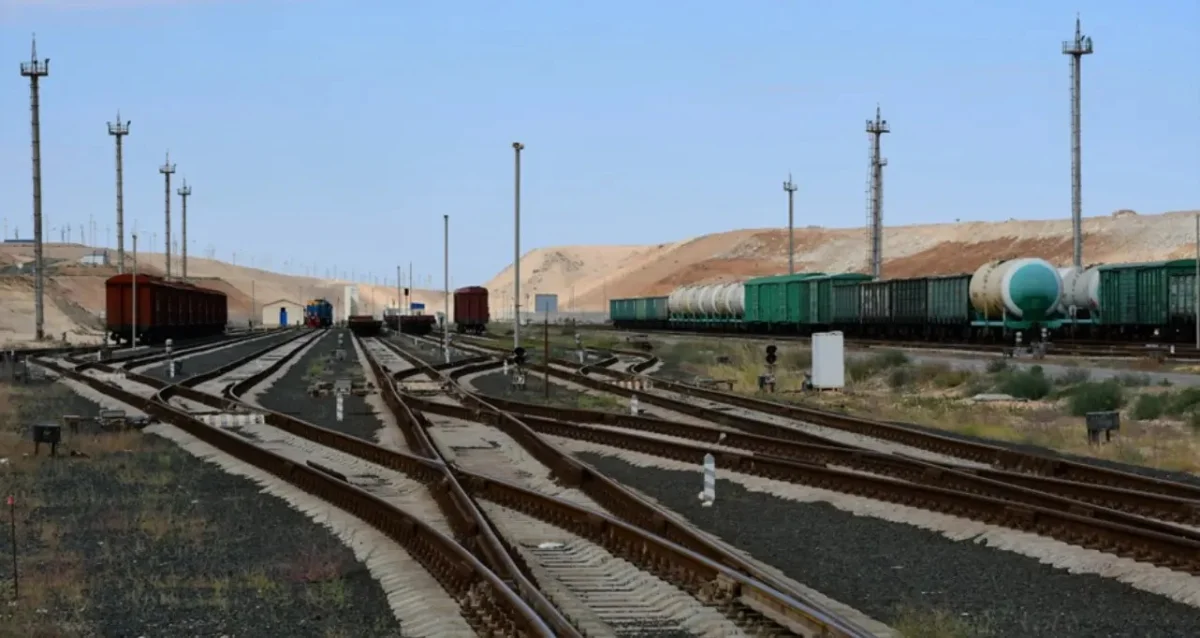
In a landmark move designed to bolster the connectivity of the Eurasian continent, the European Bank for Reconstruction and Development (EBRD) has announced a significant financial commitment to Kazakhstan’s national railway operator, KTZ (Kazakhstan Temir Zholy). The EBRD will invest up to USD 125 million as part of a larger USD 1 billion Eurobond issuance, a move that signals strong international confidence in the modernization of Central Asia’s primary logistics backbone.
This investment is not merely a financial transaction; it represents a strategic alignment between international development goals and Kazakhstan’s ambition to evolve from a landlocked nation into a land-linked transit hub. By focusing on the Trans-Caspian Corridor—the so-called "Middle Corridor"—this financing aims to create a more resilient, efficient, and sustainable artery for global trade.
Main Facts: A Strategic Financial Injection
The Eurobond issuance, now officially listed on both the London Stock Exchange and the Kazakhstan Stock Exchange (KASE), serves as the cornerstone of KTZ’s capital-raising strategy. With the EBRD serving as a key anchor investor, the total USD 1 billion raised provides KTZ with the necessary liquidity to undertake long-overdue infrastructure upgrades.
The investment package is multi-faceted, focusing on three core areas:
- Infrastructure Modernization: Upgrading aging passenger stations to meet 21st-century safety and efficiency standards.
- Strategic Corridor Development: Enhancing the capacity of the Trans-Caspian International Transport Route (TITR) to handle increased cargo volumes.
- Operational Resilience: Integrating international best practices in cybersecurity and digital passenger services.
The EBRD’s participation acts as a "seal of approval," mitigating investment risk and encouraging private sector participation in the development of Central Asian infrastructure.
Chronology: The Evolution of the Middle Corridor
The significance of this investment can only be understood through the lens of recent geopolitical and logistical shifts.
2022: The Strategic Pivot
Following the disruption of traditional northern transit routes between Asia and Europe, the Trans-Caspian Corridor gained unprecedented international attention. Kazakhstan, realizing its unique position, began accelerating infrastructure improvements.
2023: Strengthening Partnerships
KTZ intensified its collaboration with international financial institutions, including the World Bank and the EBRD, to secure funding for the second phase of infrastructure expansion, focusing on port upgrades and double-tracking key rail sections.
2024: The Eurobond Initiative
KTZ initiated the planning for the USD 1 billion Eurobond issue, seeking to diversify its funding sources away from purely sovereign-backed loans to capital market-based financing.
2025: Finalizing the Agreement
After extensive due diligence regarding ESG (Environmental, Social, and Governance) standards, the EBRD officially committed its USD 125 million tranche, ensuring that the funding would be tied to specific performance indicators, including accessibility and cyber-resilience.
Supporting Data: The Scale of KTZ Operations
To appreciate the magnitude of this investment, one must look at the sheer scale of KTZ’s operational footprint. As the backbone of the Kazakh economy, the network is massive:
- Network Length: 16,400 kilometers of track spanning the vast geography of Kazakhstan.
- Rolling Stock: A fleet comprising over 1,700 locomotives, 46,800 freight wagons, and 2,300 passenger carriages.
- Transit Potential: The Trans-Caspian route has seen cargo volume growth exceeding 50% year-on-year in some sectors, highlighting the urgent need for the infrastructure upgrades funded by this bond.
The EBRD’s long-term relationship with Kazakhstan underscores its commitment to the region. With nearly EUR 11 billion invested across 352 projects, the EBRD remains the largest institutional investor in Central Asia. This latest deal is a continuation of a multi-decade effort to integrate Kazakhstan into the global market.

Modernizing the Passenger Experience: Safety and Inclusivity
A critical component of this investment is the focus on the "human" element of rail travel. While the Middle Corridor is often discussed in the context of freight and cargo, the EBRD’s mandate specifically targets the modernization of passenger stations.
The planned upgrades include:
- Passenger Throughput: Increasing the capacity of terminal buildings to handle higher traffic volumes without congestion.
- Safety and Lighting: Implementing advanced LED lighting and structural safety monitoring systems to reduce maintenance costs and improve the passenger environment.
- Universal Design: A major push toward full accessibility for people with disabilities. This includes the installation of elevators, tactile paving, and specialized information systems, ensuring that KTZ aligns with international standards for inclusive public transport.
By modernizing these hubs, KTZ is not only improving service for Kazakh citizens but is also enhancing the professional image of the national carrier as it seeks to attract international transit travelers.
Cybersecurity: Safeguarding the Digital Railway
As KTZ digitizes its ticketing, freight tracking, and operational management systems, it faces a new class of threats. The EBRD has stipulated that a portion of the technical cooperation funds must be dedicated to cybersecurity.
This investment will support:
- Infrastructure Hardening: Protecting critical signal and switching systems from unauthorized access.
- Data Integrity: Ensuring that the digitization of the supply chain—a prerequisite for efficient transcontinental logistics—remains secure against industrial espionage and cyber-attacks.
- Training: Developing the internal expertise within KTZ to manage sophisticated IT security protocols in-house.
Implications: A New Era for Eurasian Trade
The implications of this financing extend far beyond the borders of Kazakhstan.
For the Global Supply Chain
The Trans-Caspian Corridor is increasingly viewed as the "middle ground" for global logistics. By providing an alternative to sea routes and northern land bridges, this route offers a strategic hedge against geopolitical instability. The EBRD’s investment ensures that this alternative remains viable, efficient, and sustainable.
For the Kazakh Economy
For Kazakhstan, the rail network is a primary engine of GDP. By improving the efficiency of the Middle Corridor, KTZ is directly increasing the country’s export competitiveness. Furthermore, the adoption of international standards—facilitated by the EBRD’s technical cooperation—will force a modernization of the entire Kazakh logistics sector, pushing local firms to compete on a global stage.
For Sustainable Development
The EBRD’s involvement is inherently tied to the bank’s green mandate. While rail is already more sustainable than road or air transport, the modernization of KTZ’s infrastructure is expected to lower the carbon footprint of its operations significantly. Efficient station management and optimized locomotive scheduling contribute to lower energy consumption, aligning with global climate goals.
Conclusion: A Commitment to Long-Term Growth
The USD 125 million investment by the EBRD in KTZ’s Eurobond is a testament to the transformative power of strategic infrastructure financing. It combines the financial muscle required for physical construction with the institutional expertise needed for operational reform.
As KTZ continues to manage its 16,400-kilometer network, the impact of these improvements will be felt not just in the refurbished stations of Kazakhstan, but in the smoother flow of goods between the manufacturing hubs of East Asia and the consumer markets of Europe. By championing inclusivity, safety, and digital security, this project ensures that KTZ remains not only a regional leader but a vital player in the future of global trade.
The partnership between the EBRD and Kazakhstan serves as a blueprint for how development banks can effectively leverage private capital to build the infrastructure of tomorrow. As the Middle Corridor continues to evolve, the investments made today will undoubtedly serve as the foundation for a more connected and resilient Eurasian economy.

