

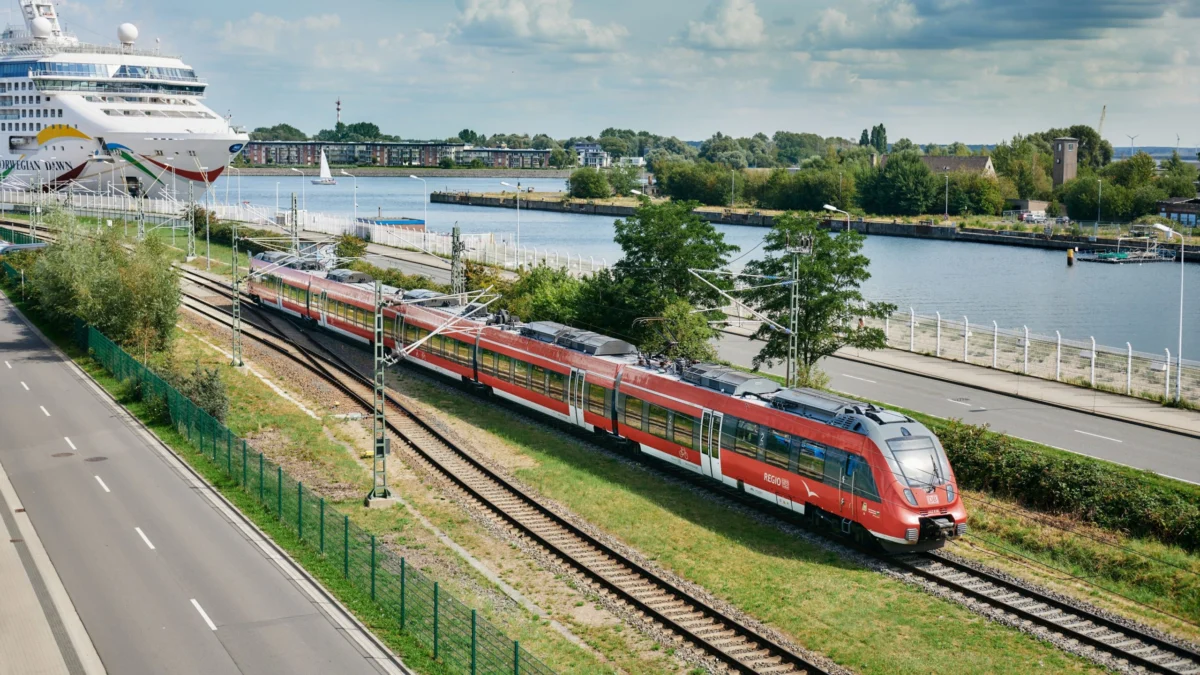
BRUSSELS — As the European Commission prepares to unveil its highly anticipated legislative proposals for the revision of the EU Emissions Trading System (ETS) on July 17, 2026, a formidable alliance of European rail and combined transport organizations has issued a unified rallying cry. The central message from the industry is clear: if the ETS is to maintain its credibility as a cornerstone of European climate policy, a dedicated portion of carbon revenue generated under the system must be systematically funneled back into the rail network.
Rather than diluting these funds across a broad spectrum of transport modes or distributing resources evenly without regard to performance, industry leaders argue that funds must be strategically targeted where the fastest, most profound emissions reductions can be achieved.
This collective position is outlined in a joint policy paper endorsed by eight leading European rail and intermodal associations: AERRL, ALLRAIL, CER, ERFA, EIM, UIP, UIRR, and UNIFE. Together, these organizations represent the full spectrum of the European railway ecosystem—from infrastructure managers and passenger operators to freight forwarders, combined transport operators, and rail supply industry manufacturers. Their lobbying push highlights an urgent structural paradox in European green policy: while rail is penalized indirectly by carbon pricing mechanisms through higher electricity costs, it receives disproportionately little direct support from the resulting revenues to scale up its capacity.
1. Main Facts: The Stakes of the July 2026 ETS Revision
The upcoming legislative proposal on July 17, 2026, represents a pivotal milestone in the evolution of the European Union’s flagship climate tool. The EU ETS, which places a cap on greenhouse gas emissions from heavy industry, power generation, and aviation (with the newly introduced ETS2 expanding into road transport and buildings), generates billions of euros annually through carbon allowances. How these revenues are distributed will shape the trajectory of European mobility for decades.

The rail industry’s core thesis is simple: the carbon mechanism should reward and reinforce solutions that have already proven their climate credentials, rather than treating all transport modes equally regardless of their environmental footprint.
Official European data underpins the industry’s demands. Over 80% of all rail traffic within the European Union is currently electrified, and the entire railway sector accounts for less than 1% of the bloc’s total transport-related greenhouse gas emissions. Conversely, road transport remains the primary driver of transport emissions in Europe, generating nearly three-quarters of the sector’s total emissions in 2023.
Rather than seeking an artificial market advantage, the rail sector argues that the ETS revision must officially codify and support an advantage that already exists structurally. By directing ETS revenues toward infrastructure, capacity enhancements, and cross-border interoperability, the European Commission can accelerate a modal shift that solves both climate and capacity crises.
2. Chronology: The Path to the July 2026 Policy Window
To understand the urgency behind the rail sector’s July 2026 mobilization, it is necessary to trace the legislative trajectory of European climate and transport policy over the past decade:

- 2019–2020 (The European Green Deal): The European Commission launches the Green Deal, setting a binding target for the EU to achieve climate neutrality by 2050, with an intermediate target of a 55% reduction in net greenhouse gas emissions by 2030 compared to 1990 levels. Sustainable and smart mobility is designated as a core pillar.
- December 2021 (The Sustainable and Smart Mobility Strategy): The Commission sets clear benchmarks for European rail: high-speed rail traffic is expected to double by 2030 and triple by 2050, while rail freight traffic must increase by 50% by 2030 and double by 2050.
- 2022–2023 (The "Fit for 55" Package): Negotiations culminate in the reform of the EU ETS, the expansion of carbon pricing to maritime transport, and the establishment of ETS2 for road transport and buildings. However, the allocation of revenues continues to favor general state budgets or road-centric infrastructure transition funds, leaving rail underfunded relative to its potential.
- 2024–2025 (Widening Performance Gap and Bottlenecks): Despite soaring demand for green travel and logistics, European rail networks suffer from severe infrastructure bottlenecks, historical underinvestment, and incomplete cross-border corridors. Meanwhile, road emissions remain stubbornly high.
- Early 2026 (Consolidation of the Joint Industry Position): Recognizing that the upcoming July 17, 2026 revision of the ETS is a once-in-a-generation window to influence funding streams, AERRL, ALLRAIL, CER, ERFA, EIM, UIP, UIRR, and UNIFE draft and finalize their joint position paper.
- July 17, 2026 (Upcoming Proposal): The European Commission is scheduled to formally adopt its legislative package revising the ETS, marking the ultimate test of whether Brussels will heed the rail sector’s call for targeted decarbonization financing.
3. Supporting Data: Road vs. Rail in the EU Emissions Equation
The statistical argument for prioritizing rail in the ETS revenue allocation is overwhelming. According to data from the European Environment Agency (EEA) and the European Commission:
- Emissions Share: Rail transport is responsible for a microscopic 0.4% of the EU’s total transport greenhouse gas emissions, despite handling roughly 17% of the bloc’s freight transport and 8% of domestic passenger transport.
- Road Dominance and Pollution: Road transport accounts for roughly 70% to 75% of all transport-related greenhouse gas emissions in the EU. Passenger cars alone represent approximately 72% of European transport activity. Furthermore, fossil fuels still cover over 90% of road transport’s energy needs.
- Noise Pollution: Road traffic is also the leading source of transport-related noise pollution in Europe, exposing an estimated 90 million citizens to noise levels well above internationally recognized harmful thresholds.
- Energy Efficiency: Rail operations demonstrate superior energy efficiency. Intermodal freight trains operating across Europe’s ~1,300 terminals already reduce energy consumption by up to 70% per ton-kilometer and cut carbon emissions by 60% to 90% compared to heavy road freight.
Despite these clear metrics, structural hurdles remain. While aviation and maritime transport are projected to see their combined share of Europe’s transport emissions rise from roughly 25% today to nearly 50% by 2050, road transport remains deeply entrenched. Rail’s market share in freight has stagnated or even declined in certain corridors between 1995 and 2023, largely due to infrastructure deficiencies rather than a lack of market demand.
4. Official Industry Responses and Strategic Demands
The eight organizations spearheading the joint position paper emphasize that reinvesting ETS revenues into rail is a matter of economic and environmental efficiency.
What the ETS Revenues Should Fund
The coalition has laid out a precise roadmap detailing where every euro of redirected carbon revenue should go. Rather than funding generalized administrative budgets, the money must target tangible network upgrades:

- Network Capacity and Expansion: Upgrading high-speed, regional, and urban rail networks to handle growing passenger volumes.
- Freight Corridors: Expanding the network of tracks capable of accommodating standardized 740-meter-long freight trains.
- Terminal Electrification: Modernizing and electrifying intermodal terminals, ports, and logistics depots.
- Traction Power Supply: Strengthening green electricity supply grids specifically dedicated to railway traction.
- Digitalization and Interoperability: Accelerating the deployment of key European railway technologies, including the European Rail Traffic Management System (ERTMS), the Future Railway Mobile Communication System (FRMCS), and Digital Automatic Coupling (DAC).
The Equity Argument
Industry leaders point out an inherent imbalance in the current system. Because railways are heavily electrified, rail operators indirectly bear the costs of carbon pricing through higher electricity bills passed down by energy markets influenced by the ETS. In essence, the rail sector already contributes financially to the carbon mechanism but does not receive a proportional share of the funds generated to reinvest in its own growth.
"This is not about asking for subsidies or artificial market distortions," a spokesperson for the coalition noted. "It is about correcting a market failure where the cleanest mode of transport subsidizes the broader system while struggling with chronic infrastructure underfunding."
5. Implications for the Future of European Mobility
The European Commission’s decision on July 17, 2026, will have far-reaching implications for the EU’s 2030 and 2050 climate targets.
If Brussels chooses to integrate the rail sector’s recommendations into the revised ETS framework, funding instruments such as the Innovation Fund, the Modernization Fund, and the Social Climate Fund could begin prioritizing high-yield rail projects. This would unlock the capital needed to bridge missing cross-border links, fix fragmented signalling systems, and build out the robust intermodal network required to hit the target of moving 30% of freight to rail by 2030.

Conversely, failing to direct carbon revenues into rail infrastructure risks entrenching the status quo. Without dedicated capital to overcome infrastructure bottlenecks—such as insufficient alternative routes, missing terminal capacity, and incomplete cross-border interoperability—the ambitious modal shift targets set out in the European Green Deal will remain out of reach.
As July 17, 2026, approaches, policymakers in Brussels face a defining choice: whether to treat the EU Emissions Trading System as a mere fiscal accounting exercise, or to transform it into a precision instrument that actively builds the green transport infrastructure of tomorrow.

