

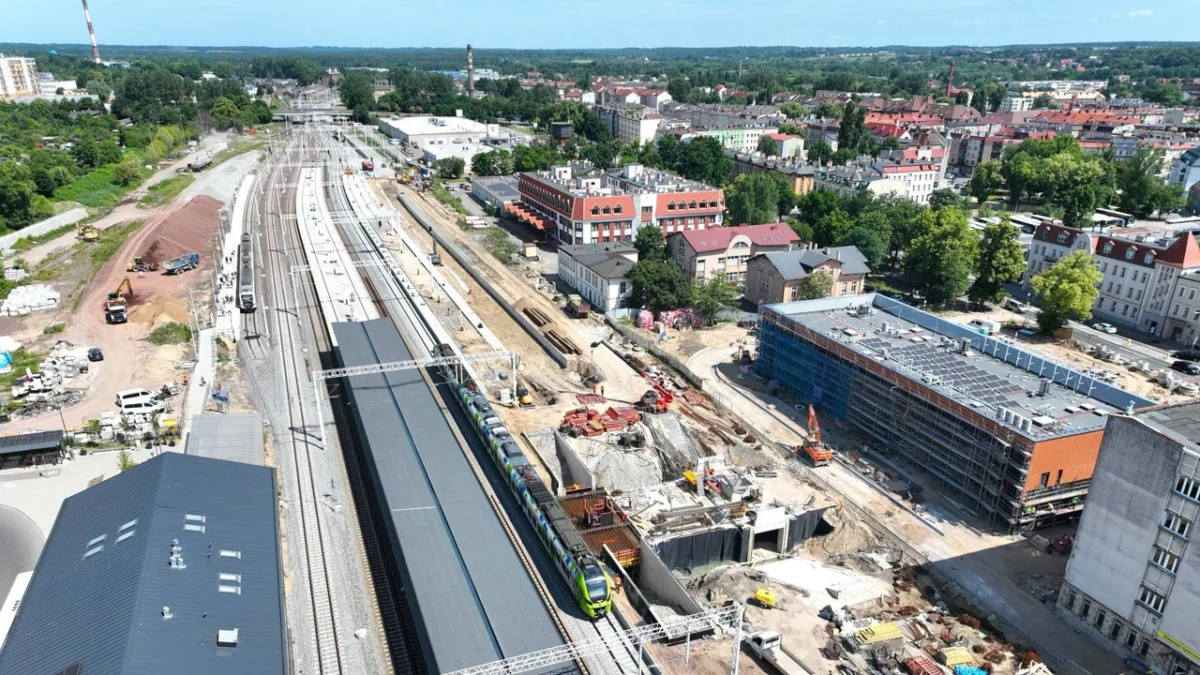
WARSAW — Driven by unprecedented infrastructural investment, aggressive digitalization, sweeping rolling stock modernization, and a visionary master plan extending to 2050, Polish Railways (Polskie Koleje Państwowe) is steadily emerging as the standard-bearer for modern rail transit in Europe.
Far from a simple upgrade of legacy tracks, Poland is orchestrating a complete overhaul of its national transport corridors. By combining cutting-edge high-speed lines, targeted regional connectivity projects, and unwavering support for domestic manufacturing, the country is transforming its railway network into a catalyst for national economic growth, regional cohesion, and European integration.
Main Facts: The Anatomy of Poland’s Rail Revolution
At the heart of Poland’s rail transformation lies a multi-layered strategy designed to radically enhance capacity, safety, and passenger experience.
- The "Integrated Rail Network" Strategy: For the first time in its modern history, Poland has formulated a comprehensive, long-term development roadmap stretching to 2050. The strategy calls for the construction of 4,700 kilometers of brand-new rail lines—including 2,700 kilometers dedicated exclusively to high-speed rail (HSR).
- Record Passenger Volumes: In 2025, the Polish rail network handled an astounding 438 million passengers, marking a 7.7 percent year-on-year increase. National long-distance operator PKP Intercity reported carrying 44.7 million passengers in the first half of the year alone—a staggering 45 percent jump compared to the same period in 2023.
- Unprecedented Speeds: Moving beyond the current 200 km/h speed limit, Poland is designing core corridors to handle speeds of up to 350 km/h, putting its domestic infrastructure on par with world-leading systems in Japan and China.
- Massive Capital Infusion: Infrastructure manager PKP Polskie Linie Kolejowe (PKP PLK) is executing the largest capital program in the nation’s history. Immediate developments are backed by a €23.5 billion (100 billion zlotys) budget, while broader mid-term strategies through 2032 are projected at €42.4 billion (180 billion zlotys). Total investments under the long-term integrated network concept are estimated at a monumental €143.5 billion.
- Domestic Industry Priority: Strategic procurement policies ensure that domestic rolling stock manufacturers—such as Pesa, Newag, and FPS H. Cegielski—as well as locally established international manufacturers like Alstom, Stadler, and Greenbrier, secure multi-billion-euro contracts, directly fueling regional economic output.
Chronology of Progress: From Legacy Network to 2050 Vision
To understand the velocity of Poland’s rail renaissance, one must look at the sequence of policy implementations, infrastructural milestones, and strategic announcements that have shaped the sector over recent years.

The Foundation Years (2021–2023)
Following years of underinvestment in regional lines, the Polish government and rail authorities initiated a systematic bailout and revitalization program for secondary routes. The focus shifted toward halting the exclusion of small towns from the national grid. Simultaneously, planning accelerated for the Centralny Port Komunikacyjny (CPK)—a massive multi-modal transport hub and high-speed rail initiative designed to reshape the country’s economic geography. PKP Intercity began laying the groundwork for massive fleet renewals, backed by European funds and the National Recovery and Resilience Plan (NRRP).
The Breakthrough Period (2024–2025)
Passenger numbers began to shatter historical records. In 2025, the network hit 438 million journeys—the highest volume recorded in over three decades. Major structural upgrades commenced along key international and domestic corridors. The "Y" high-speed line project, linking Warsaw, Łódź, Poznań, and Wrocław, advanced rapidly through detailed design phases and land procurement. Concurrently, regional connections began to reappear on maps; towns left isolated for decades saw concrete timelines for the return of passenger services.
The "Our Railway" Milestone (July 22, 2026)
On July 22, 2026, at a high-profile national conference appropriately titled "Our Railway" hosted at the newly modernized Warsaw West station, Prime Minister Donald Tusk and Infrastructure Minister Dariusz Klimczak unveiled the fully crystallized 2050 master plan. The conference served as a victory lap for the administration’s transit policies, showcasing historic passenger data, revealing contracts for 350 km/h rolling stock, and solidifying the timeline for the "Integrated Rail Network."
The Road Ahead (2026–2050)
- June 2026: Łomża is scheduled to receive its first direct rail link to Warsaw in 33 years.
- By the End of 2027: Passenger rail services will formally return to long-neglected towns including Police, Sokołów Podlaski, Połaniec, and Stronie Śląskie.
- 2026–2027 Projections: PKP Intercity anticipates carrying 470 million passengers in 2026, with forecasts predicting the psychological and operational barrier of 500 million annual passengers will be broken the following year.
- By 2032: Execution of the €42.4 billion mid-term investment program managed by PKP PLK.
- By 2050: Completion of the 4,700 km new-line expansion, targeting a staggering 800 million annual passengers.
Supporting Data: Numbers That Define the Transformation
The success of Poland’s rail modernization is best illustrated through hard metrics spanning ridership, service frequency, and budgetary commitments.

| Metric | Current / Recent Data | Projected Target / Milestone |
|---|---|---|
| Annual Passengers (Network-wide) | 438 million (2025) | 470 million (2026); 500+ million (2027); 800 million (2050) |
| PKP Intercity Growth | H1 2026: 44.7 million (+11% YoY, +45% vs 2023) | Continued double-digit annual growth |
| Daily Train Movements | Over 70,000 trains/day (All operators) | Further densification across regional corridors |
| Summer Timetable Services | 560 daily services (PKP Intercity, +46 vs prior year) | Expanding seasonal and weekend capacity |
| High-Speed Rail Expansion | ~800 km under active development (Warsaw-Białystok-Ełk, Rail Baltica, "Y" project) | 2,700 km of new HSR lines by 2050 |
| Infrastructure Budgets | €23.5 billion (immediate); €42.4 billion (through 2032) | €143.5 billion total estimated for the 2050 Integrated Network |
Official Responses: What Leaders Are Saying
The political and operational leadership behind the transformation emphasize that the railway revolution is fundamentally about restoring dignity, mobility, and economic equity to all citizens.
Speaking at the Warsaw West conference on July 22, 2026, Prime Minister Donald Tusk did not mince words regarding the nation’s ambitions:
"We are building the most modern rail network on the continent. Over the past two and a half years, we have launched new connections and stations and upgraded existing links. We will have the fastest railway in Europe, because Poles deserve to be able to travel just like the Japanese or the Chinese. Our railways are already carrying almost as many people as the entire population of the European Union."
Echoing the Prime Minister’s optimism, Infrastructure Minister Dariusz Klimczak highlighted the sheer momentum of the passenger boom:

"Over the last three years, the number of passengers travelling by train has increased by 100 million. In 2026, we will carry 470 million passengers, and next year we will break the 500 million passenger mark. PKP Intercity has increased the number of daily services by 130 and is carrying 30 per cent more passengers."
Behind these political statements, infrastructure managers and operators stress the cooperative nature of the achievement. The record-breaking transport figures—representing the highest passenger levels in over three decades—are the direct result of synchronized collaboration between national ministries, local self-governments, regional operators, and the infrastructure backbone, PKP Polskie Linie Kolejowe.
Implications: Economic Growth, Territorial Cohesion, and Industrial Might
The repercussions of Poland’s multi-billion-euro railway bet extend far beyond improved commute times and comfortable holiday travel. The strategy carries profound structural implications for the country’s economy, society, and position within the European Union.
Bridging the Territorial Divide
For decades, post-communist transition and highway-centric development left many smaller towns and rural districts economically isolated. By deliberately targeting the reinstatement of passenger rail to municipalities that have lacked service for 30 years or more—such as Łomża, Police, and Sokołów Podlaski—the government is actively combating transport exclusion. This spatial equity ensures that talent, tourism, and business opportunities are not restricted to major metropolitan hubs like Warsaw, Kraków, or Wrocław.

Powering the Domestic Rail Industry
A cornerstone of the Polish strategy is the conscious fostering of local economic multipliers. Rather than purely outsourcing rolling stock procurement to foreign entities, the state has directed tens of billions of zlotys toward domestic manufacturing powerhouses.
- National Champions: PKP Intercity’s procurement strategy under the National Recovery and Resilience Plan (NRRP) has funneled over €4 billion into homegrown enterprises such as FPS H. Cegielski (Poznań), Pesa Bydgoszcz, Pesa Mińsk Mazowiecki, PKP Intercity Remtrak, and Newag.
- Localized International Expertise: Major multinational players operating within Polish borders are thoroughly integrated into the local economy. Alstom secured a massive contract for 42 double-decker trains (with options for 30 more), which are being engineered and assembled by Polish workers at facilities in Chorzów and Nadarzyn. Similarly, Stadler Polska (producing Flirt trainsets in Siedlce) and Greenbrier Poland (manufacturing and maintaining freight rolling stock in Świdnica) generate robust regional employment, robust supply chains, and specialized engineering know-how.
A European and Global Benchmark
As high-speed corridors capable of 350 km/h take shape—connecting the capital to Białystok, the Lithuanian border via Rail Baltica, and the sprawling "Y" network—Poland is shifting from a peripheral transit zone into a central node of European mobility. By the time the Integrated Rail Network reaches its 2050 horizon, handling an anticipated 800 million annual passengers, Poland will no longer be catching up to Western European transit standards. Instead, it will have engineered a blueprint for how a mid-sized European nation can modernize its industrial base, heal regional divides, and construct a world-class, carbon-efficient mobility network for the 21st century.

