

At MWC Barcelona 2026, a pivotal shift in the architecture of the global digital backbone was unveiled. Huawei, a dominant force in the optical transmission sector for 17 consecutive years, announced a comprehensive evolution of its Optical Transport Network (OTN) portfolio. Moving away from the traditional model of passive data pipes, the company is ushering in an era of "intelligent infrastructure"—networks that do not merely transmit data, but actively perceive, secure, and self-optimize.
The move represents a significant departure from legacy networking philosophies, aligning with the surging demands of AI-driven industries such as rail, power grids, and government services, where reliability and latency are not just metrics, but operational mandates.
The Evolution of the Network: From Passive to Predictive
Historically, Optical Transport Networks have served as the silent workhorses of the digital age. Their singular mission was the reliable, high-speed movement of data from point A to point B. While effective, this model is increasingly challenged by the "AI revolution," which demands not only massive bandwidth but also extreme environmental awareness and proactive security.
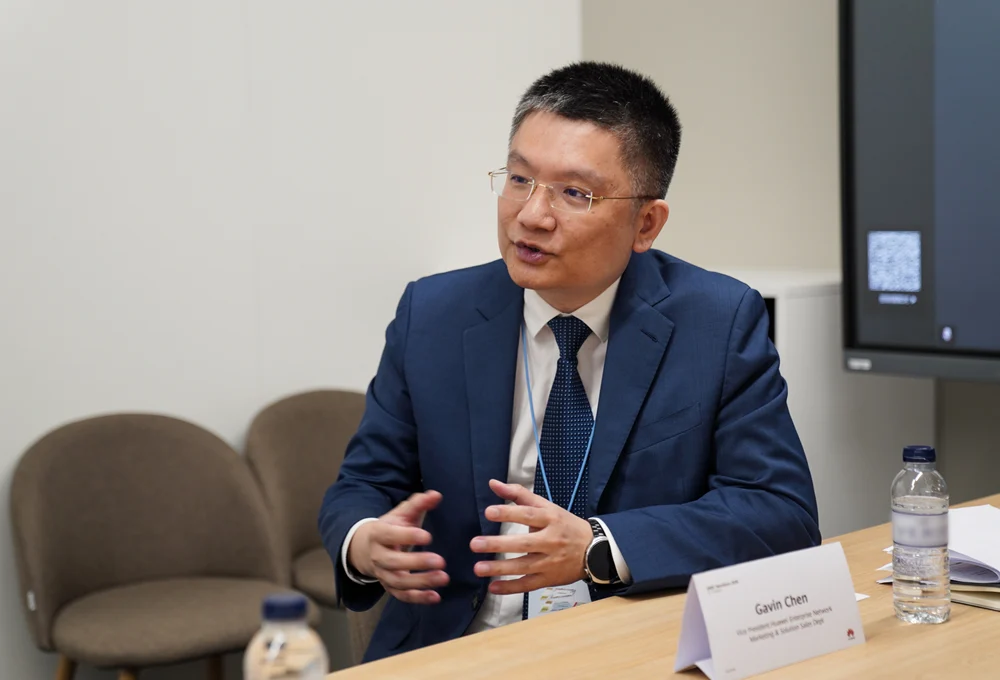
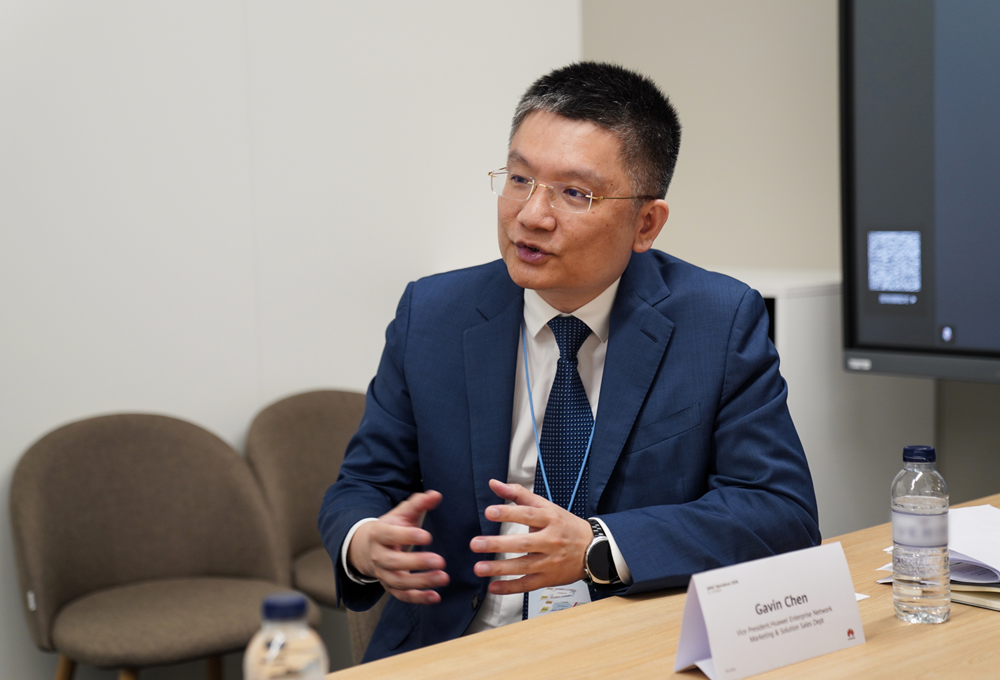
During an exclusive briefing at MWC Barcelona, Gavin Chen, Vice President of Huawei Enterprise Network Marketing & Solution Sales, articulated the vision behind this transformation. "Huawei has spent years building a substantial innovation engine, backed by over 8,000 R&D experts. We aren’t just selling equipment; we are defining the standards of the future," Chen noted. Having spearheaded over 100 industry standards and securing 30% of core patents in the field, Huawei is now leveraging that foundation to weave AI directly into the fabric of the optical layer.
The strategy builds upon the fgOTN (fine-grained OTN) solution launched at MWC 2024, providing the granular control necessary to infuse AI at the board level. By embedding AI computing power directly into network hardware, Huawei is enabling a shift toward "conversational O&M" and real-time network intelligence.
Chronology of Innovation: A Path to Intelligent Connectivity
To understand the magnitude of this shift, one must look at the progression of Huawei’s optical roadmap:
- 2024: The launch of fgOTN established the foundation for flexible, low-latency, and high-reliability data slicing, essential for the diverse requirements of critical industries.
- 2025: Initial integration of AI-driven predictive maintenance models began appearing in pilot projects, focusing on reducing network downtime.
- 2026 (MWC Barcelona): The formal integration of sensing, quantum-grade security, and the NOEMate AI assistant signals the maturity of the AI-powered OTN platform. This is no longer experimental; it is a deployable, commercial-grade solution already supporting major utility providers.
The Three Pillars of Intelligence
Huawei’s new approach centers on three core breakthroughs that redefine what an optical network can accomplish.
1. The Fiber as a Sensor
Perhaps the most striking advancement is the transformation of existing fiber infrastructure into a pervasive sensing grid. By utilizing optical fibers as distributed sensors and applying AI to analyze OTDR (Optical Time-Domain Reflectometry) signals, the network can monitor temperature, vibration, and physical stress in real time.
This eliminates the need for expensive, secondary sensing hardware. For a rail operator, this means the fiber-optic cables already buried alongside the tracks can now detect unauthorized intrusions, structural shifts, or equipment malfunctions along the route, providing immediate situational awareness without additional civil works.
2. Native Quantum Security
Cybersecurity is the primary concern for modern governments and power utilities. Huawei has moved beyond "bolt-on" encryption, instead embedding Quantum Key Distribution (QKD) natively into the OTN hardware. By sharing the same physical fiber and chassis, Huawei’s QKD modules allow for the secure distribution of quantum keys alongside high-speed data transmission. This integration solves the historical hurdle of QKD deployment, which previously required dedicated, fragile, and costly infrastructure.
3. AI-Driven Operations and Maintenance (O&M)
The management of large-scale networks is traditionally a labor-intensive, high-skill task. Huawei’s introduction of NOEMate aims to lower this barrier. By acting as a "talking assistant," NOEMate allows human engineers to query the network in natural language. Combined with NCE-T (the centralized control system), the network can now diagnose its own faults, perform root-cause analysis in seconds, and offer proactive optimization suggestions.
Supporting Data: Efficiency and Reliability
The real-world benefits of this intelligence are quantifiable. Huawei’s internal data and field deployments suggest that:
- Fault Prevention: Proactive risk identification through AI-powered optical quality analysis can prevent up to 40% of potential network failures.
- Troubleshooting Velocity: Fault location time is reduced from hours of manual inspection to mere seconds of automated, AI-driven diagnostics.
- Manpower Optimization: Operational complexity reduction has enabled a 70% decrease in the manual labor required for network maintenance.
- Deployment Speed: In the case of the Shenzhen Power Supply Bureau, the deployment cycle for quantum-enhanced networks was slashed from several months to under two weeks.
Official Perspective: The Human-Machine Symbiosis
During the media briefing, Gavin Chen emphasized that the goal is not to replace the network engineer, but to empower them. "The complexity of modern infrastructure has reached a point where human intuition alone is insufficient. By using chain-of-thought reasoning and fault feature mapping, we are providing engineers with a ‘superpower’—the ability to see into the fiber and understand the health of the network before a disruption occurs."
This sentiment is echoed by early adopters. The use of fgOTN backbone deployments at companies like EDM in Mozambique and State Grid Liaoning Electric Power in China serves as a testament to the technology’s viability in challenging, large-scale industrial environments.
Implications for the Global Digital Economy
The implications of Huawei’s "intelligent OTN" strategy are profound, particularly for the global push toward Industry 4.0.
Enhancing Critical Infrastructure
For energy grids, where a single millisecond of latency or a security breach could have catastrophic consequences, the fusion of QKD security and self-healing intelligence offers a new level of resilience. The ability to detect physical interference along thousands of kilometers of grid infrastructure is a game-changer for utility providers worldwide.
Bridging the Computing Gap
As edge computing grows, the "pipes" must become as intelligent as the data they carry. By integrating computing power into the optical layer, Huawei is facilitating a more distributed architecture, allowing data to be processed closer to where it is generated. This reduces the strain on centralized data centers and optimizes the entire network architecture for the low-latency requirements of 6G and the Internet of Things (IoT).
The Economic Case for TCO
Total Cost of Ownership (TCO) remains the final hurdle for any new technology. Huawei’s approach—consolidating sensing, security, and transmission into a single, unified chassis—presents a compelling financial argument. Reducing the number of independent systems required to run a secure, intelligent network allows organizations to deploy advanced capabilities without a proportional increase in capital or operational expenditure.
Conclusion: A New Foundation for the Future
As MWC Barcelona 2026 comes to a close, the industry is left with a clear message: the era of the passive, static data pipeline is over. The future of networking lies in platforms that are aware, adaptive, and autonomous.
Huawei’s integration of AI, quantum-grade security, and advanced sensing into the OTN layer marks a definitive milestone in digital transformation. For sectors that form the bedrock of society—power, transport, and governance—this transition to intelligent infrastructure is not merely an upgrade; it is an essential evolution to survive and thrive in an increasingly complex and interconnected world. As these systems continue to roll out globally, the "silent pipeline" is finally finding its voice, and it is using that voice to make our critical infrastructure more secure and resilient than ever before.

