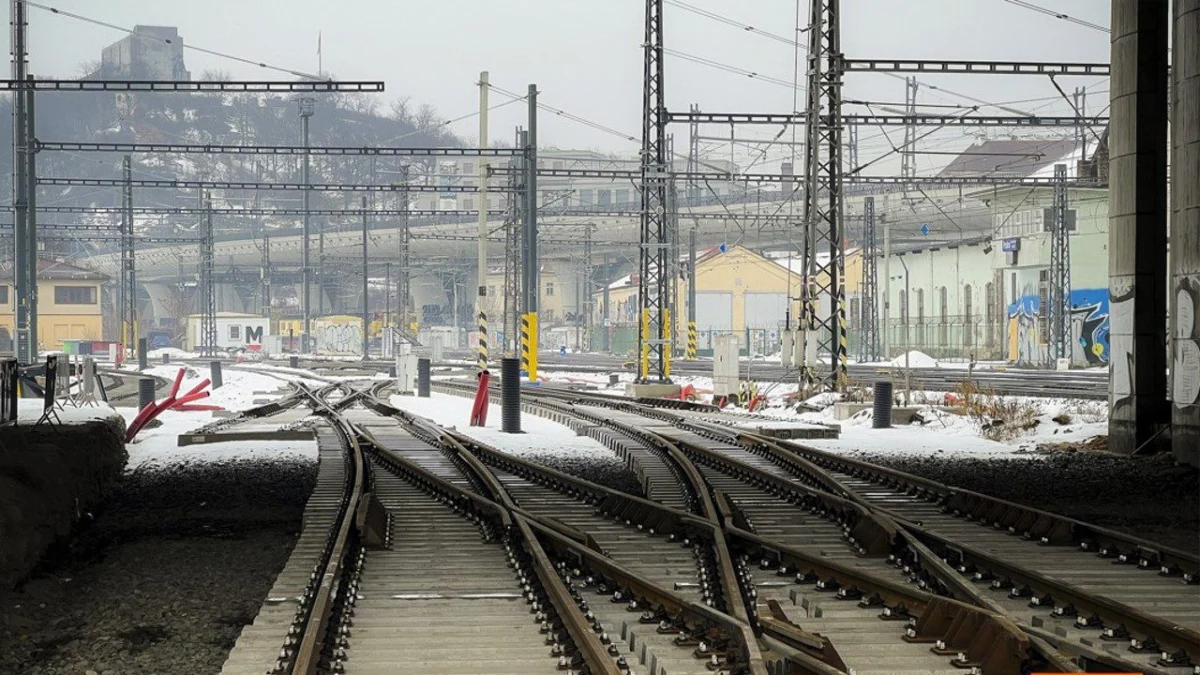
Správa Železnic Unveils Comprehensive Structural Reform to Modernize Czech Railway Sector and Boost Market Competition
rifanmuazin
November 21, 2026
7 min read
Share Article
PRAGUE — In a decisive move set to reshape the landscape of Czech rail transport, the country’s railway infrastructure manager, Správa železnic, has announced a sweeping structural and managerial overhaul. Set to take effect in April, the program aims to modernize the organization, streamline internal bureaucracy, overhaul public procurement processes, and foster a more competitive market environment.
Spearheaded by the newly appointed Chief Executive Officer, Tomáš Tóth, the reform package is projected to generate recurring annual savings of CZK 335.6 million (approximately EUR 14 million). Crucially, leadership has emphasized that these sweeping administrative changes will leave front-line and operational personnel untouched, focusing instead on pruning a historically robust upper management structure and consolidating regional divisions.
The overhaul comes at a critical juncture for the Czech Republic, as the nation accelerates investments into its core rail corridors, high-speed rail network preparations, and trans-European transport network (TEN-T) integrations. By lowering entry barriers for a broader range of suppliers and modernizing internal workflows, the government hopes to construct better, faster, and more cost-effective rail infrastructure.
Main Facts
The structural transformation of Správa železnic represents one of the most significant administrative overhauls in the modern history of the Czech railway sector. The initiative is built upon four foundational pillars:
Managerial and Administrative Simplification: The organizational hierarchy is being streamlined. Non-operational expenditures—specifically in marketing, information technology, and legal services—are targeted for a 20% reduction.
Targeted Workforce Optimization: A total of 121 administrative and managerial positions will be eliminated. Operational employees and technicians directly responsible for maintaining and managing the physical rail network are entirely excluded from these reductions.
Overhaul of Tendering and Procurement: To combat market stagnation and reduce reliance on a monopolistic or oligopolistic pool of contractors, Správa železnic is redesigning its bidding procedures. Qualification requirements will be adjusted, foreign certifications progressively recognized, and technical specifications revised.
Centralization of Operations and Procurement: Twenty-one separate operational regions within regional directorates are being consolidated under the umbrella of central dispatch centers located in Prague and Přerov. Concurrently, public procurement and commercial activities, previously fragmented across multiple units, will be centralized to eliminate duplication of effort.
Chronology: The Path to Reform
The genesis of Správa železnic’s restructuring can be traced through a series of strategic appointments, economic pressures, and long-term infrastructure ambitions.
Late 2024 – 2025: Discussions intensified within the Czech Ministry of Transport regarding the escalating costs of major infrastructure developments, such as the monumental modernization project in Česká Třebová—valued at roughly EUR 790 million—and ongoing preparations for the country’s upcoming high-speed rail lines (Vysokorychlostní tratě, VRT). Stakeholders increasingly raised concerns over the transparency, speed, and competitiveness of public procurement processes.
Early 2026: Tomáš Tóth assumed office as the Chief Executive Officer of Správa železnic, tasked by Transport Minister Ivan Bednařík with injecting greater efficiency into the organization and ensuring that public capital yields maximum economic and logistical value.
February 2026: Following rapid internal assessments, CEO Tóth presented a comprehensive reform strategy to the management team. Surprising many analysts who predicted institutional inertia, the strategy secured immediate, unanimous consensus across the board.
April 2026 (Scheduled Implementation): The structural transformation officially goes live. The initial phase will see the consolidation of regional operational units, the rollout of revised tender qualification frameworks, and the initiation of administrative downsizing.
Supporting Data and Financial Metrics
The financial justification for the reform is rooted in a meticulous audit of Správa železnic’s overhead, procurement pipelines, and administrative footprint.
Annual Savings: The total projected saving of CZK 335.6 million (EUR 14 million) will not be absorbed into general state coffers; rather, it will be directly reinvested into project preparation, feasibility studies, and long-term capital maintenance.
Overhead Reductions: By slashing expenditures in non-core administrative sectors—specifically IT infrastructure contracts, external legal counsel, and corporate marketing campaigns—by 20%, the organization expects to immediately free up capital for core engineering tasks.
Project Breakdown Mechanics: Under the new tendering philosophy, massive capital projects will no longer be routinely packaged as monolithic, single-contractor awards. Instead, complex projects will be unbundled. For instance, heavy civil engineering and earthworks will be structurally separated from specialized railway technologies, signaling systems, and electrification works.
Market Access Metrics: By facilitating the entry of smaller domestic enterprises and qualified foreign contractors—partially through the broader adoption of the "Design & Build" delivery model—Správa železnic aims to drive competitive tension down into the bidding process, theoretically curbing inflated project bids caused by supplier capacity constraints.
Official Responses and Stakeholder Perspectives
The leadership of both the Czech Ministry of Transport and Správa železnic have been vocal about the necessity and the philosophical shift underpinning the reform.
Transport Minister Ivan Bednařík framed the restructuring as a matter of national economic necessity, pointing to the foundational role that rail plays in modern mobility and commerce.
"Railways are the backbone of transport and have a significant impact on the economy and quality of life in the Czech Republic. State funds must be used as efficiently as possible," stated Minister Bednařík.
He further underscored that the appointment of Tomáš Tóth was explicitly intended to dismantle institutional red tape. The ultimate objective, according to the Minister, is to ensure that Czech railway infrastructure is "built better, faster, and cheaper."
Chief Executive Officer Tomáš Tóth expressed cautious optimism regarding the internal reception of the reforms, acknowledging that large state-owned enterprises often suffer from entrenched resistance to structural change.
"The management structure has been very robust for a long time, so I expected to encounter much greater resistance to change," Tóth admitted. "However, from the very first round, we managed to find consensus across the entire management team, which I consider a success, and I thank my colleagues for their approach."
Tóth stressed that streamlining the managerial apparatus was a prerequisite for tackling the unprecedented wave of investments currently confronting the Czech rail network. Without a leaner, more agile central administration, the sheer volume of engineering work scheduled for the coming decade threatened to overwhelm the organization’s legacy project-management frameworks.
Implications for the Czech and European Railway Markets
The structural transformation of Správa železnic carries profound implications that extend far beyond internal accounting and administrative efficiency.
1. Market Democratization and Supplier Diversification
Historically, the Czech railway construction market has faced criticisms regarding high barriers to entry, which frequently favored a tight-knit consortium of large domestic construction giants. By actively revising qualification requirements, utilizing preliminary market consultations, and progressively recognizing foreign technical certifications, Správa železnic is actively inviting international players into the fold. This influx of foreign and mid-tier competition is expected to inject innovation, mitigate supply-chain bottlenecks, and exert downward pressure on project costs.
2. Technological Integration and Specialization
The decision to unbundle large investment projects—dividing civil construction from sophisticated technological and signaling systems—reflects a mature understanding of modern project delivery. In an era where European Rail Traffic Management System (ERTMS) deployment and GSM-R communications are becoming paramount, relying on traditional general contractors who sub-contract high-tech components is no longer optimal. Direct specialization allows niche technological firms to bid directly, accelerating the technological modernization of the Czech network.
3. Alignment with European Standards and Transparency
By increasing transparency—specifically through the granular publication of price components and individual bid breakdowns—Správa železnic is aligning itself more closely with European Union best practices for public procurement. This heightened transparency protects the organization from legal challenges, appeals, and subsequent project delays, which have historically plagued major infrastructure rollouts across Central and Eastern Europe.
4. Long-Term Sustainability of the Rail Sector
Ultimately, the April 2026 restructuring positions Správa železnic as a leaner, more resilient corporate entity. By redirecting millions of crowns away from bloated bureaucracy and toward project preparation and asset maintenance, the Czech Republic is laying a robust institutional foundation. As passenger numbers rebound and freight corridors face mounting pressure to decarbonize, a modernized Správa železnic will be better equipped to deliver the high-capacity, reliable infrastructure that the Czech economy demands.