

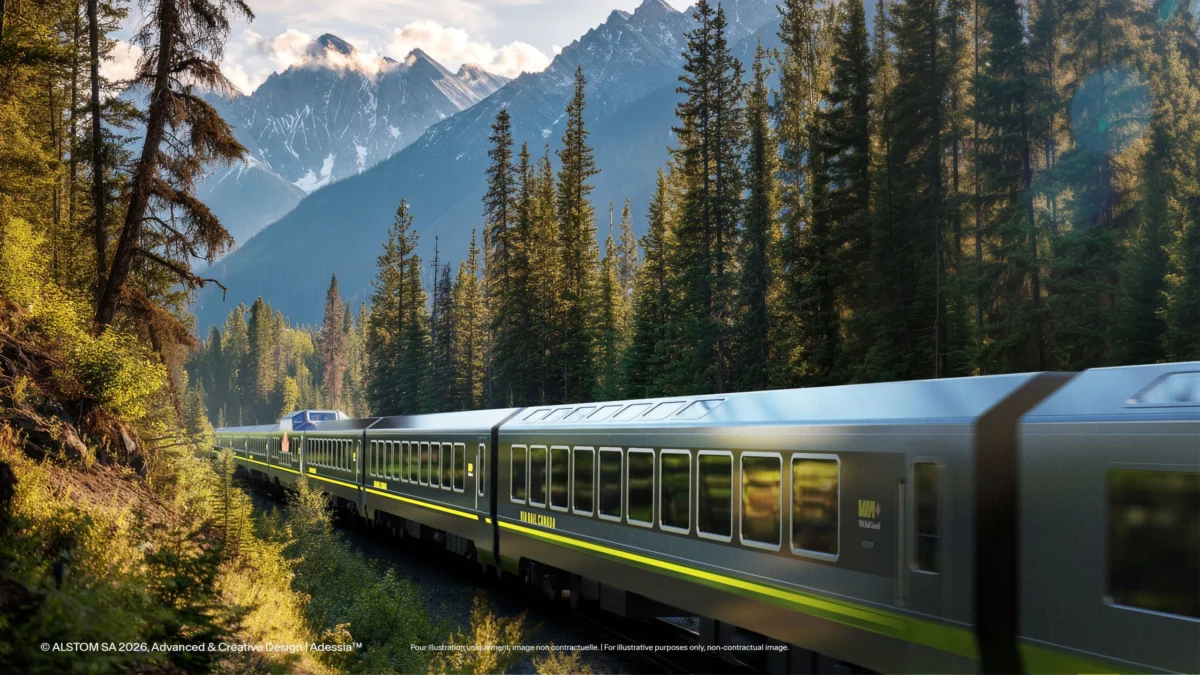
In a monumental development for Canada’s transportation infrastructure, Alstom, the global leader in smart and sustainable mobility, has finalized a comprehensive agreement with VIA Rail Canada. The contract, valued at CAD 4.7 billion (approximately EUR 3 billion), mandates the design, manufacturing, and long-term maintenance of 313 state-of-the-art Adessia railcars. This strategic partnership marks one of the most significant investments in Canadian public transit history, aiming to overhaul the aging fleet that connects the country’s diverse geography from coast to coast.
The Core Agreement: Modernizing the Trans-Canadian Experience
The deal is structured as a two-pronged commitment: the primary manufacturing of 313 Adessia railcars and a robust, 15-year service agreement for technical support and spare parts supply, which accounts for CAD 700 million (EUR 435.4 million) of the total contract value.
The Adessia platform—Alstom’s versatile, high-performance passenger rail solution—is specifically engineered to navigate the unique challenges of the Canadian landscape. These railcars will serve as the backbone for eight major long-distance, regional, and remote community routes, bridging the gap between urban centers and the most isolated regions of the North. By replacing rolling stock that has, in some instances, been in service for over seven decades, VIA Rail is taking a definitive step into the 21st century.
A Legacy of Service: The Chronology of Transformation
To understand the scale of this project, one must appreciate the history of the fleet it is replacing. VIA Rail’s current long-distance operations rely on heritage equipment, some of which dates back to the mid-20th century. While these trains have served as iconic symbols of Canadian travel, they have reached the end of their operational lifecycle.
- The Heritage Era: For over 70 years, these carriages have weathered the harsh Canadian winters and vast wilderness. However, maintaining such legacy equipment has become increasingly difficult, costly, and inefficient.
- The Strategic Shift: Recognizing the need for modernization, VIA Rail began exploring options for a fleet renewal program that would align with modern environmental, accessibility, and digital standards.
- The Tender Process: Following a rigorous competitive bidding process, Alstom emerged as the partner of choice, citing its extensive Canadian industrial footprint and its proven ability to deliver high-capacity, climate-resilient rolling stock.
- The Contract Award: The signing of the CAD 4.7 billion deal serves as the culmination of years of planning, positioning the project to commence immediately.
- Future Outlook: With production now underway, the rollout of the new fleet is expected to redefine the passenger experience, with delivery schedules set to ensure a phased transition that maintains continuity of service across all 400 communities currently served by the network.
Engineering for the Extremes: Supporting Data and Technical Specs
Canada’s climate presents perhaps the most significant challenge for any rail operator. Temperatures can swing from +35°C in the summer to -40°C in the deep winter, combined with high-wind corridors and heavy snowfall.
Technical Adaptations
The new Adessia fleet is being designed with "winterization" as a primary requirement. This includes:
- Advanced Insulation and Climate Control: Superior thermal management systems to ensure interior comfort regardless of external conditions.
- High-Resilience Materials: Use of materials resistant to frost-heave stress and extreme temperature cycling.
- Snow and Ice Mitigation: Specialized bogie designs and under-carriage protection to prevent ice buildup that could impede braking or suspension performance.
Fleet Versatility
To accommodate the diverse needs of Canadian travelers, the 313 railcars will be delivered in nine distinct configurations. This ensures that a single platform can cater to a range of travel experiences:
- Standard Railcars: Optimized for comfort on regional and day-tripping routes.
- Sleeper Railcars: Reimagining the overnight experience with improved ergonomics and privacy.
- Accessible Variants: Setting a new standard for universal accessibility, ensuring all Canadians can travel with dignity.
- Couchette Compartments: Offering flexible options for budget-conscious long-distance travelers.
- Prestige Railcars: Providing premium, luxury-class service for the trans-continental market.
- Panoramic Railcars: Designed to offer unobstructed views of the Canadian Rockies and the boreal forests.
- Dome Railcars: Maintaining the nostalgic charm of classic rail travel while integrating modern safety.
- Dining Railcars: Modernized galleys designed to support high-quality culinary services.
- Luggage Railcars: High-capacity storage solutions for long-haul passengers.
Industrial Synergy: A "Built-in-Canada" Mandate
One of the most notable aspects of this contract is the commitment to domestic production. The project is a major win for the Canadian manufacturing sector, ensuring that the economic benefits of this investment remain within the country.

- Design and Engineering: The brain of the operation will be located at Alstom’s Saint-Bruno-de-Montarville site in Québec. This is where the initial design, systems integration, and complex engineering work will take place.
- Carriage Body Manufacturing: The primary structural work will occur in La Pocatière, Québec. By leveraging this site, Alstom is tapping into a region with a deep history of rail manufacturing expertise.
- Final Assembly: The Thunder Bay, Ontario facility will be the final destination for the components. Here, the trains will be fully assembled, tested, and prepared for entry into service.
This regional distribution of labor ensures that the project benefits multiple provinces, fostering job creation and sustaining a high-tech supply chain across Canada.
Official Responses and Strategic Implications
The implications of this deal are far-reaching. By investing in modern rail, VIA Rail and the Canadian government are signaling a move toward more sustainable, low-carbon transportation.
Connectivity and Economic Impact
The network serves critical hubs, including Montréal, Halifax, Gaspé, Jonquière, Senneterre, Toronto, Vancouver, Churchill, Prince Rupert, Jasper, Sudbury, and White River. By connecting nearly 400 communities, the new fleet will serve as a lifeline for remote areas that rely on rail as their primary connection to the rest of the country.
Passenger Experience and Sustainability
Modernization is not just about the exterior; the interior experience is undergoing a revolution. Passengers can expect:
- Digital Connectivity: High-speed internet, integrated entertainment systems, and real-time travel information.
- Cyber Security: State-of-the-art protection for onboard systems, ensuring passenger safety and operational integrity.
- Universal Accessibility: The fleet will exceed current accessibility standards, offering easier boarding and maneuverability for passengers with limited mobility.
"This is more than a procurement deal; it is a commitment to the future of Canadian mobility," a representative from the rail sector noted. "By investing in the Adessia platform, we are ensuring that the long-distance rail experience is not just preserved, but significantly improved, making rail a more attractive alternative to domestic air travel."
Conclusion: A New Horizon for Canadian Rail
As the transition from the heritage fleet to the modern Adessia railcars begins, the impact on the Canadian landscape will be profound. The project effectively bridges the gap between Canada’s vast, rugged history and its future as a leader in sustainable, efficient, and accessible public transit.
With the manufacturing process set to span several years, the next phase of the project will focus on the integration of these new units into the existing network. For millions of Canadians, the promise of more spacious interiors, improved connectivity, and a smoother, more reliable ride represents a new era of national travel. Alstom’s CAD 4.7 billion investment is not merely a contract for hardware; it is a vital injection of energy into the arteries of the nation, ensuring that for decades to come, the rails will continue to be a primary way to explore, connect, and thrive across the second-largest country in the world.

