


As the world’s population continues to migrate toward urban centers, the pressure on municipal infrastructure has reached an inflection point. For over a decade, the "Smart City" movement has promised efficiency through sensors and data collection. However, the next evolution—the "AI City"—is shifting the paradigm from passive observation to proactive, autonomous governance.
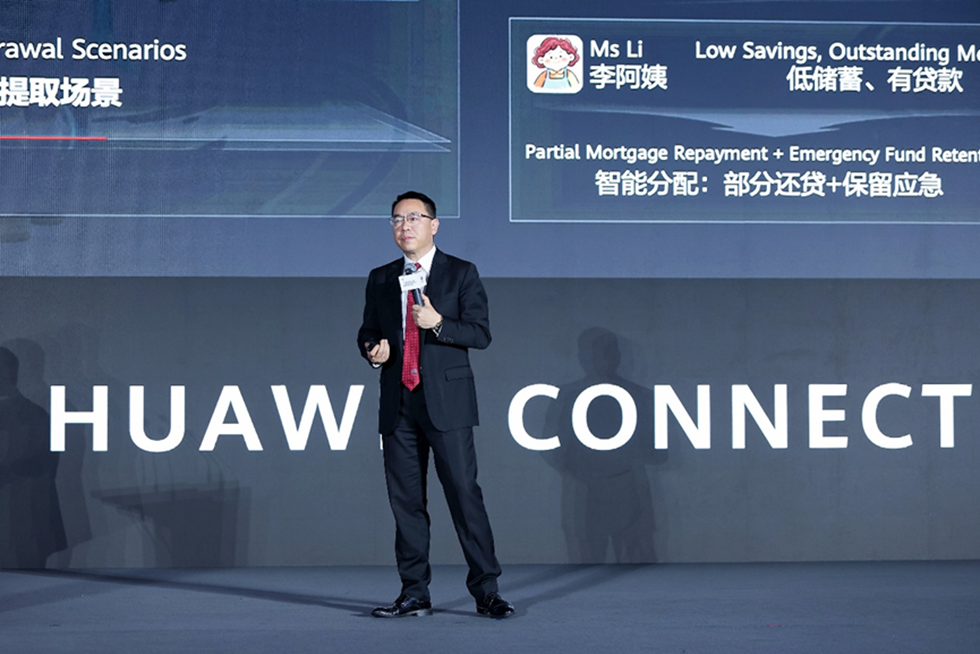
At the Global Government AI CITY Innovation Summit, held during Huawei Connect 2026 in Shanghai, global leaders, technologists, and policymakers gathered to address a fundamental question: How can governments evolve from simple digitalization to true urban intelligence? The consensus among the 500 delegates was clear: the future of city management lies in trusted digital foundations, cross-sector collaboration, and AI agents capable of transforming raw data into life-saving action.
Main Facts: The AI City Vision
The vision presented at the summit is defined by the integration of "AI-native" agents into the city’s digital nervous system. While traditional smart cities focused on monitoring water levels or traffic flow, AI cities layer these data streams with advanced logic models that detect patterns, forecast demand, and automate complex decision-making processes.
This transition marks a departure from the "dashboard culture"—where officials stare at screens—to an "action-oriented culture," where AI agents manage routine governance tasks, from disaster response to public service delivery. The summit underscored that the core of this transformation is not merely adding software, but building a unified "device-edge-cloud" architecture that allows for real-time processing and immediate intervention.
Chronology of the AI City Evolution
The progression toward the AI-driven metropolis has been marked by a transition from basic digital connectivity to the deployment of autonomous systems.

- 2015–2020: The Digitization Era. Cities worldwide invested in IoT sensors to track transport, waste, and energy. Data was collected but often siloed, leading to "data graveyards" where insights were rarely acted upon.
- 2021–2024: The Integration Phase. Governments began centralizing data through "City Brains" and unified cloud platforms, creating the necessary foundation for cross-departmental collaboration.
- 2025–2026: The AI-Native Leap. The emergence of specialized government AI agents (such as Shenzhen’s "Long Xiao Er") signifies the current era. AI is no longer a peripheral tool; it is now a core component of municipal operations, managing everything from typhoon preparation to unlicensed street trading.
- Late 2026 and Beyond: The launch of the Global AI City Innovation and Development Ecosystem Alliance represents the next phase, focusing on international standardization and the sharing of "agent marketplaces" to accelerate global adoption.
Supporting Data: Efficiency at Scale
The empirical evidence shared by participating cities demonstrates that AI integration is not just a technological upgrade—it is an economic and operational necessity.
In Guangzhou, China, the scale of AI adoption is illustrative of the potential for rapid transformation. Having embarked on its AI journey two years ago, the city now operates 20 active AI agents, with plans to reach 50 by the end of 2026. The city’s smart office agent has become an essential utility, serving 55 government agencies and 26,000 public servants. The sheer volume of this interaction—over 5 billion token invocations—highlights the extent to which AI has become embedded in the daily workflow of the bureaucracy.
The performance metrics provided by Guangzhou are equally compelling:
- Hotline Resolution: Ticket dispatch times have been slashed from one hour to a matter of seconds.
- First-Contact Success: The AI-managed hotline maintains a resolution rate exceeding 69%.
- Administrative Efficiency: Data governance and cataloguing agents have reduced manual workloads by 80% and 90%, respectively.
Similarly, in Shenzhen, the "Long Xiao Er" agent proved its worth during the July 2026 Typhoon Noul. By synthesizing weather forecasts, sensor data, and public reports, the AI analyzed 740,000 site images and identified 900+ abnormal risks, leading to 2,800 proactive alerts for emergency personnel.
Official Responses and Strategic Perspectives
The summit provided a platform for international representatives to frame AI development through the lens of local necessity.

The Foundation-First Approach (Angola)
Meick Afonso, General Director of Angola’s Administrative Modernization Institute (IMA), offered a cautionary note to developing nations. With a median age of 17 and a population set to double by 2050, Angola faces immense pressure. Afonso emphasized that the "glamour" of AI must not distract from the "grunt work" of infrastructure. "Redesign your procedures and establish interoperable platforms first," Afonso advised. "AI is the engine, but the platform is the road. If the road is broken, the engine cannot deliver you to the destination."
The Closed-Loop Requirement (Saudi Arabia)
Mohammed Ashgar, CEO of the Center for Monitoring City Operations in Saudi Arabia, highlighted the critical issue of accountability. His team shifted from fragmented, multi-channel reporting to a centralized National Command Control Center. "AI detection is only half the battle," Ashgar noted. "The true value lies in the ‘closed-loop’—ensuring that once the AI detects a road defect or a hygiene violation, the system tracks the fix until completion. Without this operational oversight, AI is just a notification system."
Inclusive Governance (Ethiopia)
Melaku, Director of Coordination at the Modern Ethiopian Service for Organized Benefits (MESOB), focused on the human element. For Ethiopia, the goal is to bridge the gap between urban centers and remote communities. By using mobile service buses and unified digital applications, the government is extending public services to historically underserved populations. For Melaku, the measure of a successful AI city is not just its processing speed, but its ability to foster trust, transparency, and accessibility for every citizen, regardless of their proximity to the capital.
Implications for the Future of Governance
The implications of this shift are profound, suggesting that the "City Hall" of the future may operate more like a high-tech command center than a traditional administrative office.
The Rise of Agent Marketplaces
One of the most significant takeaways from the summit was the introduction of the "AI Foundry" agent marketplace. This allows government bodies to download and deploy pre-trained agents—much like apps on a smartphone—rather than building custom software from scratch. This "democratization" of AI will likely reduce the barrier to entry for smaller municipalities, allowing them to leapfrog older, inefficient systems.
Ethical and Technical Risks
While the summit maintained an optimistic tone, the underlying challenges were acknowledged. Building a "unified base" for device-edge-cloud collaboration is a massive technical undertaking that requires stringent data privacy standards and robust cybersecurity. Furthermore, the reliance on AI for sensitive tasks like emergency management necessitates a "human-in-the-loop" approach, where AI provides the recommendation, but qualified staff retain the authority to act.
Global Collaboration as a Necessity
The launch of the Global AI City Innovation and Development Ecosystem Alliance by Huawei and its 14 founding partners marks a strategic pivot toward collaborative R&D. By focusing on three pillars—computing power, data standards, and scenario innovation—the alliance aims to prevent the fragmentation of global AI standards.
Conclusion: A New Era of Urban Stewardship
As the summit concluded, the message from Huawei’s leadership was clear: the goal is to "break city boundaries." By leveraging AI, governments can move beyond the limitations of geography and human bandwidth to provide more inclusive, responsive, and efficient services.
The AI City is no longer a futuristic concept—it is a developing reality. Whether it is a typhoon warning in Shenzhen, a road maintenance request in Riyadh, or a digital service access point in Addis Ababa, the evidence suggests that when AI is built on a foundation of trust, open data, and a commitment to the citizen, the result is a city that is not only smarter, but more resilient and more human-centric than ever before. As global cities move into 2027 and beyond, the competition will no longer be about who has the most data, but who can best use that data to serve their people.

