
The future of European rail transport stands at a critical juncture. As the continent grapples with shifting geopolitical realities, the urgent need for climate action, and the demand for increased economic competitiveness, the rail sector is positioning itself as the backbone of a resilient Europe. Recent high-level deliberations in Valenciennes and Zurich have underscored a singular, unifying truth: the fragmentation of national networks is no longer tenable. To achieve a seamless European rail space, Member States must pivot toward radical collaboration, harmonized technical standards, and, crucially, long-term, predictable financial commitments.
The State of Play: Key Developments and Strategic Directives
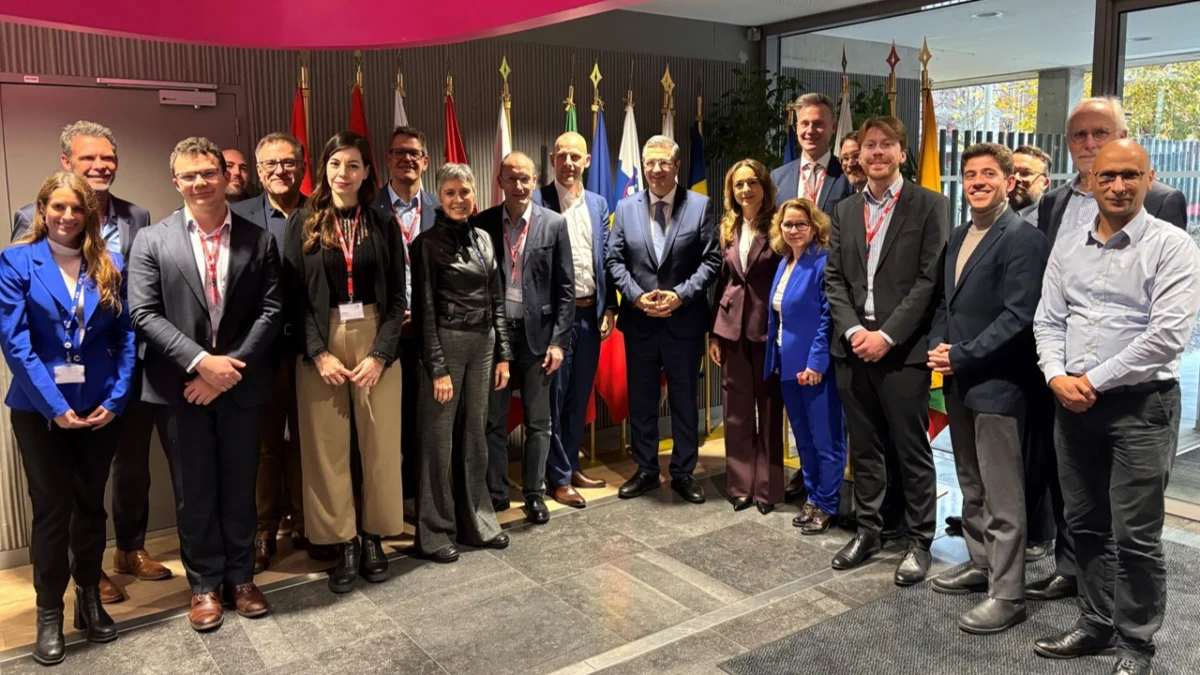
In mid-November 2026, two pivotal summits set the tone for the coming decade of European railway policy. On November 12, the European Union Agency for Railways (ERA) hosted the 57th meeting of the Network of Representative Bodies (NRB) at its headquarters in Valenciennes, France. This gathering brought together the highest echelons of European transport governance, including the European Commissioner for Transport, Apostolos Tzitzikostas, and ERA Executive Director Oana Gherghinescu.
Less than a week later, on November 18, the focus shifted to Zurich, where the Community of European Railway and Infrastructure Companies (CER) and the European Rail Infrastructure Managers (EIM) convened a high-level meeting hosted by SBB Infrastructure. Together, these events have articulated a coherent roadmap: rail is no longer just a transport mode; it is a strategic asset for security, sustainability, and economic growth.
Chronology of High-Level Deliberations
November 12, 2026: The Valenciennes Consensus
The 57th NRB meeting served as a "state of the union" for railway interoperability. Discussions were dominated by the necessity of moving beyond national silos. Key focus areas included:
- Regulatory Harmonization: A call to simplify the labyrinthine certification procedures that currently hamper cross-border train operations.
- The ERTMS Imperative: Addressing the persistent technical fragmentation caused by disparate national signaling systems.
- Institutional Empowerment: A consensus emerged that the ERA requires a stronger mandate, augmented by the budgetary and personnel resources necessary to oversee a continent-wide network.
November 18, 2026: The Zurich Infrastructure Summit
The Zurich meeting shifted the dialogue from regulatory frameworks to the physical and financial reality of the network. Infrastructure managers from across Europe analyzed the "resilience gap"—the vulnerability of the rail network to external shocks. The conversation focused on:

- Threat Modeling: Assessing the impact of climate-induced extreme weather, cyber-attacks, and physical sabotage on rail stability.
- Funding Predictability: The argument that infrastructure maintenance and development cannot be subject to the whims of annual national budget cycles.
Supporting Data and Technical Challenges: The ERTMS Context
The implementation of the European Rail Traffic Management System (ERTMS) remains the linchpin of European rail policy. Currently, the European rail landscape is a patchwork of over 20 different signaling systems, which acts as a massive "hidden tax" on international rail freight and passenger transport.
Data presented during the November sessions highlights that the lack of interoperability significantly increases operational costs, as trains must switch locomotives or crews at borders—a relic of the 19th century that is increasingly incompatible with 21st-century logistics. By replacing these fragmented systems with a unified, digital ERTMS framework, the EU aims to boost line capacity by up to 30% without laying a single new meter of track. However, the pace of deployment remains sluggish, hampered by a lack of synchronized national funding and technical "gold-plating" where Member States add unique national requirements to the European standard.
Official Responses and Stakeholder Perspectives
The industry’s unified voice was represented by a coalition of organizations, including CER, UNIFE, ALLRAIL, ERFA, EIM, UIP, UITP, and UIRR. Their message was consistent: political ambition must be matched by financial muscle.
The Institutional View
European Commissioner Apostolos Tzitzikostas emphasized that the Commission is prepared to treat rail as a strategic priority for the European economy. Oana Gherghinescu, representing the ERA, reiterated that the Agency is ready to lead the charge in safety and interoperability, provided the political will at the Member State level translates into concrete legislative and financial support.
The Infrastructure Managers’ Stance
Monika Heiming, Executive Director of EIM, highlighted the precarious position of infrastructure managers. "We are expected to build a network that is both climate-neutral and climate-resilient," she noted. "Without long-term funding stability, we are merely patching up a system rather than evolving it."

The Freight Perspective
Maria Price, Secretary-General of ERFA, brought the discussion to the practical realities of the market. She pointed out that rail freight is the most vulnerable to cross-border bottlenecks. With the rise of military mobility requirements—where the rail network must be capable of moving heavy equipment across borders efficiently—the current state of infrastructure is a matter of national and European security, not just commercial efficiency.
The Call for Financial Certainty
Alberto Mazzola, Executive Director of CER, was firm on the budget question. He argued that the future European Union budget must prioritize the Connecting Europe Facility (CEF). "We cannot have a world-class railway network with a piecemeal budget," Mazzola stated. "The CEF is the heartbeat of our infrastructure development. If we cut or stagnate this funding, we are effectively choosing to remain fragmented."
Implications for the Future: A Multi-Dimensional Strategy
The implications of these meetings are far-reaching, touching upon three major pillars:
1. Security and Resilience
The era of assuming rail infrastructure is a "safe" environment is over. The dual-use nature of modern rail—serving both civilian passengers and potential military logistics—means that infrastructure must be hardened against both cyber-physical attacks and climate change. This requires a "security-by-design" approach to all future upgrades.
2. Economic Competitiveness
Europe’s goal of reaching climate neutrality by 2050 hinges on shifting traffic from road and air to rail. This shift is mathematically impossible if the rail network remains slow, unreliable, and administratively complex. The harmonisation of rules is, therefore, an economic imperative to ensure that European industry can move goods across the continent with the same ease as they move across a single nation-state.

3. Institutional Evolution
The call to strengthen the ERA is a signal that the era of purely national rail regulation is drawing to a close. There is an increasing recognition that a train traveling from Warsaw to Lisbon should be subject to a unified safety and interoperability regime, managed by a strong central authority. This represents a significant shift in the balance of power between national ministries of transport and the European Union.
Conclusion: Turning Ambition into Implementation
The consensus reached in Valenciennes and Zurich is clear: the path forward is paved with the removal of national barriers and the installation of digital systems. However, the history of European rail is littered with grand visions that failed due to the "implementation gap."
The challenge for the next three years will be moving from high-level declarations to on-the-ground execution. This requires, first and foremost, a political commitment from Member States to cede a degree of sovereign control over their signaling and certification processes. Secondly, it requires the EU to secure a robust multi-annual financial framework that shields rail investment from the volatility of short-term politics.
If Europe succeeds, the result will be a competitive, resilient, and unified iron continent. If it fails, the rail network risks becoming a collection of isolated, aging systems that will ultimately fail to support the European economy. The tools—technical, digital, and institutional—are largely available. The remaining hurdle is the political courage to prioritize the European network over the national network. The journey to a truly integrated rail system has entered a new, more urgent chapter, and the stakes for the continent have never been higher.

