

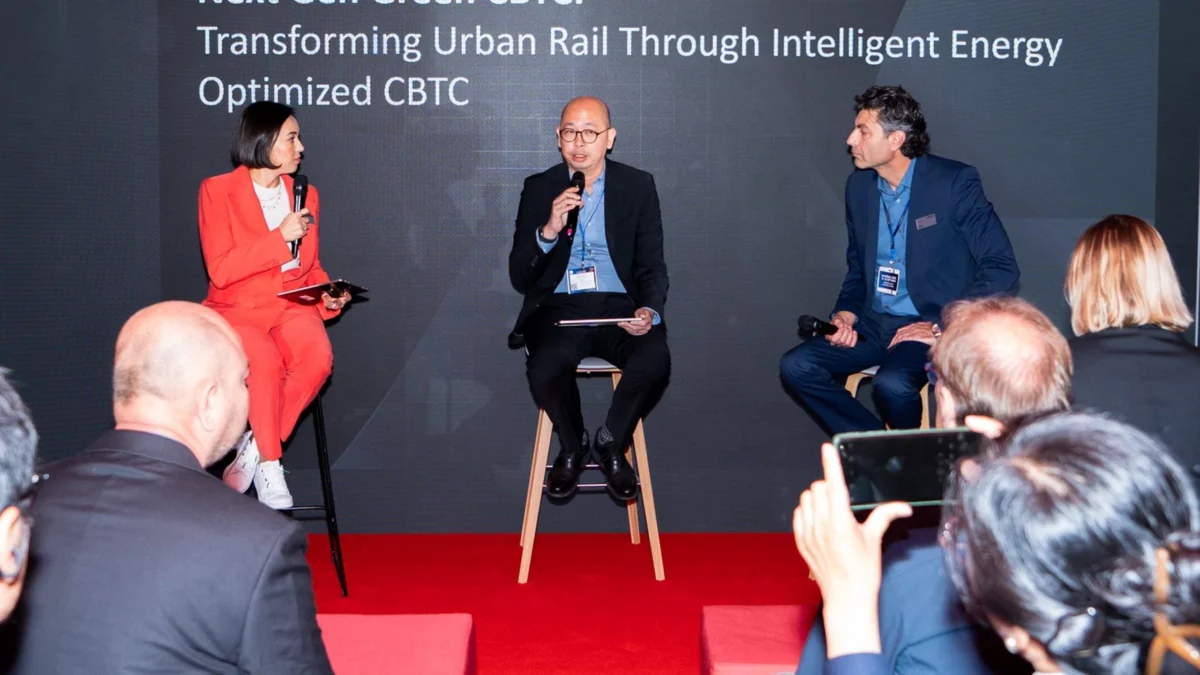
SINGAPORE — In a milestone achievement for urban transit sustainability, Hitachi Rail and SMRT Trains have released verified performance data demonstrating a 14% reduction in traction energy consumption across Singapore’s vital North-South and East-West metro lines. The substantial energy savings are the direct result of the "Green Communications Based Train Control (CBTC) Next Gen" programme, a high-impact technological collaboration launched in 2023 to fundamentally rethink and optimize the environmental footprint of heavy-rail signaling infrastructure.
The findings mark the successful conclusion of the programme’s second phase, setting a new benchmark for sustainable mass transit operations in high-density metropolitan environments. By intelligently fine-tuning train movement profiles without compromising safety, punctuality, or passenger experience, the initiative provides a blueprint for how legacy and modern metro networks alike can aggressively cut carbon emissions.
Main Facts: The Green CBTC Next Gen Initiative
At its core, the Green CBTC Next Gen programme leverages state-of-the-art digital signaling and data analytics to transform how trains accelerate, coast, and brake. Traditional metro operations often rely on rigid timing and localized driving behaviors that can result in unnecessary energy spikes. The modernized CBTC framework utilizes automated optimization algorithms integrated directly into Hitachi Rail’s proprietary SelTrac™ signaling platform to govern train trajectories with pinpoint precision.
The scope of this achievement is vast. Singapore’s North-South and East-West lines form the backbone of the island-nation’s mass rapid transit (MRT) network. Within any metro system, traction power—the electricity required to propel trains along the tracks—accounts for approximately 60% of the network’s total energy consumption. Consequently, any efficiency gains realized in traction power yield disproportionately large benefits for the system’s overall sustainability profile.
The partnership between Hitachi Rail and SMRT Trains has proved that digital innovation can drive down this heavy power load. Through continuous real-time data analysis and algorithmic refinement, the system dynamically adjusts train movements to maximize kinetic efficiency. Trains now make optimal use of coasting phases and regenerative braking energy, sharply cutting the draw on the national electrical grid while preserving the high-frequency headways required by millions of daily commuters.
Chronology of the Transformation: A Phased Implementation
The journey toward a 14% energy reduction was meticulously planned and executed across a multi-year timeline, building upon long-standing foundational technology deployments.
Foundation and Deployment (2017–2018)
The technological groundwork for this efficiency leap was laid years prior. Hitachi Rail’s advanced CBTC technology was deployed on the North-South Line in 2017, followed swiftly by its implementation on the East-West Line in 2018. These initial deployments modernized Singapore’s oldest heavy-rail corridors, replacing legacy signaling systems with digital, radio-based communications that dramatically enhanced network capacity, safety, and reliability under the operation of SMRT Trains.
Program Launch and Phase One (2023–2024)
Capitalizing on the installed CBTC infrastructure, Hitachi Rail and SMRT Trains officially launched the Green CBTC Next Gen programme in 2023. The explicit mandate of the initiative was to unlock hidden efficiency reserves within the existing signaling software and hardware architecture.
Phase one of the programme, which wrapped up in 2024, focused heavily on refining the automated operation profiles of the trains. By tweaking the algorithms governing automated train operation (ATO), the engineering teams achieved an immediate and verifiable 8% reduction in traction energy consumption. This initial success proved that software-driven optimization could yield major power savings without requiring expensive physical overhauls of the rolling stock or track infrastructure.
Phase Two Completion and Verification (2025–2026)
Building on the momentum of phase one, the partners advanced to phase two, which concluded in 2025, with verified results published in 2026. This second stage introduced deeper data analytics capabilities, refining coasting and braking curves even further based on real-world operational patterns, passenger load variations, and topographical nuances of the North-South and East-West lines.
Phase two delivered an additional 6% reduction in traction energy consumption. When combined with the first phase, the cumulative result reached the headline-grabbing 14% efficiency gain, officially closing the second phase of the programme with performance metrics that exceeded initial projections.
Supporting Data and Lifecycle Analysis
The verified 14% energy reduction is backed by rigorous operational data, but the environmental benefits of Hitachi Rail’s signaling innovations extend far beyond immediate kilowatt-hour savings.
Hitachi Rail evaluates its signaling technologies through a comprehensive standard configuration model that assesses environmental impact across a 30-year operational lifecycle. According to the company’s lifecycle assessments, the latest iterations of the SelTrac™ CBTC configuration yield estimated carbon dioxide ($textCO_2$) emissions that are 16.4% lower over a 30-year horizon compared to the baseline 2018 versions of the technology.
This dramatic shrinkage of the carbon footprint is achieved through a combination of factors:
- Optimized Power Profiles: Algorithmic management eliminates erratic acceleration and harsh braking, which not only saves energy but also reduces mechanical wear and tear on brakes, wheels, and tracks.
- Enhanced Energy Recovery: Modernized braking profiles maximize the capture and return of energy to the third rail or overhead catenary system via regenerative braking, allowing nearby trains to utilize energy generated by decelerating units.
- Reduced Thermal Output: Lower energy consumption directly translates to a reduction in waste heat generated within underground tunnels, subsequently lowering the energy required for station ventilation and environmental control systems (ECS).
For a high-frequency metro system operating thousands of route-kilometers daily, a 16.4% reduction in lifecycle emissions represents a massive contribution to corporate sustainability goals and national climate targets.
Official Responses and Strategic Vision
Leadership from both organizations have lauded the partnership as a triumph of collaborative engineering and a vital stepping stone toward long-term environmental stewardship.
Executives from Hitachi Rail emphasized that the success of the Green CBTC Next Gen programme demonstrates how digital rail technologies can deliver immediate ecological benefits without sacrificing commercial or operational performance. By embedding advanced analytics into proven signaling platforms, Hitachi Rail is positioning itself as a leader in green transit innovation, proving that decarbonization can be achieved through smart software upgrades rather than solely through capital-intensive infrastructure replacement.
Meanwhile, SMRT Trains views the initiative as a cornerstone of its corporate sustainability strategy. SMRT operates a diverse multi-modal transit portfolio in Singapore—including not only the North-South and East-West lines, but also the Circle Line, the Thomson-East Coast Line, and the Bukit Panjang Light Rail Transit (LRT) system.
SMRT Trains has aligned its long-term operational roadmap directly with Singapore’s national objective of achieving net-zero carbon emissions by 2050. By systematically optimizing energy usage across its rail networks, SMRT is demonstrating that high-capacity public transport operators can actively drive down their greenhouse gas emissions even as urban populations and commuter volumes continue to grow.
Future Implications and Next-Gen Horizons
The successful conclusion of the Green CBTC Next Gen programme’s second phase does not mark the end of the collaboration between Hitachi Rail and SMRT Trains; rather, it serves as a launchpad for the next wave of technological innovation.
Both organizations have already confirmed that they are actively exploring further opportunities for joint development. High on the agenda is the integration of Artificial Intelligence (AI) and machine learning into future iterations of the Green CBTC Next Gen capabilities.
By introducing AI-driven predictive analytics, the signaling system could theoretically learn from daily operational anomalies, weather patterns, and shifting passenger demand in real time. This would allow the system to dynamically self-optimize train driving profiles on a second-by-second basis, unlocking even deeper layers of energy efficiency across the North-South and East-West lines.
Broader Industry Impact
The implications of the Singapore project extend far beyond the borders of the city-state. Mass transit authorities around the globe are facing intense pressure to reduce their carbon emissions while managing rising energy costs and growing urban mobility demands.
The verified 14% energy savings achieved on the North-South and East-West lines provide a compelling, empirically proven case study for global metro operators. It illustrates that transit agencies do not need to wait for entirely new fleets of rolling stock to make substantial progress toward sustainability. Instead, by upgrading the "brain" of the railway—the signaling and train control systems—operators can unlock profound energy efficiencies, lower operational expenditures, and secure a greener future for urban mobility worldwide.

