
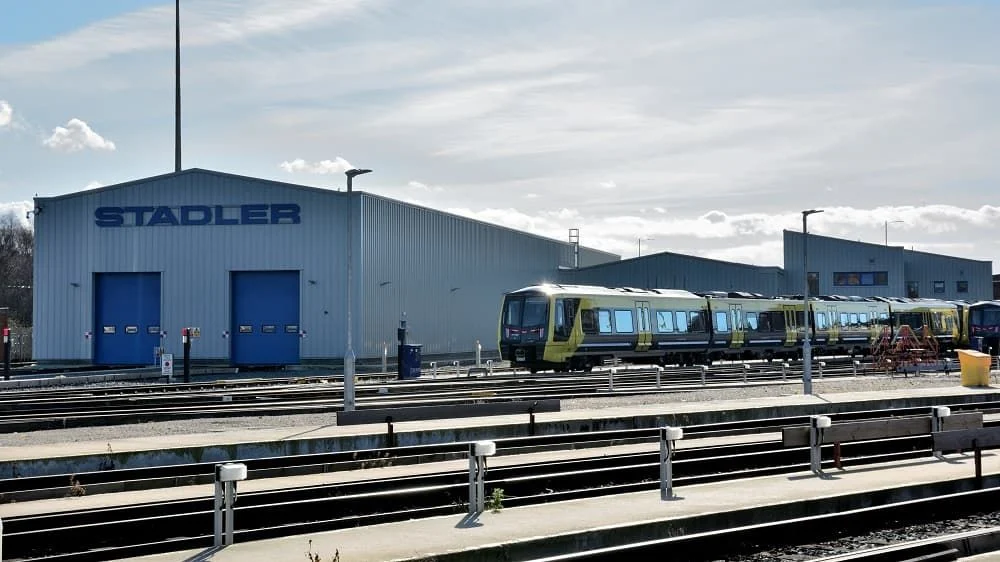
In a move that signals a paradigm shift for the European railway industry, Swiss rolling stock giant Stadler and Portuguese technology powerhouse Critical Software have officially announced the formation of a joint venture: Stadler Digital Labs (STADL). This partnership marks a convergence of high-precision mechanical engineering and advanced digital intelligence, aimed at redefining the safety, efficiency, and cybersecurity standards of modern rail transport.
The establishment of STADL is not merely a corporate restructuring; it is a strategic response to the growing complexity of the global railway ecosystem. As trains become increasingly connected and autonomous, the demand for sophisticated software that can manage safety-critical functions has outpaced traditional manufacturing capabilities. By formalizing this venture, Stadler is positioning itself to lead the next generation of digital rail mobility.
Main Facts: The Anatomy of a Strategic Alliance
Stadler Digital Labs (STADL) represents a synergy between two industry leaders. Stadler, renowned for its heritage in designing and manufacturing high-performance trains, holds a majority stake of 51%. Critical Software, a Portuguese firm globally recognized for its expertise in safety-critical systems and complex software engineering, holds the remaining 49%.
The entity will operate out of two primary hubs in Portugal: Coimbra and Lisbon. The initial workforce of 100 specialists is expected to scale rapidly, with a projected headcount of 300 highly skilled engineers and software architects within the next three years. Under the leadership of CEO Rogério Gomes, the company aims to move beyond traditional hardware-centric models, focusing on "software-defined rail" solutions.
The venture’s mandate is clear: to create a standardized, scalable framework for railway software that encompasses everything from onboard train control systems to cybersecurity protocols and data-driven maintenance diagnostics.
Chronology: Building the Foundation
The formation of STADL is the culmination of an evolving relationship between the two companies, reflecting a broader trend in the rail industry toward strategic tech-partnerships.
- Pre-2025: The Foundation of Trust. Critical Software had already established itself as a reliable partner in the defense, aerospace, and medical sectors, with a growing footprint in rail. Stadler, meanwhile, was seeking a more integrated digital partner to handle the increasing complexity of its digital train control and signaling systems.
- Early 2026: Formalizing the Vision. Throughout the early months of 2026, leadership teams from both Stadler and Critical Software engaged in intensive negotiations to align their organizational cultures and technical roadmaps.
- February 2026: Official Launch. The joint venture was formally announced, marking the beginning of operations. The establishment of the Coimbra and Lisbon offices was prioritized to leverage Portugal’s growing reputation as a European hub for engineering talent.
- 2026–2029: The Scaling Phase. The roadmap for the next three years involves aggressive recruitment and the integration of Stadler’s legacy software assets into a new, unified architectural framework developed by STADL.
Supporting Data: Why This Partnership Matters
The necessity for STADL is backed by the current trajectory of the rail sector. As the European Union pushes for a "Single European Railway Area," the need for interoperability has never been higher.
Technical Expertise
Critical Software brings over two decades of experience in "mission-critical" environments. Their background includes:
- Embedded Software: Real-time operating systems that manage essential train functions.
- Certification Support: Navigating the complex regulatory landscape of the European Union Agency for Railways (ERA).
- Verification and Validation (V&V): Ensuring that software performs under extreme conditions, a standard that is non-negotiable in the transit industry.
Market Potential
The global market for railway management systems is projected to grow significantly as operators move toward Automatic Train Operation (ATO) and Internet of Things (IoT) connectivity. Stadler’s massive global install base—spanning commuter rail, high-speed lines, and light rail—provides a ready-made market for the digital products emerging from the new venture.
Workforce Growth
The goal of reaching 300 employees is a significant commitment to the Portuguese technology sector. By focusing on specialized software engineering, the venture aims to retain local talent and foster a culture of innovation that attracts top-tier engineers from across the continent.
Official Responses: Aligning Visions
The leadership behind the venture has emphasized that this partnership is about more than just technical integration; it is about a shared vision for the future of mobility.

Rogério Gomes, CEO of Stadler Digital Labs, stated:
"Stadler Digital Labs reflects the strategic alignment between two organizations with converging visions on innovation, safety, and modernization of the railway sector. Railways are not only relevant for the growth of the Portuguese economy, but also for the development of a safe and interoperable European mobility ecosystem."
Gonçalo Quadros, President of Critical Software, added:
"Our experience in critical software engineering and complex systems will help bring Stadler’s ambitious vision for the rail and mobility sector to fruition. We are moving toward a future where the train is a high-tech node in a wider network, and our work here will ensure that this network is secure, resilient, and efficient."
Implications: The Future of Railway Engineering
The creation of STADL signals several critical shifts in how railway equipment is developed, maintained, and operated.
1. Cybersecurity as a Core Requirement
In an era where digital infrastructure is a target for cyberattacks, STADL will treat cybersecurity as a "feature by design" rather than an afterthought. By integrating Critical Software’s expertise, Stadler is insulating its fleet against emerging threats, ensuring that onboard systems and communications remain impenetrable.
2. Standardization and Efficiency
Currently, many railway operators face the challenge of "siloed" software—systems that do not communicate well with one another. STADL intends to standardize processes and reuse software assets across different train platforms. This modularity reduces development time and makes maintenance significantly more cost-effective.
3. The Shift to "Software-Defined" Rail
The railway industry is currently undergoing a transformation similar to the automotive industry’s shift toward software-defined vehicles. Trains are becoming computers on wheels. STADL’s mission to provide "end-to-end solutions" suggests that future Stadler trains will be updated via the cloud, optimized by AI, and managed through sophisticated digital twins.
4. Economic Impact on Portugal
By basing the operation in Coimbra and Lisbon, Stadler and Critical Software are reinforcing Portugal’s position as a critical node in the European engineering supply chain. This investment in human capital and R&D infrastructure provides a long-term boost to the local economy and sets a precedent for international tech-manufacturing collaborations.
Conclusion: A New Era of Mobility
The launch of Stadler Digital Labs is a testament to the changing requirements of global transportation. As the world demands greener, faster, and more reliable rail travel, the reliance on legacy mechanical engineering alone is no longer sufficient. By blending Swiss industrial excellence with Portuguese software prowess, STADL is set to provide the digital nervous system for the trains of tomorrow.
As the joint venture begins its operations, the industry will be watching closely. If STADL successfully scales its operations and standardizes the way railway software is built and validated, it could set a new global benchmark—one where safety and innovation are not competing priorities, but mutually reinforcing pillars of the next generation of rail. The journey from a manufacturing-heavy model to a digital-integrated ecosystem has officially begun, and with 300 specialists in the pipeline, Stadler and Critical Software are leading the charge.

