
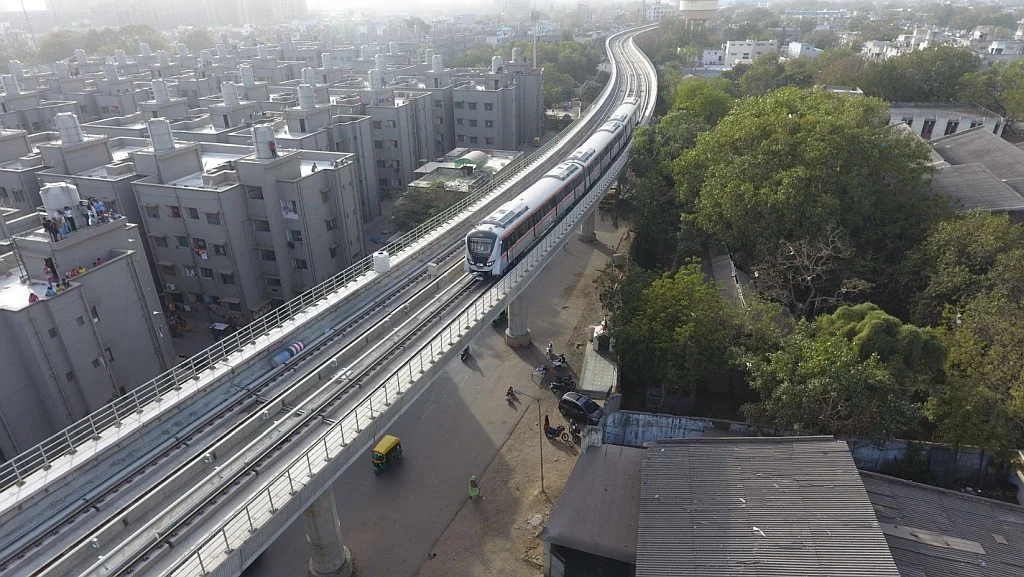
SURAT, INDIA — The urban transit landscape of Gujarat is undergoing a monumental transformation as the Gujarat Metro Rail Corporation (GMRC) accelerates development on the ambitious Surat Metro Rail Project. In a significant series of milestones, GMRC has officially invited bids for the construction of an 11.6-kilometer elevated viaduct for the first phase of the network, alongside crucial tenders for subterranean tunneling and underground station development.
Valued at an estimated USD 107.44 million (INR 805.356 Crore), the latest tender marks a critical step forward for the high-speed mass rapid transit system designed to alleviate traffic congestion, reduce carbon emissions, and catalyze economic growth in one of India’s fastest-growing commercial hubs. With an overarching project timeline targeting completion within five years of its initial March 2019 approval, Surat’s burgeoning metropolitan population is steadily moving closer to realizing a world-class, integrated public transport network.
Main Facts of the Surat Metro Rail Project
The Surat Metro Rail Project is an extensive, multi-phase urban mass transit initiative engineered to connect key residential, commercial, and industrial zones across the diamond and textile capital of India. The comprehensive blueprint encompasses a total network length of approximately 40.35 kilometers, strategically distributed across two primary corridors, supported by 38 modern stations and two dedicated maintenance depots located at Dream City and Bhesan.
Core Corridor Breakdown:
- Line 1 (Sarthana to Dream City): Spanning a total length of 21.6 kilometers, this vital artery will feature 20 stations. The engineering design for Line 1 incorporates both elevated and underground segments to seamlessly navigate Surat’s densely populated urban core. It includes a 15-kilometer elevated section served by 14 stations, alongside a complex 6.5-kilometer underground section featuring 6 subterranean stations.
- Line 2 (Bhesan to Saroli): Stretching 18.74 kilometers, this entirely elevated corridor will comprise 18 thoughtfully positioned stations, bridging western residential sectors to eastern commercial outposts.
The newly issued tender focuses on a pivotal 11.6-kilometer elevated viaduct stretch running from Kadarsha Ni Nal to Dream City—the city’s upcoming, high-tech business district. This scope of work goes beyond simple track alignment; it encompasses the construction of a depot ramp and 10 fully equipped stations along the route. GMRC has stipulated that this ambitious package must be successfully executed within 30 months (two years and six months) from the commencement date, with interested construction firms given until August 31, 2020, to submit their competitive bids.
Chronology of Development
The progression of the Surat Metro Rail Project reflects a carefully orchestrated sequence of administrative approvals, strategic planning, and aggressive procurement cycles.
- March 2019: The Central Government of India officially grants administrative and financial approval for the 40-kilometer Surat Metro Rail Project, establishing a targeted five-year window for full commercial operation.
- July 10, 2020: Demonstrating rapid momentum, GMRC publishes a high-value tender for the design and construction of underground stations and twin tunnels linking the Surat railway station to the south ramp. This package includes three critical underground stations: Chowk Bazar, Maskati Hospital, and Surat Railway Station, valued at USD 125.7 million (INR 942.16 crore) with a 40-month completion timeframe. Concurrently, a sister tender is issued for the twin tunnel and station package from the UG Ramp Kapodra to Surat Railway Station, encompassing the Kapodra, Labheshwar Chowk, and Central Warehouse stations, valued at USD 124 million (INR 929.46 crore).
- July 16, 2020: GMRC initiates single-stage, two-package tenders aimed at drafting a comprehensive financial feasibility report. This administrative step covers the entirety of the 40.35 km network, ensuring robust economic modeling for the system’s dual depots in Dream City and Bhesan.
- Late July / August 2020: GMRC launches the tender for the 11.6 km elevated viaduct from Kadarsha Ni Nal to Dream City, setting an August 31 bid submission deadline.
This timeline illustrates GMRC’s strategy of simultaneous procurement—fast-tracking both subterranean engineering and elevated viaduct construction to prevent bottlenecks and adhere to the strict 2024–2025 completion horizon.
Supporting Data and Financial Framework
The financial architecture of the Surat Metro Rail Project is reflective of a high-capital, high-return infrastructure investment backed by state and federal resources, alongside potential international developmental funding.
Financial and Technical Specifications:
- Total Network Length: 40.35 kilometers across two corridors.
- Total Stations: 38 stations (mix of elevated and underground).
- Maintenance Depots: 2 facilities (Dream City and Bhesan).
- Viaduct Package (Kadarsha Ni Nal to Dream City):
- Length: 11.6 km elevated viaduct.
- Estimated Value: USD 107.44 million (INR 805.356 Crore).
- Execution Window: 30 Months.
- Includes: Depot ramp and 10 stations.
- Underground Package 1 (Surat Railway Station to South Ramp):
- Estimated Value: USD 125.7 million (INR 942.16 Crore).
- Stations: Chowk Bazar, Maskati Hospital, Surat Railway Station.
- Execution Window: 40 Months.
- Underground Package 2 (UG Ramp Kapodra to Surat Railway Station):
- Estimated Value: USD 124 million (INR 929.46 Crore).
- Stations: Kapodra, Labheshwar Chowk, Central Warehouse.
- Execution Window: 40 Months.
- Overall Project Timeline: 5 Years from March 2019 approval.
The sheer scale of capital allocation—with individual tunneling and viaduct packages nearing or exceeding the USD 100 million threshold—demonstrates GMRC’s commitment to engaging top-tier engineering talent and heavy civil construction contractors capable of executing complex urban civil works.
Official Responses and Stakeholder Perspectives
While specific commentary from executive leadership at the Gujarat Metro Rail Corporation has centered on rigorous technical adherence and transparent bidding processes, regional stakeholders have expressed overwhelming optimism regarding the project’s trajectory.

Urban planners and local government representatives have repeatedly emphasized that the Surat Metro is not merely a transportation upgrade, but an economic survival necessity. Surat’s rapid demographic expansion, driven by its status as a global diamond-cutting powerhouse and a major textile manufacturing center, has placed immense strain on surface roadways.
Industry bodies and commercial associations in Surat have welcomed the acceleration of tenders—particularly the connection to Dream City. Business leaders note that linking the historic urban center directly to the modern business district via a high-capacity rail corridor will drastically reduce logistical friction. Furthermore, municipal authorities have pledged full cooperation with GMRC to streamline utility shifting, land acquisition, and traffic diversion plans necessary for executing heavy underground tunneling beneath densely populated neighborhoods like Kapodra and Chowk Bazar.
Implications for Urban Mobility, Economy, and Environment
The implementation of the Surat Metro Rail Project carries profound implications for the city’s future trajectory across multiple dimensions:
1. Easing Urban Congestion and Enhancing Mobility
Surat’s roads have long faced the brunt of surging private vehicle ownership and commercial freight movement. By introducing a high-frequency, reliable metro system capable of carrying tens of thousands of daily commuters, the project will intercept private car and two-wheeler trips. The integration of Line 1 and Line 2 will ensure that peripheral residential zones like Bhesan and Saroli are directly linked to employment hubs like Sarthana and Dream City, drastically cutting down average daily commute times.
2. Catalyzing Commercial Growth and Real Estate Value
Infrastructure-led development is a proven economic multiplier. The establishment of Dream City as a premier financial and business hub is heavily dependent on reliable mass transit. By guaranteeing rapid, air-conditioned connectivity between Surat Railway Station and Dream City, property values, commercial investments, and corporate office absorption rates along the corridor are projected to rise significantly. Transit-Oriented Development (TOD) policies implemented around the 38 stations will further optimize land use, encouraging high-density mixed-use developments.
3. Environmental Benefits and Carbon Reduction
As part of India’s broader national commitments to reducing greenhouse gas emissions and promoting sustainable urban centers, the Surat Metro will serve as a green transport alternative. Shifting commuters from fossil-fuel-powered personal vehicles to an electrified rail network will substantially curb urban air pollution, lowering particulate matter ($PM2.5$ and $PM10$) and carbon dioxide emissions across the city.
4. Engineering and Employment Milestones
The execution of complex engineering feats—such as twin-bore tunneling beneath historical and busy commercial districts, and the erection of extensive elevated viaducts—will generate thousands of direct and indirect jobs for civil engineers, technicians, laborers, and administrative personnel. Moreover, the stringent 30-to-40-month execution windows set by GMRC will test and showcase the capabilities of India’s modern construction sector in delivering mega-infrastructure projects on schedule.
Looking Ahead
As the August 31, 2020 deadline for the 11.6 km elevated viaduct tender approaches, anticipation runs high within India’s infrastructure sector. With multiple high-value tenders running concurrently for both elevated and underground segments, the Surat Metro Rail Project has transitioned firmly from the planning drawing boards into active, visible reality. When completed, it will firmly position Surat alongside India’s most advanced metropolitan cities, redefining how millions of citizens live, work, and travel.

