

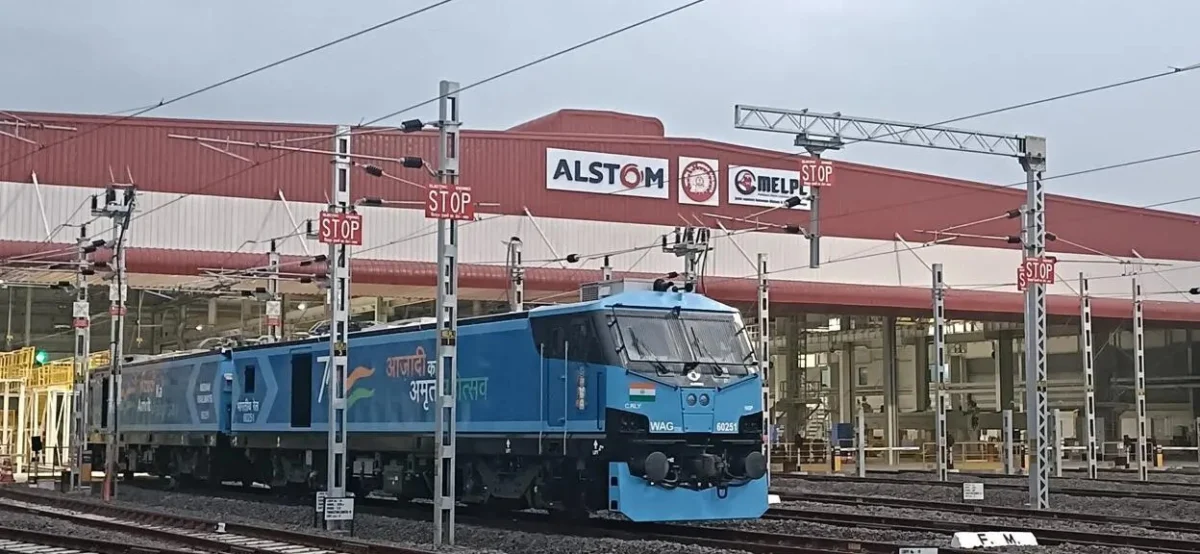
In a significant reinforcement of its strategic partnership with Indian Railways, French rolling stock giant Alstom has been awarded a new five-year maintenance contract valued at EUR 107 million. The agreement focuses on the comprehensive upkeep of 250 WAG-12B electric freight locomotives, managed through Madhepura Electric Locomotive Private Limited (MELPL)—a pivotal joint venture between Alstom and the Indian government. This contract renewal underscores the deepening integration of advanced European rail technology within India’s rapidly modernizing logistics backbone.
Main Facts: A Landmark Deal for Indian Logistics
The contract centers on the specialized maintenance of the WAG-12B, also known as the Prima T8, at the state-of-the-art facility in Nagpur. As India pushes to transition its freight operations from road to rail to reduce carbon emissions and logistical costs, the reliability of these locomotives has become a cornerstone of national infrastructure strategy.
The core parameters of the agreement include:
- Contract Value: EUR 107 million.
- Duration: Five years.
- Scope: Comprehensive maintenance of 250 WAG-12B locomotives and associated depot infrastructure.
- Key Entity: Madhepura Electric Locomotive Private Limited (MELPL).
- Strategic Objective: Maximizing fleet availability and operational efficiency for the Dedicated Freight Corridors (DFCs).
By continuing to utilize the Nagpur depot as a central hub, MELPL is tasked with ensuring that these heavy-haul locomotives maintain the highest standards of safety and performance, directly supporting the Indian government’s goal of achieving a "freight transport revolution."
Chronology: Building the Foundation of a Rail Giant
The partnership between Alstom and Indian Railways is not a recent development but the result of a long-term strategic evolution in India’s rail manufacturing sector.
The Genesis of the Joint Venture
The collaboration began with the vision to modernize India’s freight capacity. In 2015, Alstom signed a historic agreement with the Ministry of Railways to supply 800 high-power electric locomotives over an 11-year period. This deal, valued at approximately EUR 3.5 billion, led to the establishment of the Madhepura Electric Locomotive Private Limited joint venture.
The Launch of the WAG-12B
In 2018, the first WAG-12B locomotive rolled out of the Madhepura facility, marking a major milestone for the "Make in India" initiative. These units were designed specifically to meet the grueling demands of Indian topography and the specific requirements of the Dedicated Freight Corridors.
The First Maintenance Cycle
Following the deployment of the initial batches, a four-year maintenance contract was established. The successful execution of this initial phase served as a "proof of concept" for the Indian government. The Nagpur depot emerged during this period not just as a repair facility, but as a benchmark for excellence in railway maintenance, demonstrating that high-tech, international-standard maintenance could be executed successfully on Indian soil.
The Current Renewal
With the completion of the initial four-year term, the renewal of the maintenance contract for an additional five years signals that the relationship has moved from an experimental phase to a mature, long-term operational marriage.
Supporting Data: The Powerhouse of the WAG-12B
To understand why this contract is vital, one must look at the technical specifications of the WAG-12B locomotives. These are not standard freight engines; they are high-performance machines designed for heavy-haulage.
Technical Specifications
- Power Output: 12,000 horsepower (HP).
- Hauling Capacity: Capable of moving loads of up to 6,000 metric tons.
- Operating Speed: Capable of sustained speeds of up to 120 km/h.
- Operational Role: Specifically engineered for heavy freight transport on India’s Dedicated Freight Corridors, allowing for faster transit times and higher frequency of freight movement.
Operational Impact
The transition to 12,000 HP locomotives allows Indian Railways to replace smaller, less efficient engines that often require multiple units to haul the same weight. By reducing the number of locomotives required per train and increasing the load capacity, Alstom’s technology directly contributes to the reduction of energy consumption and the alleviation of congestion on the tracks.

Official Responses: Aligning Visions
The announcement of the contract renewal was met with optimism from both the corporate and government sectors. Olivier Loison, Managing Director of Alstom India, emphasized that the contract is a testament to the reliability of the partnership.
"The renewal of this contract is a strong confirmation of our commitment to Indian Railways and the success of our partnership," Loison stated. "We are proud that the trust placed in us has translated into the proven performance and reliability of the WAG-12B electric locomotives, which are essential to the freight transport revolution in India."
Government officials have echoed this sentiment, noting that the "Atmanirbhar Bharat" (Self-Reliant India) initiative has been significantly bolstered by Alstom’s localization efforts. By investing in the Nagpur depot and training local engineers, Alstom has moved beyond being a mere supplier to becoming an integral part of the domestic industrial ecosystem.
Implications: The Strategic Future of Indian Rail
The impact of this contract extends far beyond the mechanical maintenance of locomotives. It represents a shift in how India approaches rail infrastructure management.
Maintenance and Rapid Response
A unique feature of this contract is the continued operation of Alstom’s mobile rapid-response teams. These units, strategically stationed across the country, are equipped with advanced diagnostic tools and spare parts to address technical issues in the field. This "proactive maintenance" approach is designed to minimize downtime, ensuring that the locomotives spend more time on the tracks and less time in the depot.
Human Capital and Skill Development
The contract includes robust on-site training programs for depot staff. This focus on human capital is essential for India’s long-term rail goals. By transferring technical knowledge from global experts to local technicians, Alstom is creating a sustainable talent pool that will support India’s rail sector for decades to come.
Strengthening the "Make in India" Initiative
Alstom’s footprint in India is substantial, encompassing six manufacturing facilities and five major engineering centers. By anchoring its maintenance operations in Nagpur and its manufacturing in Madhepura, the company is ensuring that the supply chain remains localized. This aligns perfectly with the New Delhi government’s efforts to strengthen domestic manufacturing and reduce reliance on imported railway components.
Environmental Sustainability
The shift to electric, high-capacity freight locomotives is a critical component of India’s climate change strategy. By increasing the efficiency of rail freight, India is effectively lowering the carbon footprint of its logistics sector. The WAG-12B locomotives, by facilitating the transition of freight from road to rail, are essential tools in the government’s plan to reach net-zero emissions in the transport sector.
Conclusion
The EUR 107 million contract renewal is more than just a financial transaction; it is a seal of approval for a model of international cooperation that has successfully integrated cutting-edge technology with domestic industrial ambition. As Alstom continues to maintain the 250-strong WAG-12B fleet in Nagpur, it is not only keeping trains running on time but is also actively participating in the transformation of India into a global logistics hub.
With the Dedicated Freight Corridors nearing full operational capacity, the reliability provided by Alstom’s maintenance services will remain a decisive factor in the success of Indian Railways. The synergy between the French engineering expertise and the massive scale of the Indian rail network is set to define the next era of industrial growth in the region, proving that strategic partnerships can drive both economic progress and environmental sustainability.

