

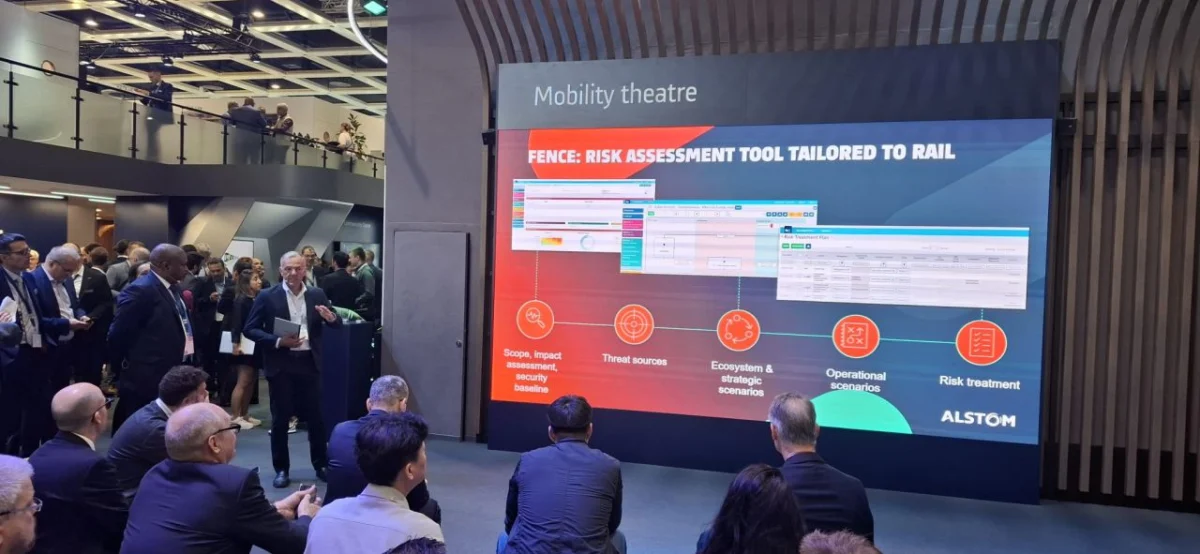
BERLIN, GERMANY — As the global railway industry undergoes a rapid digital transformation, the vulnerability of critical infrastructure to cyber-attacks has moved to the forefront of strategic planning. At InnoTrans 2024, the world’s leading trade fair for transport technology, Alstom and Airbus Protect marked a pivotal milestone in this domain. The two industry titans announced the successful development and field-testing of a unified Risk Assessment Methodology tailored specifically for the complexities of the rail sector.
This development represents a significant leap forward in the three-year strategic partnership between the two companies, signaling a shift toward more resilient, standardized, and automated cybersecurity protocols in public transportation.
Main Facts: A Unified Defense Strategy
The core of the announcement centers on the maturation of a risk assessment framework designed to combat the increasing sophistication of cyber threats targeting transport networks. By leveraging Airbus Protect’s expertise in industrial cybersecurity—honed largely in the high-stakes aeronautical sector—and Alstom’s deep-rooted knowledge of rail operations, the partners have created a methodology that bridges the gap between IT security and operational technology (OT).
Key highlights of the announcement include:
- Operational Integration: The new methodology is fully integrated into Fence, the proprietary risk assessment tool developed by Airbus Protect.
- Standardization: The framework aligns with critical international benchmarks, including the EBIOS RM risk management framework, the IEC 62443 industrial cybersecurity standard, and the CLC/TS 50701 technical specification for railway applications.
- Scalability: The system allows for a centralized database of risks, enabling Alstom to reuse assessment data across multiple projects, thereby reducing complexity and increasing efficiency.
- Broad Coverage: The initiative covers all market segments, from high-speed rail and urban mass transit to signaling systems and rolling stock maintenance.
Chronology: From Cooperation to Implementation
The journey toward this achievement began long before the halls of InnoTrans were filled with industry stakeholders. The timeline of this collaboration underscores a methodical, long-term commitment to digital safety.
September 2021: The Genesis of Partnership
Recognizing that digital transformation in rail—while essential for efficiency—introduces new "attack surfaces," Alstom and Airbus Protect formalized a worldwide cooperation agreement. The objective was clear: to harmonize cybersecurity practices across Alstom’s global rail portfolio.
2022–2023: The Pilot Phase
For nearly two years, the two companies engaged in rigorous pilot projects. These weren’t merely theoretical exercises; they involved real-world field-testing on active railway systems. This period was dedicated to "stress-testing" the methodology against various threat vectors, ranging from unauthorized access to signaling disruptions.
September 2024: The InnoTrans Milestone
During InnoTrans 2024, the partners transitioned from the development phase to the deployment phase. The successful completion of the pilot programs provided the evidence required to scale the methodology globally across Alstom’s international projects.
Supporting Data: Why Cybersecurity in Rail is Non-Negotiable
The urgency behind the Alstom-Airbus partnership is backed by broader industry data regarding the digitization of transport. As trains become "data centers on wheels," the volume of information exchanged between rolling stock, trackside infrastructure, and control centers has surged.
The Complexity of Rail Ecosystems
Modern rail systems rely on a dense web of interconnected technologies:
- Signaling Systems: Often transitioned from legacy hardware to IP-based communication.
- Passenger Information Systems: Increasingly connected to external networks for real-time data updates.
- Predictive Maintenance: Utilizing IoT sensors that feed data back to centralized cloud servers.
Without a unified methodology, each of these systems would require siloed, inconsistent security audits. The Alstom-Airbus solution addresses this by providing a "knowledge base" that maintains a record of previous vulnerabilities and mitigations. According to internal metrics, this reuse of assessment data significantly reduces the time required for security audits on new projects, allowing teams to focus on emerging threats rather than reinventing the wheel.
Compliance and Regulation
The rail industry is currently navigating a complex regulatory landscape. The integration of the CLC/TS 50701 specification is particularly significant, as it provides a sector-specific application of the broader IEC 62443 standard. By automating compliance through the Fence tool, Alstom can now demonstrate to national transport authorities and regulators that their projects meet the highest level of cybersecurity diligence with verifiable documentation.
Official Responses: The Philosophy of Security
The collaboration is not merely a technical integration; it is a cultural alignment between two industrial giants.
Eddy Thesee, Vice President of Digital & Cybersecurity at Alstom, highlighted the existential nature of the threat. "In the context of rising cyber risks across all sectors, Alstom is committed to safeguarding rail assets of our customers. Our collaboration with Airbus Protect will ensure the continued success of green mobility worldwide," Thesee stated. His comments reflect the company’s broader strategy: that the green transition—the shift toward rail as a sustainable alternative to road and air—can only succeed if that rail infrastructure is trusted and resilient.
Julien Touzeau, Head of Cyber Consulting at Airbus Protect, emphasized the value of cross-industry knowledge transfer. "Innovating and collaborating across industries is part of the Airbus Protect DNA," Touzeau remarked. "As specialists in the cybersecurity of industrial systems and mobility solutions, we are proud to be working closely with Alstom, bringing our experience in the aeronautical sector to enhance the security of information systems in the rail sector."
The aeronautical influence is vital; the aviation industry has long managed highly complex, interconnected systems where a single failure can have catastrophic consequences. By importing these mature risk-management workflows into the rail sector, Airbus Protect is effectively "fast-tracking" the maturity of railway cybersecurity.
Implications: The Future of the "Connected" Train
The impact of this methodology will be felt across the entire lifecycle of a railway project, from the initial design phase to the decommissioning of assets.
Streamlining the Value Chain
For Alstom, the ability to centralize risk data means that cybersecurity is no longer an "afterthought" or a bolt-on. It is integrated into the design phase. By utilizing the Fence tool, Alstom can manage permissions and knowledge bases across its global engineering hubs, ensuring that a lesson learned on a metro project in Singapore can benefit a high-speed rail project in Europe.
Safeguarding the Existing Installed Base
A unique challenge in the rail industry is the longevity of the assets. Trains and signaling systems often remain in service for 30 to 40 years. This creates a "legacy problem" where older systems are not equipped to handle modern cyber-attacks. The Alstom-Airbus approach is designed to be backwards-compatible, allowing for the auditing and protection of the existing installed base, not just the newest, high-tech fleet.
The Competitive Advantage
As digital threats evolve, clients—national governments and private rail operators—are increasingly making cybersecurity a prerequisite in tender processes. By adopting a standardized, robust methodology backed by the expertise of Airbus, Alstom is positioning itself as a leader in safety-critical technology. This provides them with a distinct competitive advantage, as they can offer a "security-first" guarantee to their customers.
Sustainability and Digitalization
Alstom’s overarching strategy involves the development of sustainable, energy-efficient transport. However, energy efficiency is intrinsically linked to digitalization—such as AI-driven energy management systems. These systems are inherently data-heavy. Therefore, the Alstom-Airbus partnership acts as an enabler for sustainability. By making these digital solutions secure, Alstom is paving the way for the further adoption of green, high-capacity, and low-cost rail travel.
Conclusion: A New Standard for the Industry
The announcement at InnoTrans 2024 serves as a blueprint for how critical infrastructure sectors should approach cybersecurity. By moving away from fragmented, project-by-project security efforts and toward a unified, automated, and standardized framework, Alstom and Airbus Protect have set a new benchmark.
As the world continues to rely on rail to decarbonize transport and move millions of people daily, the security of the underlying information systems has become a matter of public safety. The Alstom-Airbus partnership, through its rigorous application of international standards and innovative risk-assessment tools, is ensuring that as the trains of the future get faster and smarter, they remain steadfastly secure.
The industry will be watching closely as this methodology is rolled out across Alstom’s global portfolio, as it represents a significant step toward a safer, more resilient, and more sustainable future for rail travel worldwide.

