

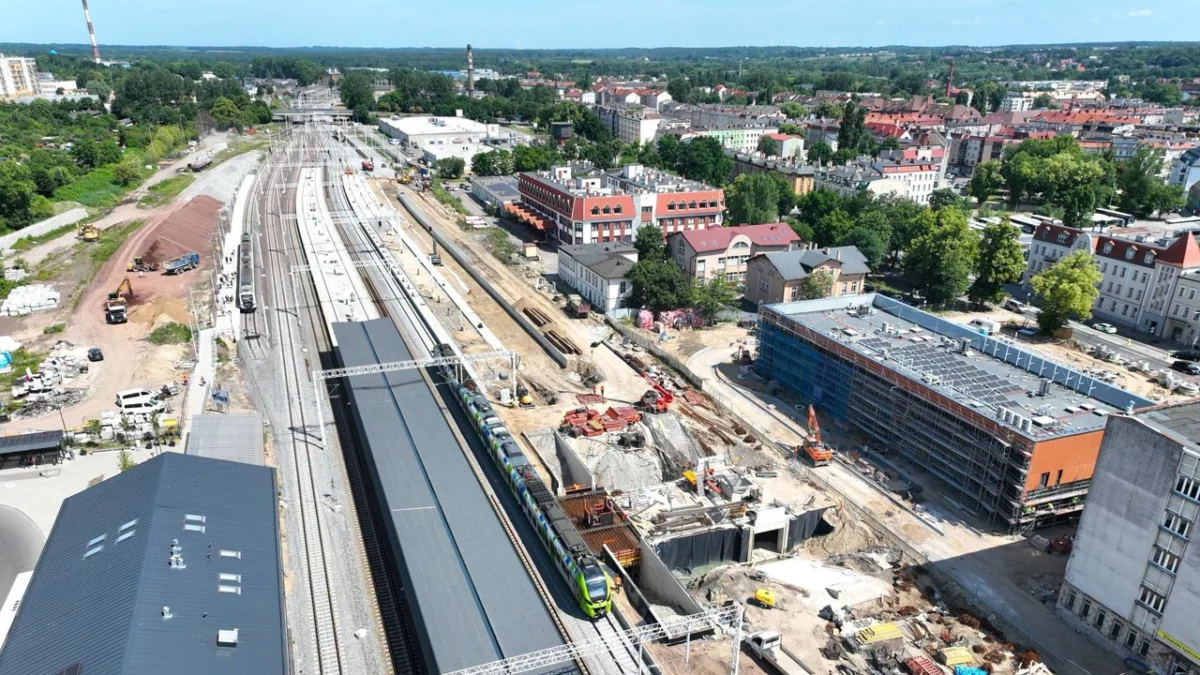
Train Network
Warsaw — In an ambitious transformation reshaping the heart of Central Europe, Poland is systematically modernizing, digitizing, and expanding its railway network to position itself as home to the most advanced rail system on the continent. Through unprecedented financial investments, sweeping infrastructure programs, and a firm commitment to domestic manufacturing, the country is rewriting the future of European public transit.
Main Facts
Poland’s railway renaissance is anchored by the "Integrated Rail Network"—the nation’s first-ever comprehensive long-term development strategy extending out to 2050.
- Massive Expansion: The plan outlines the construction of 4,700 kilometers of new lines, including 2,700 kilometers dedicated to high-speed rail (HSR).
- Record-Breaking Speeds: Moving beyond the current 200 km/h operational ceiling, new and upgraded infrastructure is being engineered for speeds of up to 350 km/h, rivaling systems in Japan and China.
- Unprecedented Ridership: In 2025, Polish railways carried 438 million passengers—a 7.7% year-on-year increase. National long-distance operator PKP Intercity reported monumental gains, setting passenger transport records not seen in over 30 years.
- Historic Budgets: Infrastructure manager PKP Polskie Linie Kolejowe (PKP PLK) is overseeing the largest investment program in Polish history, backed by an immediate EUR 23.5 billion allocation, scaling up to EUR 42.4 billion by 2032, and an ultimate long-term framework reaching EUR 143.5 billion.
Chronology and Strategic Milestones
The path toward Poland’s modern rail network is structured across distinct phases, balancing immediate network revamps with visionary long-term megaprojects.
The Foundation and Immediate Upgrades (2023–2026)
Over the past two and a half years, national and local authorities have prioritized eliminating transport exclusion, upgrading critical bottlenecks, and deploying new rolling stock.

- Summer 2026: PKP Intercity rolled out its most extensive timetable yet, featuring 560 daily services—46 more than the previous year.
- June 2026: A landmark milestone for regional integration saw the town of Łomża regain a direct rail link to Warsaw after a 33-year absence. Additional historically isolated towns—such as Police, Sokołów Podlaski, Połaniec, and Stronie Śląskie—are scheduled to be reconnected to the national grid by the end of 2027.
Medium-Term Horizon (Up to 2032)
PKP PLK’s current deployment phase targets systemic overhauls, network-wide signaling digitization, and platform accessibility enhancements. A total investment pool of EUR 42.4 billion (180 billion PLN) has been earmarked to transform regional and long-term corridors, setting the stage for surging passenger volumes projected to exceed 500 million annually by the late 2020s.
Long-Term Vision: The 2050 Strategy and CPK
Looking toward mid-century, the central focus shifts to the Centralny Port Komunikacyjny (CPK) project—specifically the "Y" network, which will connect Warsaw, Łódź, Poznań, and Wrocław—alongside the Rail Baltica corridor linking Warsaw, Białystok, Ełk, and the Lithuanian border. By 2050, the country aims to integrate an 8,300-kilometer hybrid network (comprising 2,700 km of high-speed lines and 5,600 km of modernized legacy lines), targeting a staggering 800 million annual passengers.
Supporting Data and Operational Statistics
The tangible success of Poland’s rail pivot is reflected in hard metrics spanning daily operations, capacity management, and financial allocation.
+------------------------------------------------------------------------+
|                      POLISH RAILWAY METRICS AT A GLANCE                |
+----------------------------------+-------------------------------------+
| Metric                           | Value / Growth                      |
+----------------------------------+-------------------------------------+
| Daily Train Operations           | Over 70,000 trains/day (All-time high)|
| 2025 Annual Passengers           | 438 million (+7.7% YoY)             |
| PKP Intercity H1 2025 Growth     | +11% vs. 2024 / +45% vs. 2023       |
| Projected 2026 Passengers        | 470 million                         |
| Projected 2027 Passengers        | >500 million                        |
| Immediate Infrastructure Budget  | EUR 23.5 billion (100 billion PLN)  |
| 2032 Infrastructure Framework    | EUR 42.4 billion (180 billion PLN)  |
| Integrated Network Cost Est.     | EUR 143.5 billion                   |
+----------------------------------+-------------------------------------+
Rolling Stock and Fleet Expansion
To service the soaring demand, operators are aggressively refreshing their fleets. PKP Intercity’s total investment value surpasses PLN 18 billion (EUR 4.24 billion). Notably, recent procurement strategies heavily favor local industrial integration. Under the National Recovery and Resilience Plan (NRRP), major domestic builders—including FPS H. Cegielski (Poznań), Pesa Bydgoszcz, Pesa Mińsk Mazowiecki, PKP Intercity Remtrak, and Newag—have secured multi-billion-euro contracts.
International manufacturers with heavy local footprints are also driving the transition:

- Alstom: Secured a contract for 42 double-decker trains (with options for 30 more), assembled by Polish engineers in Chorzów and Nadarzyn.
- Stadler Polska: Specializes in producing modern regional trainsets, such as the Flirt series, out of its Siedlce facility.
- Greenbrier Poland: Operates a freight rolling stock manufacturing and maintenance hub in Świdnica.
Official Responses and Perspectives
Speaking at the "Our Railway" conference held at Warsaw West station on July 22, Polish leadership emphasized both the domestic and geopolitical significance of the modernization drive.
"We are building the most modern rail network on the continent. Over the past two and a half years, we have launched new connections and stations and upgraded existing links," declared Prime Minister Donald Tusk.
Highlighting the sheer scale of the transformation, Tusk noted that the country’s trains are rapidly approaching an annual ridership equivalent to the entire population of the European Union. Turning to future ambitions, he added:
"We will have the fastest railway in Europe, because Poles deserve to be able to travel just like the Japanese or the Chinese."
Underscoring the operational milestones, Infrastructure Minister Dariusz Klimczak provided detailed projections for the sector’s immediate future:

"Over the last three years, the number of passengers travelling by train has increased by 100 million. In 2026, we will carry 470 million passengers, and next year we will break the 500 million passenger mark. PKP Intercity has increased the number of daily services by 130 and is carrying 30 per cent more passengers."
Economic and Territorial Implications
The systematic overhaul of Polish railways extends far beyond transportation convenience; it serves as a core catalyst for macroeconomic growth, regional equity, and industrial prowess.
Territorial Cohesion and Anti-Exclusion
For decades, post-industrial transitions and regional depopulation left numerous smaller towns and rural municipalities entirely disconnected from the national rail grid. By systematically restoring legacy tracks and integrating remote communities into the long-distance network, Poland is successfully reversing transport exclusion. This guarantees equitable access to labor markets, education, and healthcare, breathing new economic life into regions previously sidelined from urban prosperity.
Boosting the Domestic Industrial Base
By anchoring procurement strategies within national borders, the Polish government has transformed the domestic rail supply chain into an international powerhouse. Contracts awarded under the NRRP and through operators like PKP Intercity have allowed domestic heavy industry and local engineering sectors to expand production capabilities, modernize facilities, and scale up research and development.
Furthermore, these localized manufacturing ecosystems—bolstered by foreign direct investments from global firms like Alstom, Stadler, and Greenbrier—are exporting rolling stock and technical know-how across European markets. This elevates Poland’s profile from a regional transit corridor to a central manufacturing pillar of the European rail industry.

Environmental and Modal Shift Goals
As Europe grapples with stringent climate targets, Poland’s rail renaissance provides a vital mechanism for reducing carbon emissions. By offering high-speed, reliable, and high-frequency alternatives to highway and short-haul air travel, the state is steering millions of travelers toward sustainable mobility.
Ultimately, through precise long-term planning, monumental capital allocation, and unwavering political will, Poland is not merely upgrading tracks—it is laying the physical and economic groundwork for a modern, connected European future.

