

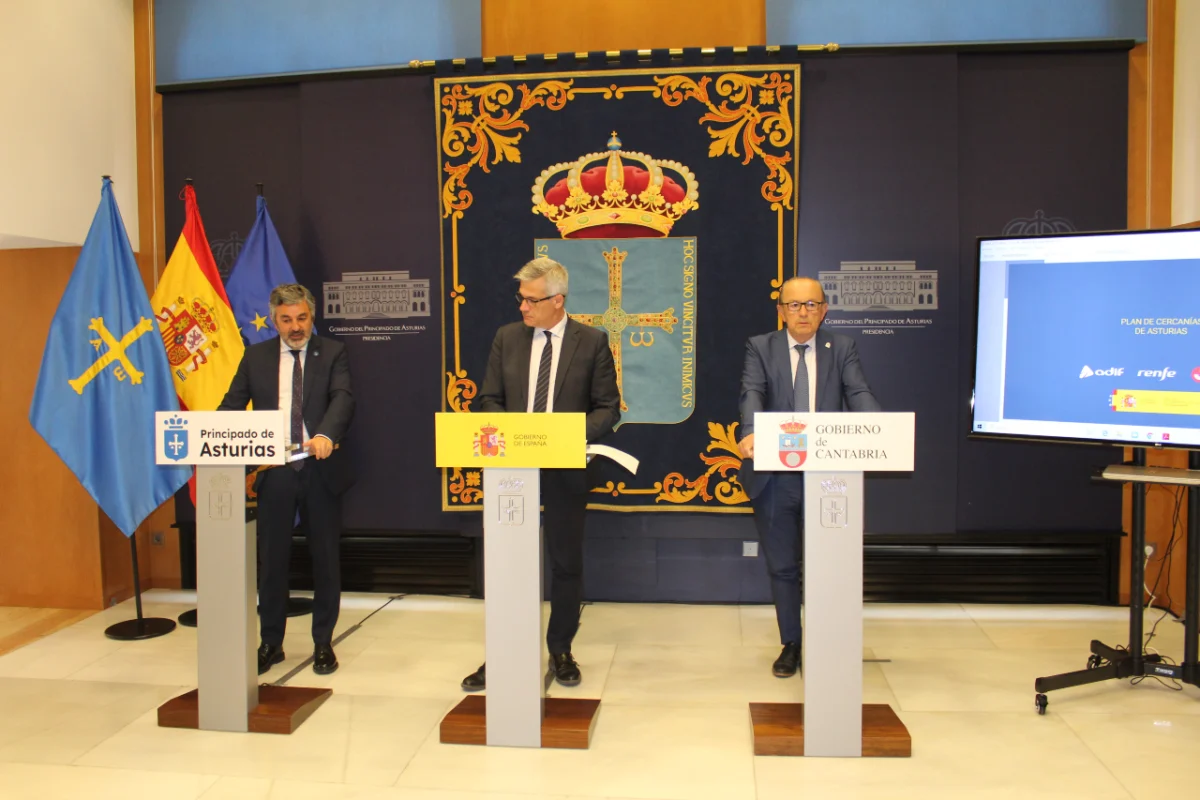
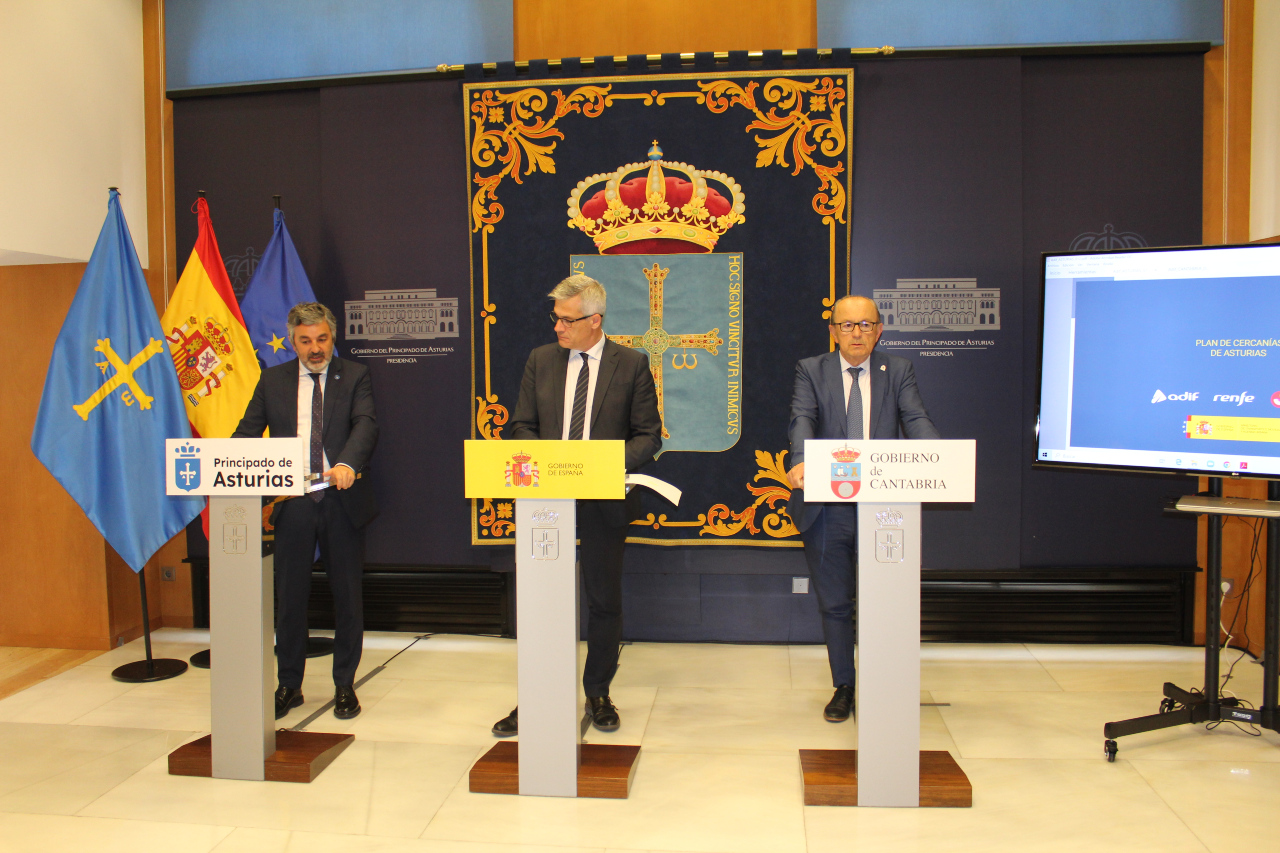
In a landmark commitment to regional mobility, the Spanish Ministry of Transport, Mobility and Urban Agenda (MITMA) has unveiled a radically expanded investment plan for the Cercanías commuter rail networks in the northern autonomous communities of Asturias and Cantabria. The revised strategy, presented in Oviedo by State Secretary for Transport David Lucas, signals a fundamental shift in national infrastructure policy, with the total budget for the program more than doubling from an initial €1.1 billion to a staggering €2.74 billion.
This comprehensive modernization effort aims to rectify decades of infrastructure fatigue, resolve long-standing capacity bottlenecks, and integrate these vital transport corridors into a seamless, modern, and sustainable network.
The Strategic Vision: Transforming Northern Rail Connectivity
The primary objective of the updated plan is the complete revitalization of the rail systems serving the Asturias and Cantabria regions. By targeting both Iberian and metric gauge networks, the government intends to provide a robust alternative to road transport, effectively reducing carbon emissions and enhancing the quality of life for thousands of daily commuters.
The investment framework is bifurcated into two major pillars: infrastructure development managed by Adif and rolling stock/station upgrades spearheaded by the national operator, Renfe.
Financial Breakdown
The scale of the funding reflects the gravity of the modernization task. Under the new plan:
- Adif Infrastructure Investment: The budget has been increased from €887.5 million to €2.1 billion. Of this, approximately €1.67 billion has already been committed to active or ongoing projects.
- Renfe Fleet and Station Upgrades: A total of €76.8 million is earmarked specifically for station accessibility, structural renovations, and passenger experience improvements. Furthermore, €547.6 million is dedicated to the procurement of new trains and the modernization of the existing fleet.
Technical Scope: The Anatomy of the Upgrade
The transformation is not merely financial; it is a massive engineering undertaking. The plan targets a total of 703 kilometers of track for rehabilitation and modernization.
Key Infrastructure Milestones:
- Capacity Expansion: Track doubling will be carried out across 55 kilometers of high-traffic sections to alleviate congestion.
- Technological Modernization: Security and telecommunication facilities will be overhauled across 453 kilometers of the network.
- Safety and Integration: A major focus remains on the elimination of dangerous level crossings and the enhancement of urban integration, ensuring that rail lines serve as community assets rather than urban barriers.
- Station Enhancements: Stations are undergoing a "facelift" focused on accessibility—a critical requirement for modern European transit systems—alongside new signage and updated passenger amenities.
Regional Impact: A Tale of Two Communities
While the investment is unified under a single national framework, the specific execution is tailored to the distinct geographical and demographic needs of Asturias and Cantabria.
The Asturias Transformation
Asturias, with its 28 connected municipalities, 156 stations, and 8 distinct rail lines, is the beneficiary of a significant budgetary increase. The initial allocation of €517.5 million has been bolstered to €1.1 billion. This includes:
- Iberian Gauge Projects: €493.2 million.
- Metric Gauge Projects: €636.2 million.
Currently, 35 major projects are underway, including the comprehensive renewal of the Gijón–Laviana section and the modernization of block systems between Pravia and Gijón. Renfe has committed to adding 35 new trains to the fleet to replace obsolete equipment, with 7 units already under contract and 18 currently in the tender phase.
The Cantabria Modernization
Cantabria’s network, serving 23 municipalities across 3 lines, has seen its investment envelope climb from €370 million to €991 million. The focus here is heavily skewed toward resolving critical bottlenecks.
- Strategic Duplication: Key projects include the duplication of tracks on the Renedo–Guarnizo, Astillero–Orejo, and Muriedas–Santander sections.
- The Santander Bypass: Perhaps the most significant project in the region, the Santander bypass is designed to drastically reduce travel times and improve the fluidity of the metropolitan rail corridor.
- Rolling Stock: Cantabrian commuters can expect the introduction of 21 new metre-gauge trains, which will significantly improve service reliability compared to the legacy fleet.
Chronology of the Initiative
The development of this plan is the result of years of deliberation and, at times, political friction regarding the state of northern Spanish rail infrastructure.
- 2021–2022: Initial funding allocations were established under the umbrella of the Recovery, Transformation, and Resilience Plan, supported by the European Union’s REACT-EU funds.
- Early 2023: Recognition of the "obsolete" status of specific subsystems in Asturias and Cantabria led to public pressure and subsequent government reviews.
- April 2023: The official presentation in Oviedo by David Lucas, confirming the doubling of the investment budget and setting a new trajectory for the network’s future.
- Post-August 2023 (Targeted): Implementation of the "Unified Ticket" system, allowing passengers to move seamlessly across the suburban rail networks of Asturias, Cantabria, and the Bilbao area.
Official Responses and Stakeholder Sentiment
During the presentation in Oviedo, the high-level delegation—including General Secretary for Infrastructure Xavier Flores, Adif President María Luisa Domínguez, and Renfe President Raúl Blanco—emphasized that this project is a "commitment to equity."
"This is not just about laying new tracks; it is about providing the citizens of northern Spain with the mobility standards they deserve," stated David Lucas. The government highlighted that these projects are being financed through a robust combination of the Spanish recovery plan and the European Regional Development Fund (ERDF) for the 2021–2027 cycle, demonstrating the critical role of EU cohesion policy in Spanish infrastructure.
Regional government representatives expressed cautious optimism, acknowledging that while the history of these rail lines has been plagued by delays and technical hurdles, the sheer scale of the current budget finally aligns with the actual needs of the regions.
Implications for the Future: Beyond the Rails
The implications of this €2.74 billion investment extend far beyond the immediate construction sites.
1. Modal Shift and Environmental Impact
By increasing capacity and punctuality, the government aims to lure motorists away from private vehicles, particularly for suburban commutes into the hubs of Gijón, Oviedo, and Santander. This is a central component of Spain’s broader strategy to meet EU decarbonization targets.
2. Economic Cohesion
Reliable rail links are the lifeblood of regional economies. Improved connections between industrial zones, residential hubs, and city centers are expected to stimulate local labor markets and reduce the "peripheral" feeling that has historically hindered economic integration in the northern provinces.
3. The "Single Ticket" Milestone
The most visible change for the average passenger will be the introduction of the integrated ticketing system. By harmonizing the technological backend across the northern networks, MITMA is effectively creating a "mega-region" of transit. A passenger will eventually be able to traverse complex routes across different providers and lines with a single digital pass, a level of interoperability that was previously non-existent in this sector.
4. Setting a Precedent
The project serves as a case study for how Spain intends to handle the modernization of its legacy metric-gauge (narrow-gauge) lines. By proving that these older, more complex networks can be successfully integrated into a modern digital and physical infrastructure, the government is creating a roadmap for other regions facing similar challenges.
Conclusion
The modernization of the Asturias and Cantabria Cercanías represents a historic pivot point. By injecting €2.74 billion into a system that has long required modernization, the Spanish government is moving to fulfill its promise of territorial equality. As the projects move from the tender and planning phases into full-scale construction, the focus will remain on the timely delivery of these assets.
For the commuters of Northern Spain, the promise is clear: a transition from an aging, bottlenecked system to a modern, integrated, and reliable rail network that supports the demands of the 21st century. Through the lens of the EU’s recovery funds and a renewed national focus on rail-led transit, Asturias and Cantabria are positioned to become the flagship examples of modern, sustainable regional mobility in Spain.

