

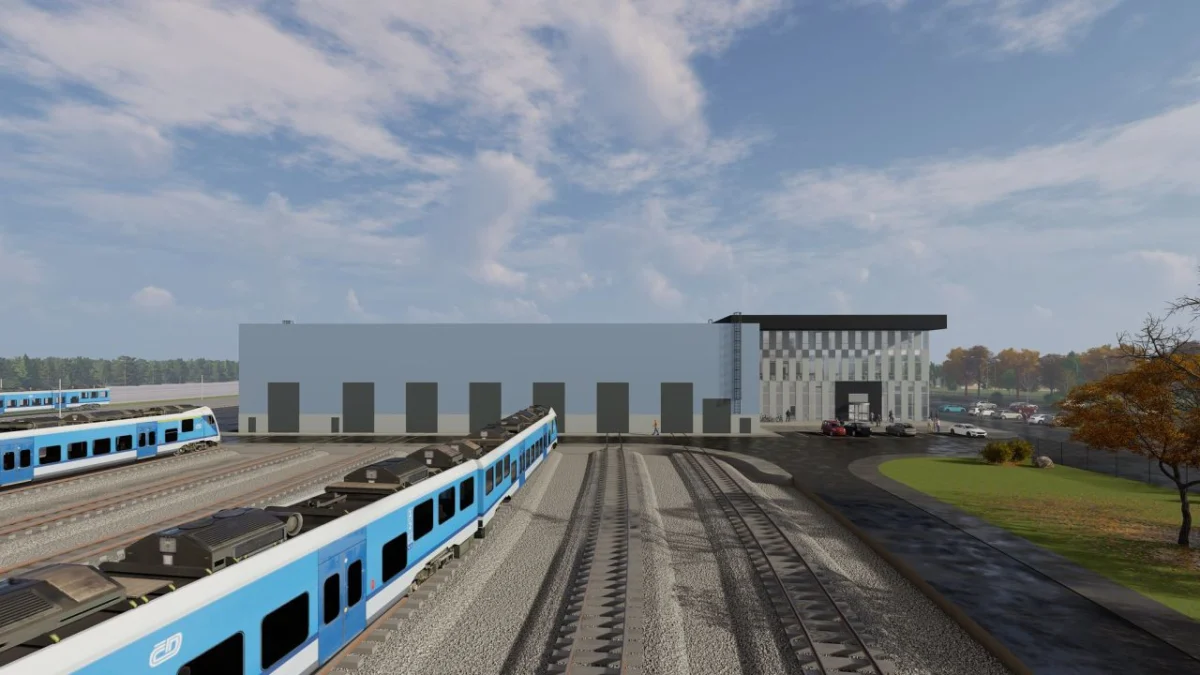
The landscape of Baltic transportation is undergoing a seismic shift. Rail Baltic Estonia has officially initiated the procurement process for what is set to become the largest, most technologically advanced rolling stock depot in the entire Baltic region. Located in the Soodevahe area of Harju County, this massive infrastructure project serves as the operational backbone for the future Rail Baltica high-speed network. With an investment totaling EUR 41.33 million (excluding VAT), the facility is designed to centralize the lifecycle management, maintenance, and operational readiness of the fleet that will redefine regional connectivity.
This project represents more than just a maintenance hub; it is a strategic investment in the long-term viability of the Rail Baltica project, ensuring that the high-speed line remains reliable, safe, and efficient for decades to come.
Main Facts: The Blueprint of Efficiency
The proposed depot is a marvel of industrial engineering, designed to accommodate the unique demands of high-speed rail. The facility will be constructed to handle the dual requirements of both international high-speed trains and regional rolling stock, ensuring seamless operation across the network.
Key Specifications:
- Total Investment: EUR 41.33 million (excluding VAT).
- Location: Soodevahe, Harju County, Estonia.
- Completion Target: End of 2028.
- Capacity: Simultaneous maintenance for up to six high-speed trains or twelve regional trains.
- Infrastructure: The main building will feature eight internal service lines (totaling 1,380 meters in length) and six external service lines for cleaning and parking.
- Specialized Equipment: The site will include dedicated facilities for automated train washing and precision wheel-profiling lathes.
The depot’s design prioritizes a "one-roof" philosophy, consolidating repair, cleaning, and administrative tasks to minimize downtime and optimize the utilization of the fleet. By creating a centralized hub, Rail Baltic Estonia aims to establish a standard of excellence in railway maintenance that will serve as a blueprint for other national operators in the region.
Chronology: A Roadmap to 2028
The road to this milestone has been paved with years of rigorous feasibility studies and strategic planning. The timeline for the depot’s realization is tightly structured to align with the broader Rail Baltica deployment.
- Early 2026 (The Launch): Rail Baltic Estonia officially launches the public procurement procedure, encompassing both the technical design phase and the physical construction works.
- March 10, 2026: The definitive deadline for all interested contractors to submit their bids. This phase is expected to attract high-profile international consortiums with expertise in specialized railway infrastructure.
- April 2026: The anticipated signing of the construction contract.
- Late 2026: Commencement of on-site construction works in the Soodevahe area.
- 2027–2028: The intensive construction and fit-out phase, involving the installation of specialized rail technologies and depot-specific machinery.
- End of 2028: Final handover of the facility to Rail Baltic Estonia, marking the depot’s readiness for operational integration.
Supporting Data: The Scale of Operations
The sheer volume of operations planned for the Soodevahe site highlights the scale of the Rail Baltica ambition. To understand the importance of this hub, one must look at the technical requirements of high-speed rail. High-speed rolling stock requires stringent maintenance intervals and specialized diagnostics that conventional regional trains do not always demand.
The Structural Layout
The depot will be divided into two primary volumes. The first is a central maintenance hall, which houses the eight internal service lines. These lines are critical for the heavy-lifting aspects of rail maintenance: engine diagnostics, bogie replacement, and complex electrical systems repair. The second volume is a three-story administrative building, which will serve as the "brain" of the operation. This center will house the control systems, staff offices, and logistical planning departments that manage the flow of trains in and out of the depot.
External Capacity
The external capacity is equally vital. With six service lines dedicated to cleaning, fueling, and short-term staging, the depot ensures that the main line is never bottlenecked by secondary tasks. The inclusion of a dedicated wheel-profiling lathe is a critical technical asset; as high-speed trains operate at speeds reaching 250 km/h, the integrity of the wheel-rail interface is paramount. Regular profiling extends the life of both the rolling stock and the tracks, resulting in significant long-term cost savings.

Official Responses: Strengthening the Baltic Connection
The leadership at Rail Baltic Estonia has emphasized that this project is not merely an engineering endeavor but a catalyst for regional economic growth and professional development.
Lauri Ulm, Technical Director and member of the Board of Directors of Rail Baltic Estonia, noted the project’s multifaceted benefits:
"The depot will bring all activities related to maintenance, repairs, washing, and operational preparation of trains under one roof. At the same time, the project will create between 150 and 200 permanent, highly skilled jobs. This is an investment in human capital as much as it is in iron and concrete."
The sentiment is echoed by government stakeholders, who view the depot as an essential component of Estonia’s broader integration into the European rail network. By creating a center of excellence for rail maintenance, Estonia is positioning itself to become a regional leader in railway technology and workforce expertise.
Implications: A New Chapter for Elron and Beyond
The implications of this project reach far beyond the immediate construction sector. The decision to lease the facilities to Elron, the national passenger rail operator, is a strategic move to ensure that the depot hits the ground running.
Synergies with Elron
Elron, which has been expanding its safety credentials and operational capacity in recent years, is the natural choice to be the first operator to utilize the new infrastructure. By integrating Elron’s current operations with the Rail Baltica infrastructure, the project ensures that the transition to high-speed rail is as smooth as possible for both commuters and the workforce. The lease agreement provides a clear framework for how national and international rail services will coexist under the umbrella of the new depot.
Economic and Strategic Impact
- Job Creation: The commitment to 150–200 permanent, highly skilled positions is a significant boost for the Harju region. These jobs will require specialized training in modern rail maintenance, fostering a new generation of technical experts in Estonia.
- Technological Sovereignty: By owning and operating such a sophisticated maintenance facility, Estonia reduces its dependency on foreign maintenance hubs, ensuring that the Rail Baltica fleet remains functional under local oversight.
- Regional Connectivity: The presence of a robust, state-of-the-art depot in Estonia ensures that the northern terminus of the Rail Baltica line is fully supported, allowing for consistent scheduling and high-frequency service.
- Environmental Efficiency: By centralizing maintenance and washing, the depot is designed to minimize the environmental footprint of rail operations. Advanced waste-water treatment for the wash-line and energy-efficient building standards are core components of the project’s sustainability goals.
Future-Proofing the Baltic Corridor
As the Rail Baltica project continues to advance across Latvia and Lithuania, the Estonian depot serves as a beacon of progress. It demonstrates that the infrastructure required to sustain a modern, high-speed rail network is being built with foresight and durability in mind. The Soodevahe facility will eventually act as a critical junction in the broader Trans-European Transport Network (TEN-T), bridging the gap between the Baltic states and the rest of Europe.
In conclusion, the construction of the Rail Baltica rolling stock depot is a cornerstone event in the development of Northern Europe’s transport infrastructure. By the time the facility opens its doors at the end of 2028, it will be prepared to handle the complex, high-speed future of rail travel, cementing Estonia’s role as a key player in the modern European transportation landscape. With the procurement process now underway, the industry looks toward March 2026 with anticipation, as the next phase of this transformative project begins to take shape.

