
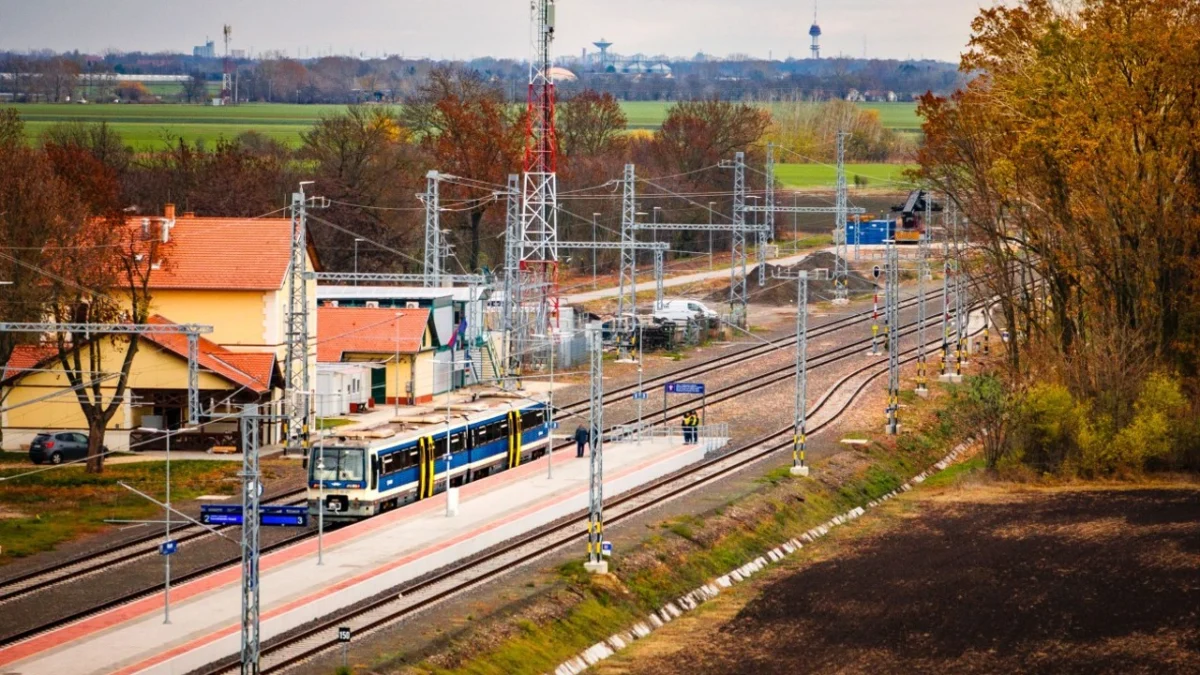
SZEGED, Hungary — In a major milestone for Central European rail infrastructure, Hungary has successfully finalized the comprehensive electrification and modernization of the Szeged–Röszke railway line (Railway Line No. 136). Stretching down to the border with Serbia, this vital cross-border artery has been transformed into a modern, electrified corridor. Alongside the core line improvements, developers completed the construction of a strategic new connecting link in the Szeged area, bridging the Cegléd–Szeged and Szeged–Röszke routes to streamline regional and international transit.
Valued at 50.4 billion forints (approximately EUR 138.4 million), the total investment was funded entirely through grants from the European Union. The initiative was integrated directly into Hungary’s Recovery and Resilience Plan under the thematic pillar dedicated to sustainable, green, and environmentally friendly transport systems. Executed by MÁV Pályaműködtetési Zrt., the infrastructure overhaul is designed to dramatically improve international passenger and freight transport, shrink transit times, and cement robust, reliable rail connectivity between Hungary and the Western Balkans.
Main Facts: Project Scope and Technical Parameters
The modernization of the Szeged–Röszke line represents a critical link in Hungary’s national railway network and its integration into the wider European TEN-T (Trans-European Transport Network) framework. Geographically positioned in southern Hungary, the Szeged region serves as a natural gateway linking multiple international transport corridors, including the Vienna–Szeged–Istanbul–Thessaloniki and Budapest–Arad–Bucharest rail routes.
The technical specifications of the modernized corridor reflect a forward-looking design philosophy:
- Infrastructure Upgrades: The project covered the entirety of Railway Line No. 136, running from Szeged-Rendező station through Röszke to the Serbian border.
- The New Bypass Link: A crucial engineering achievement of the project is the construction of a brand-new connecting link between the Cegléd–Szeged (Line 140) and Szeged–Röszke lines. This allows north–south and east–south international freight trains to bypass the congested Szeged-Rendező station entirely, accelerating regional freight flows.
- Traction and Speed: The entire 44 km route between Szeged and Subotica (Serbia) has been fully electrified, ending the era of diesel-only traction. Trains currently operate at speeds of up to 100 km/h, with authorization procedures underway to elevate operational speeds to 120 km/h. Notably, the physical alignment and geometry of the upgraded infrastructure are engineered to support future speeds of up to 160 km/h, subject to ongoing regulatory approvals and safety certifications.
Chronology of a Resurgence: From Preparations to Completion
The revival of the Szeged–Röszke line is a story of phased recovery, demonstrating how infrastructure planners can progressively restore services while major construction continues around them.
Preparatory Works and Freight Resumption (2021–2022)
Major preparatory and civil engineering works commenced in 2021 under MÁV’s management. As the Budapest–Kelebia line underwent large-scale modernization, European rail corridors faced significant capacity constraints. To alleviate this bottleneck, the Szeged–Röszke route was prioritized for early intervention. In August 2022, rail freight services officially resumed between Szeged-Rendező station and Subotica in Serbia. This early milestone provided an immediate, highly functional alternative route for international freight traffic while heavy engineering works continued across the broader network.
Passenger Service Comeback (2023)
Following the phased completion of platform, signaling, and safety infrastructure, rail passenger services—which had been suspended since 2015—officially resumed in November 2023. The re-established service debuted with a robust schedule of ten trains daily, re-connecting local communities across the border.

Operational Integration and Performance (2023–2026)
To operate the passenger services seamlessly, Hungarian operator MÁV-Start and Serbia’s national passenger railway company, Srbijavoz, established a joint rolling stock pool utilizing modern Diesel Multiple Units (DMUs) during the interim pre-electrification phase.
By September 2025, cumulative operations on the line surpassed 150,000 kilometers traveled, with approximately one-third of that distance logged within Hungarian territory. Passenger reliability metrics proved exceptionally high: nine out of ten trains arrived precisely on schedule, with technical faults remaining a rarity.
The physical journey time along the 44 km cross-border stretch between Szeged and Subotica stabilized at an efficient 30 to 40 minutes, excluding the mandatory Schengen border control stops. By mid-2026, the final electrification works and system integration checks were wrapped up, culminating in the official declaration of project completion by MÁV in September 2026.
Supporting Data: Ridership and Economic Metrics
Quantitative data gathered during the initial years of the revived line highlight a strong, consistent demand for cross-border rail mobility in the region:
- Passenger Volumes: In the first full year following the restoration of passenger services, trains carried travelers across roughly 100,000 individual journeys.
- Daily Averages: Under normal operating conditions, daily passenger numbers hovered between 250 and 300, frequently surging to 500 during peak commuting and holiday periods.
- Financial Investment: The total EU grant allocation of 50.4 billion forints (EUR 138.4 million) represents one of the most substantial targeted investments in southern Hungary’s public transport infrastructure in recent decades.
- Freight Efficiency: The elimination of bottlenecks at Szeged-Rendező via the new connecting curve has trimmed valuable minutes off international logistics schedules, reinforcing the competitiveness of rail freight against road transport.
Official Responses and Stakeholder Perspectives
The successful delivery of the Szeged–Röszke electrification project has drawn praise from transport officials, railway operators, and regional stakeholders across both Hungary and Serbia.
MÁV representatives emphasized that the completion of the project marks a turning point for southern Hungary’s rail network. In official statements released upon project completion in September 2026, the railway administration highlighted that the transition to electric traction will significantly reduce the carbon footprint of regional operations while lowering long-term maintenance and energy costs.
From the passenger perspective, the line has been widely embraced. Commuters and cross-border workers have lauded the punctuality—boasting a 90% on-time performance rate—and the comfort of the modern railcars. Local business leaders in both Szeged and the Bačka region have similarly welcomed the restoration of ties, noting that seamless rail links are essential for fostering labor mobility, tourism, and trade between southern Hungary and northern Serbia.

Furthermore, Serbian rail authorities and partner operator Srbijavoz have expressed deep satisfaction with the binational cooperation. The synchronization of timetables, joint rolling stock deployment, and synchronized border processing frameworks have served as a model for future cross-border transport initiatives in the Western Balkans.
Implications: Regional Connectivity, Trade, and Future Outlook
The modernization and electrification of the Szeged–Röszke railway line carry profound strategic implications for Central and Southeastern Europe:
An Essential Corridor Alternative
One of the most immediate practical benefits of the upgraded line is its function as a redundant corridor. During periods when major trunk routes—such as the high-profile Budapest–Belgrade modernization project—experience temporary service halts, software integration issues, or capacity constraints due to heavy construction, the Szeged–Röszke route provides a reliable, high-capacity detour for both freight and passenger traffic. This redundancy shields international supply chains from costly disruptions.
Synergy with Serbian Infrastructure
The Hungarian project does not exist in a vacuum; it directly complements concurrent railway modernization efforts undertaken by the Republic of Serbia on the adjacent Horgoš–Subotica section. Together, these complementary upgrades are breathing new economic life into the historical Bačka region—straddling northern Serbia and southern Hungary—by restoring historic trade and cultural pathways that had languished under decades of underinvestment.
Environmental and Climate Goals
Aligning with the European Union’s broader Green Deal objectives, the shift from diesel traction to electric power on Line 136 dramatically slashes greenhouse gas emissions associated with regional transport. By offering a fast, clean, and competitive alternative to highway travel, the project encourages a modal shift from cars and trucks to electrified rail, supporting Hungary’s commitments under its Recovery and Resilience Plan.
Looking Ahead
With physical construction complete and electric infrastructure fully energized, the immediate next steps involve the finalization of regulatory approvals to unlock the line’s full 120 km/h operational speed limit. As administrative procedures clear and passenger numbers continue to climb, the Szeged–Röszke corridor stands as a shining example of modern European cross-border cooperation—bridging communities, accelerating commerce, and laying down the tracks for a sustainable, interconnected future.

