

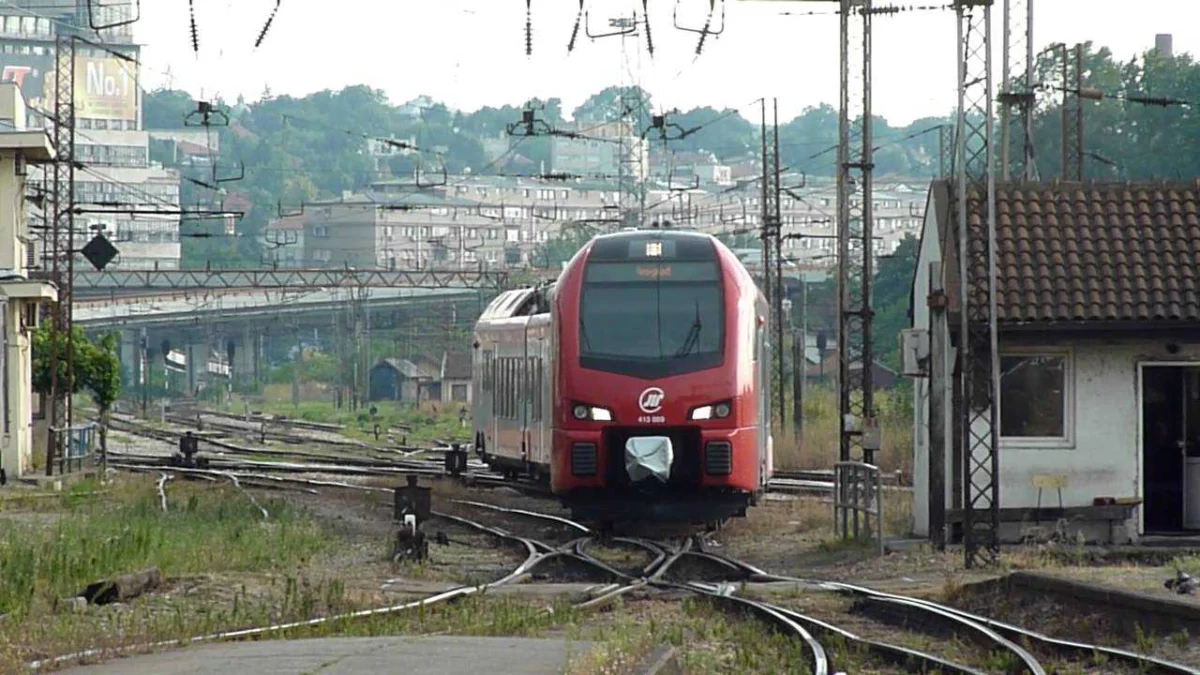
In a landmark development for regional connectivity in the Western Balkans, Bosnia and Herzegovina and Serbia have announced the formal resumption of international passenger rail services. Beginning December 13, 2026, a new daily rail link will connect Zvornik Novi in the Republika Srpska with the Serbian capital, Belgrade. This service marks the end of a 14-year suspension of cross-border passenger trains, a move that local officials believe will breathe new life into the regional economy and provide a vital, sustainable alternative to road-based transit.
Main Facts: The Return of the Cross-Border Link
The new service, finalized following intense negotiations between the railway operators of both nations, is set to be a cornerstone of the 2026–2027 rail timetable. The train will run daily, bridging the gap between Zvornik Novi—a station located in the Karakaj industrial zone of Bosnia and Herzegovina—and the central hub of Beograd Centar in Serbia.
The operational architecture of the route relies on a bilateral cooperation agreement. While the railway operator of the Republika Srpska (Željeznice Republike Srpske, or ŽRS) will ensure the necessary track conditions and infrastructure support within Bosnian territory, the Serbian national operator, Srbija Voz, will provide the rolling stock and the essential train crews.
For the residents of the Zvornik region, the service is a long-awaited convenience. The train is scheduled to depart Zvornik Novi at 04:29 AM, arriving in Belgrade by mid-morning. While the route map and final list of stops are subject to formal confirmation, the train is expected to serve key urban centers in Serbia, including Loznica, Šabac, and Ruma. Regarding the financial aspect, preliminary estimates place a one-way ticket at approximately 10 EUR, with a round-trip fare set at around 18 EUR, positioning the train as a highly competitive alternative to private cars and bus travel.
A Historical Chronology: From Suspension to Restoration
To understand the significance of this milestone, one must look back at the decline of regional rail infrastructure. In December 2012, the landscape of Balkan travel shifted dramatically when international passenger services connecting Bosnia and Herzegovina to its neighbors were discontinued. For over a decade, major links—including those to Sarajevo and Banja Luka—remained dormant, forcing passengers to rely exclusively on road transport.
The current restoration effort is the culmination of years of quiet, incremental progress. A critical distinction in the timeline occurred in December 2019, when Srbija Voz introduced a direct service from Belgrade to Zvornik. However, that service terminated at the Zvornik station located on the Serbian side of the border. While this kept the route alive in spirit, it failed to bridge the actual border for commuters.
The upcoming December 2026 launch is qualitatively different: it re-establishes the "trans-border" connection, allowing seamless transit from the Bosnian industrial hub directly into the heart of Belgrade. This timeline is part of a broader, phased strategy by ŽRS to modernize the entity’s rail network and reconnect it to the European grid.
Supporting Data and Operational Logistics
The feasibility of this route rests on the synchronization of two distinct national operators. Dragan Zelenković, acting director-general of ŽRS, has emphasized that the service’s success will be monitored closely during its inaugural months to determine if additional frequency or capacity upgrades are required.
Infrastructure and Staffing
A unique aspect of this operational model is the logistics of the personnel. Recognizing the constraints on local human resources, the Zvornik municipal authorities have committed to organizing accommodation for the Serbian railway staff who will be operating the daily cross-border trains. This level of municipal cooperation highlights the strategic importance the local government places on the project.
Financial Viability
The projected pricing strategy is designed to capture the student and commuter demographic. By pricing the one-way ticket at 10 EUR, the operators are aiming to undercut the cumulative costs of fuel, parking, and potential toll fees associated with road travel. Should the ridership numbers align with initial projections, the revenue model will be adjusted to potentially include subscription-based passes for frequent commuters, which could further stabilize the service’s long-term financial health.

Official Responses and Strategic Implications
The re-establishment of the Zvornik–Belgrade line is not an isolated incident but part of a wider, multi-year plan for the Republika Srpska. The authorities are simultaneously preparing for a significant expansion of their rail reach.
Expanding the Network
Beyond the Belgrade connection, ŽRS is eyeing the restoration of rail links with Croatia. Plans are currently underway to initiate a passenger connection via the Dobrljin–Volinja border crossing, expected to commence in February 2027. This service is intended to facilitate travel to Zagreb, although it will initially require a transfer at the border crossing, unlike the direct, seamless transit model being implemented for the Belgrade route.
The Institutional Challenges
Despite the optimism surrounding these new routes, the railway sector in Bosnia and Herzegovina faces structural challenges. The rail network remains fragmented, managed separately by the operators of the two constituent entities. Currently, there is a notable absence of regular, efficient passenger services connecting the Federation of Bosnia and Herzegovina with the Republika Srpska, which complicates the vision of a unified national rail network.
However, there is a silver lining in the freight sector. Recent advancements in rail logistics—such as the inauguration of a new freight corridor between Croatia and Serbia that traverses Bosnia and Herzegovina—demonstrate that the country’s geography remains a strategic asset. By utilizing the Volinja–Dobrljin and Zvornik–Brasina crossings, the region is proving that it can successfully integrate into international logistics chains.
The Broader Impact: Reconnecting the Western Balkans
The return of the Zvornik–Belgrade train is a symbolic and practical victory for regional integration. For too long, the "border" has acted as a psychological and physical barrier to the mobility of the people in the Zvornik region.
Economic and Environmental Considerations
From an economic standpoint, the train offers a predictable, safe, and cost-effective means of transport for the workforce and students. From an environmental perspective, shifting even a fraction of daily commuters from private vehicles to rail is a step toward meeting the sustainability goals increasingly demanded by regional stakeholders.
A Catalyst for Future Rail Policy
The success of this endeavor will serve as a litmus test for the viability of other dormant lines. If the Zvornik–Belgrade link demonstrates high load factors, it will provide the political leverage needed to lobby for further cross-border investments and the eventual harmonization of signaling and safety protocols across the entire Balkan rail network.
As the December 2026 launch date approaches, anticipation is growing. The restoration of this route is more than just a return to a 2012-era schedule; it is an acknowledgement that in the 21st century, regional development requires the seamless movement of people across borders. By bridging the distance between Zvornik Novi and Belgrade, Bosnia and Herzegovina and Serbia are taking a decisive step toward a more connected, efficient, and integrated future for the Western Balkans.
The rail sector, often overlooked in the rush toward highway construction, is proving that it remains the most reliable backbone for long-term regional development. With the collaboration between ŽRS and Srbija Voz now solidified, the tracks are cleared for a new chapter in cross-border cooperation. As the first train pulls out of Zvornik Novi in the early hours of that December morning, it will be carrying more than just passengers—it will be carrying the hopes of a region eager to reconnect with its neighbors and its own future.

