

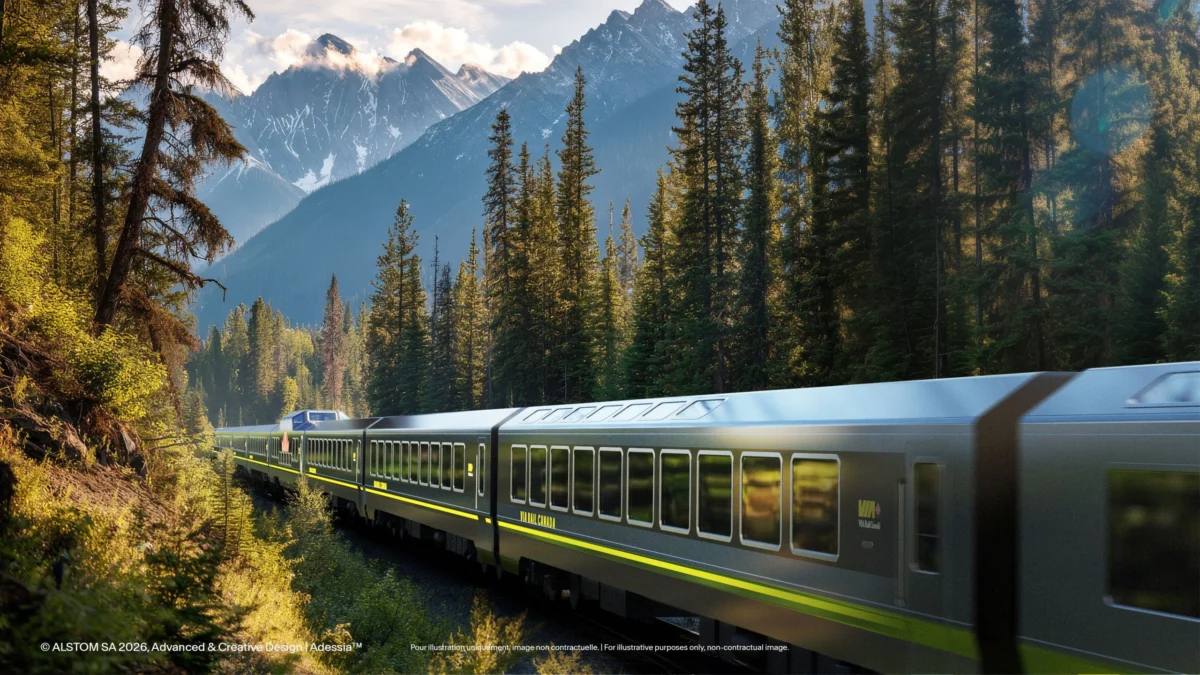
In a landmark development for North American passenger rail, Alstom has officially entered into a transformative agreement with VIA Rail Canada. The contract, valued at CAD 4.7 billion (approximately EUR 3 billion), marks the most significant fleet modernization effort in the history of Canada’s national passenger rail service. Under the terms of the deal, Alstom will spearhead the design, manufacture, and long-term maintenance of 313 state-of-the-art Adessia railcars, promising to revitalize connectivity across the vast expanse of the country.
This massive investment is not merely a replacement project; it is a fundamental reimagining of the Canadian rail experience. By upgrading infrastructure that has, in some instances, been in service for over seven decades, VIA Rail aims to bridge the gap between historic rail tradition and modern, sustainable, and inclusive transportation.
The Core Scope: Modernizing a National Lifeline
At the heart of the agreement is the procurement of 313 Adessia railcars, designed to serve a diverse array of Canadian routes ranging from dense urban corridors to the most remote northern communities. The scope of the contract extends beyond initial manufacturing, encompassing a 15-year technical support and spare parts agreement valued at CAD 700 million (EUR 435.4 million).
Strategic Geographic Reach
The new fleet is destined to transform operations across eight primary long-distance and regional routes. These routes serve as the lifeblood for nearly 400 communities, many of which rely on rail as their sole reliable connection to the rest of the nation. Key hubs and regions set to benefit include:
- The East Coast: Connecting Montréal to Halifax and the Gaspé Peninsula.
- Northern Quebec: Serving communities such as Jonquière and Senneterre.
- The Continental Corridor: Linking Toronto to the vast western reaches, including Vancouver, Jasper, and Prince Rupert.
- The Northern Frontier: Providing vital access to Churchill, Manitoba, as well as Ontario locations like Sudbury and White River.
Chronology of a Mega-Project
The path to this contract represents years of planning, legislative advocacy, and technical vetting. While the announcement marks a celebratory milestone, the timeline of this project underscores the complexity of replacing a national fleet.
- 2018–2021: The Strategic Assessment: Recognizing that its legacy fleet—some cars dating back to the 1940s—was nearing the end of its operational lifespan, VIA Rail began intensive studies on fleet sustainability, accessibility requirements, and the need for modern digital infrastructure.
- 2022–2023: The Tender and Evaluation Phase: Alstom, leveraging its global expertise and strong footprint in the Canadian manufacturing sector, engaged in a competitive bidding process. The technical focus was on the "Adessia" platform, known for its modularity and performance in extreme climates.
- 2024: Contract Finalization: Following rigorous negotiations regarding manufacturing localization and maintenance protocols, the final terms were codified to ensure that the project would stimulate the Canadian economy.
- 2025–2026: Design and Initial Engineering: Currently, the project has entered the formal engineering phase, with design teams at the Saint-Bruno-de-Montarville site in Québec finalizing the specifications for the nine distinct railcar configurations.
- 2027 and Beyond: Phased Delivery: Production is slated to ramp up across Ontario and Québec, with the first of the new fleets expected to begin testing and eventual deployment to replace the aging heritage rolling stock.
Supporting Data: Engineering for the Extreme
The technical requirements for Canadian rail travel are among the most demanding in the world. The Adessia platform has been specifically engineered to survive the "Canadian extremes," where temperatures can fluctuate from sweltering summer heat to sub-arctic winter lows.
Manufacturing and Economic Impact
A crucial aspect of this CAD 4.7 billion investment is the commitment to domestic production. By building the trains in Canada, Alstom and VIA Rail are securing thousands of jobs and fostering a robust supply chain within the country:
- Saint-Bruno-de-Montarville (Québec): The nerve center for design and engineering.
- La Pocatière (Québec): Dedicated to the fabrication of the complex carriage bodies.
- Thunder Bay (Ontario): The site of final assembly, leveraging the region’s long history of rail manufacturing expertise.
Modular Configuration Options
Recognizing that a one-size-fits-all approach cannot satisfy the varied needs of a cross-country network, the fleet will feature nine distinct railcar configurations:
- Standard Railcars: Optimized for high-density passenger comfort.
- Sleeper Railcars: Reimagining the overnight travel experience.
- Accessible Variants: Ensuring universal access, setting new benchmarks for mobility-impaired passengers.
- Couchette Compartments: Flexible sleeping options for mid-range journeys.
- Prestige Railcars: High-end, luxury accommodations.
- Panoramic Railcars: Designed for sightseeing in the Rockies and beyond.
- Dome Railcars: Maintaining the iconic Canadian rail aesthetic while adding modern structural safety.
- Dining Railcars: Modernized galley systems for regional and long-haul catering.
- Luggage Railcars: High-capacity storage for remote travelers.
Official Perspectives and Industry Implications
The project has garnered significant attention from government officials, industry leaders, and passenger advocacy groups. The consensus is that this deal represents a "generational investment."

"This is not just about moving people from A to B," said an industry analyst familiar with the project. "It is about the dignity of public transit. When you replace 77-year-old rolling stock, you aren’t just improving mechanical efficiency; you are telling the people of rural and remote Canada that they are a priority."
Alstom’s leadership has emphasized the "Digital Connectivity" aspect of the project. In an age where travelers expect seamless Wi-Fi, cyber-secure entertainment, and real-time transit information, the Adessia fleet will feature an integrated IT backbone designed for the future. The inclusion of modern cybersecurity protocols ensures that passenger data and operational controls remain shielded against increasingly sophisticated digital threats.
Implications: A Sustainable Future for Rail
The replacement of the current fleet carries profound environmental and social implications.
Sustainability and Carbon Reduction
Modern railcars are significantly more energy-efficient than their mid-20th-century counterparts. Through the use of lightweight materials and aerodynamic design, the new Adessia fleet will reduce the energy intensity per passenger-kilometer. As Canada moves toward its 2050 net-zero goals, shifting long-distance travel from private vehicles and short-haul flights to a modernized rail network is a cornerstone of the national decarbonization strategy.
Improving Accessibility
Perhaps the most significant social gain is the shift toward true universal accessibility. Older railcars often present significant barriers to passengers with mobility aids. The new fleet is being designed with "accessibility by design" principles, including level boarding, wider aisles, and specialized washroom facilities that meet the highest current international standards.
The Return of the "Rail Experience"
Despite the move toward modern digital convenience, VIA Rail and Alstom have made a conscious decision to preserve the heritage elements of the Canadian rail experience. By retaining the dome and panoramic car designs, the project ensures that the aesthetic beauty of the journey—especially through the mountainous terrain of Western Canada—remains a core feature of the service.
Conclusion: A Track Toward 2030
As the project shifts from planning to physical production, the focus will remain on timely delivery and technical integration. The CAD 4.7 billion partnership between Alstom and VIA Rail Canada serves as a blueprint for how national infrastructure can be revitalized through public-private cooperation.
For the citizens of Canada, the coming years will mark a transition from the nostalgia of the past to the efficiency and connectivity of the future. By investing in the Adessia platform, VIA Rail is ensuring that its network remains a viable, comfortable, and essential mode of transportation for generations to come, effectively bridging the distance between the nation’s diverse communities through the power of modern engineering.

