

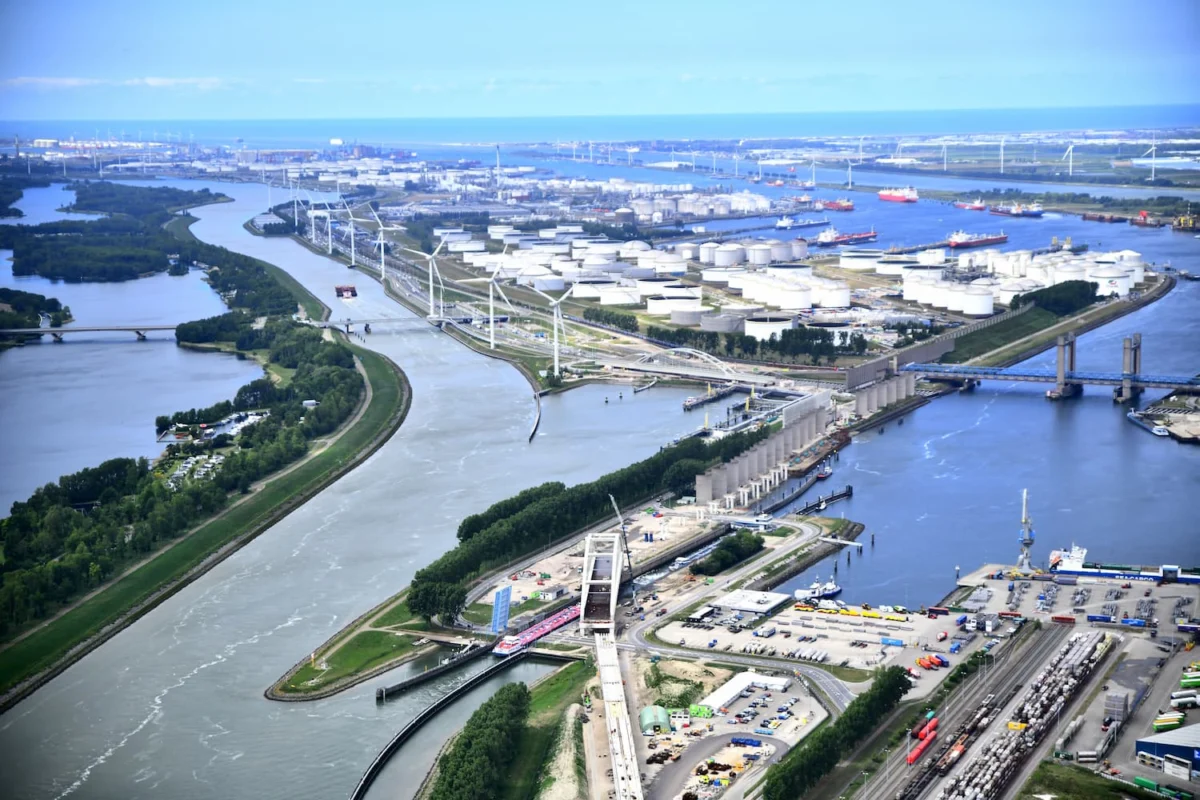
BRUSSELS / ROTTERDAM — In a landmark move to accelerate Europe’s transition toward carbon-neutral transportation, the European Commission has awarded a landmark EUR 25 million grant to the Port of Rotterdam Authority and a vast international coalition. Comprising 45 entities—including leading port authorities, industrial powerhouses, and prestigious knowledge institutes—the consortium is launching an ambitious initiative dedicated to transforming European ports into smart, green, and highly efficient multimodal hubs.
The five-year research and demonstration initiative, operating under the acronym MAGPIE (sMArt Green Ports as Integrated Efficient multimodal hubs), represents one of the most comprehensive cooperative efforts in maritime and inland logistics to date. Spanning six European nations, the project aims to bridge the gap between theoretical decarbonization models and real-world industrial application, targeting the complete elimination of carbon emissions in port operations by 2050.
Main Facts: The MAGPIE Initiative at a Glance
The MAGPIE project brings together a powerhouse of European maritime stakeholders to address the urgent need for sustainable logistics. Funded primarily through the European Union’s Horizon 2020 Green Deal program, the initiative focuses heavily on the operational, technological, and infrastructural hurdles facing modern ports and their hinterland connections.
Core Objectives and Scope
- Total Funding: EUR 25 million allocated by the European Commission.
- Consortium Composition: 45 partners, including port authorities, over 30 private companies, and 10 research institutes.
- Geographic Reach: Collaborative efforts spanning the Netherlands, Germany, France, Portugal, Denmark, and Sweden.
- Duration: Five years, running through the mid-2020s.
- Key Deliverable: A comprehensive master plan detailing the pathway to carbon-free port transport by 2050, complete with concrete milestones for 2030 and 2040.
The Multi-Port Alliance
The initiative is anchored by four major European port authorities:
- Port of Rotterdam Authority (The Netherlands) — Project lead and Europe’s largest port.
- DeltaPort (Germany) — Vital gateway connecting inland European waterways and rail corridors.
- HAROPA Port (France) — The axis connecting Le Havre, Rouen, and Paris along the Seine corridor.
- Port of Sines (Portugal) — A strategic Atlantic gateway for Southern Europe.
These ports, working alongside more than 30 commercial enterprises and 10 specialized academic institutions, will execute 10 distinct pilot and demonstration projects. These initiatives are specifically designed to test, scale, and optimize next-generation energy carriers, alternative fuels, and advanced digital automation tools.
Chronology: The Road to MAGPIE and the 2050 Horizon
The realization of the MAGPIE project is the result of years of escalating climate urgency, technological evolution, and strategic cross-border diplomacy within the European Union.
Phase 1: Policy Genesis and the European Green Deal (2019–2020)
The framework for MAGPIE was heavily influenced by the European Commission’s unveiling of the European Green Deal in late 2019. The policy established an aggressive target: making Europe the world’s first climate-neutral continent by 2050. Recognizing that ports are massive industrial clusters responsible for significant energy consumption and freight movements, EU policymakers earmarked dedicated Horizon 2020 funds specifically for greening maritime and aviation logistics.
Phase 2: Alliance Formation and Proposal Development (2020–2021)
During 2020, port authorities in Rotterdam, Le Havre, Rouen, Paris, Sines, and German inland hubs began coalescing around shared decarbonization goals. Recognizing that individual ports could not solve the complex systemic challenges of green energy adoption alone, they forged a multinational alliance. They integrated academic heavyweights and private sector innovators—spanning logistics, energy, and rail engineering—to draft a comprehensive research proposal under the MAGPIE banner.
Phase 3: Grant Approval and Project Kick-Off (2021–2022)
Following rigorous evaluation by the European Commission, the MAGPIE project secured its EUR 25 million grant. The formal launch mobilized 45 organizations to establish baseline metrics, set up governance structures, and prepare the groundwork for 10 targeted pilot projects.
Phase 4: Execution of Pilots and Interim Milestones (2022–2026)
Over the five-year operational lifespan of the project, the consortium is rolling out practical trials. These include testing hybrid-electric locomotives, deploying green hydrogen bunkering infrastructure, and evaluating ammonia as a marine fuel.
Phase 5: The Master Plan and Beyond (2026 and Onward)
As the five-year research program concludes, the primary output—a definitive master plan—will be delivered to industry stakeholders and policymakers. This roadmap will outline precise, actionable steps for European ports to achieve absolute decarbonization by 2050, providing interim checkpoints for 2030 and 2040 to ensure accountability and continuous progress.
Supporting Data: The Technological and Logistical Landscape
The transition away from fossil fuels in maritime and port logistics is not a simple "plug-and-play" scenario. Different segments of the transport chain require entirely different energy carriers, each presenting unique engineering and economic challenges.
Alternative Fuels and Energy Carriers
MAGPIE’s research program focuses intensely on four primary renewable energy vectors:

- Green Hydrogen ($H_2$): Widely considered essential for heavy-duty industrial applications, long-haul trucking, and certain segments of inland shipping. However, large-scale storage, pipeline distribution, and refueling safety standards require further practical testing.
- Large Electric Batteries: Highly efficient for short-sea shipping, harbor craft, and terminal equipment (such as automated guided vehicles and yard cranes). Weight, charging times, and grid capacity remain primary design hurdles.
- Ammonia ($NH_3$): Emerging as a promising zero-carbon marine fuel for deep-sea vessels due to its high volumetric energy density compared to liquid hydrogen. However, its high toxicity demands entirely new bunkering protocols and safety systems.
- Bio-LNG (Liquefied Natural Gas): A transitional drop-in fuel derived from organic waste that significantly reduces greenhouse gas emissions compared to fossil LNG, serving as an immediate bridge technology while zero-carbon fuels scale up.
Untested Links in the Supply Chain
While individual components of these green energy value chains have been studied in laboratory environments, the consortium notes that significant gaps remain in real-world integration. MAGPIE’s trials explicitly target the missing links across the entire lifecycle:
- Production: Scaling up green hydrogen electrolysis and sustainable biomass conversion.
- Transport: Managing high-pressure pipelines, cryogenic tankers, and bulk chemical carriers safely within densely populated port zones.
- Storage: Designing large-scale, safe terminal storage facilities for volatile energy carriers like ammonia and hydrogen.
- Distribution and Bunkering: Establishing standardized, safe methods for transferring alternative fuels from shore facilities to ships, locomotives, and trucks.
- Charging Infrastructure: Developing high-capacity electrical grids and fast-charging points for heavy electric machinery.
Spotlight on Specific Pilot Projects
To address these challenges, the 10 pilot projects include highly innovative real-world trials:
- The Dual-Power Hybrid Locomotive: Testing an electric battery-powered locomotive equipped with an overhead pantograph. The engine draws power from overhead lines while running on primary tracks to pull heavy loads and simultaneously recharge its onboard batteries. When venturing onto non-electrified marshalling yards, it seamlessly switches to battery power, eliminating local diesel emissions entirely.
- Ammonia Bunkering Trials: Developing and testing the regulatory, technical, and operational frameworks required to safely bunker ammonia as a marine fuel to commercial vessels.
- Offshore Shore Power Mooring Buoys: Designing innovative electrical power supply systems delivered via mooring buoys to ships anchored offshore, allowing vessels to shut down their auxiliary diesel engines completely while waiting to berth.
Official Responses and Stakeholder Perspectives
The scale and ambition of the MAGPIE project have drawn widespread praise from European officials, port directors, and industrial leaders alike.
European Commission Perspective
EU officials have repeatedly emphasized that meeting the European Green Deal’s targets is impossible without radical transformations in the logistics and transport sectors. By channeling Horizon 2020 funds into port-centric innovation, the European Commission is betting that scalable pilots in major hubs like Rotterdam, Le Havre, and Sines will serve as blueprints for ports across the entire continent.
Port Authority Leadership
Representatives from the leading port authorities have highlighted the necessity of cross-border collaboration.
- The Port of Rotterdam Authority noted that achieving climate neutrality requires breaking down silos between energy producers, transport operators, and technology developers. Rotterdam’s leadership in the project underscores its ambition to remain Europe’s most forward-thinking port, balancing economic competitiveness with strict environmental stewardship.
- DeltaPort (Germany) stressed the critical importance of hinterland connectivity. A green port loses its value if goods cannot be transported inland via equally green rail and waterway networks. The participation of German inland logistics nodes ensures that decarbonization extends deep into the European mainland.
- HAROPA Port (France) and the Port of Sines (Portugal) emphasized the geopolitical and geographical diversity of the alliance. By linking the North Sea, the Seine corridor, the Atlantic coast, and Central European waterways, MAGPIE creates a representative testing ground that mirrors the complex realities of the entire European transport network.
Industry and Academic Partners
The 30+ private companies and 10 research institutes involved view MAGPIE as a unique opportunity to commercialize green technologies ahead of tightening global environmental regulations. Academic partners have underscored that the data gathered during the five-year trial period will be crucial for shaping future European maritime policy, ensuring that regulatory frameworks are grounded in empirical, operational reality.
Implications: Shaping the Future of Global Logistics
The implementation and eventual success of the MAGPIE project carry profound implications for the global maritime industry, regional economies, and environmental policy.
1. Setting the Global Standard for Green Ports
As international maritime organizations—such as the International Maritime Organization (IMO)—face mounting pressure to adopt stricter carbon reduction targets, the technical and operational standards developed under MAGPIE could become global benchmarks. Ports outside of Europe will likely look to the Rotterdam-led consortium for proven methodologies on how to handle alternative bunkering fuels and implement port-wide automation.
2. Accelerating Workforce Upskilling
Transitioning to green hydrogen, ammonia, and complex electrical systems requires a fundamental shift in workforce capabilities. Port workers, engineers, safety inspectors, and logistics managers will need specialized training. The MAGPIE project indirectly stimulates regional educational and vocational programs, creating high-skill green jobs across the participating nations.
3. Boosting Digitalization and Smart Logistics
Sustainability and digitalization are inextricably linked. The consortium’s focus on automation and smart logistics platforms means that ports will not only reduce their carbon footprints but also dramatically improve turnaround times, reduce congestion, and optimize supply chain resilience. Real-time data sharing between vessels, terminals, and hinterland carriers will minimize idle times and energy waste.
4. Long-Term Economic Resilience
While the upfront capital expenditure required for the energy transition is substantial, the MAGPIE project demonstrates that early adoption mitigates the long-term risks of regulatory penalties and stranded fossil-fuel assets. By positioning European ports at the forefront of the hydrogen and green fuel economy, the initiative secures Europe’s competitive edge in the global logistics market for decades to come.
Conclusion
With the European Commission’s EUR 25 million backing and the collective expertise of 45 international partners, the MAGPIE initiative marks a defining chapter in the evolution of European transport. By rigorously testing alternative fuels, hybrid locomotives, shore power solutions, and advanced digitalization tools across diverse geographic corridors, the project moves Europe decisively closer to its ultimate goal: a fully decarbonized, highly efficient, and smart multimodal logistics network by 2050.

