

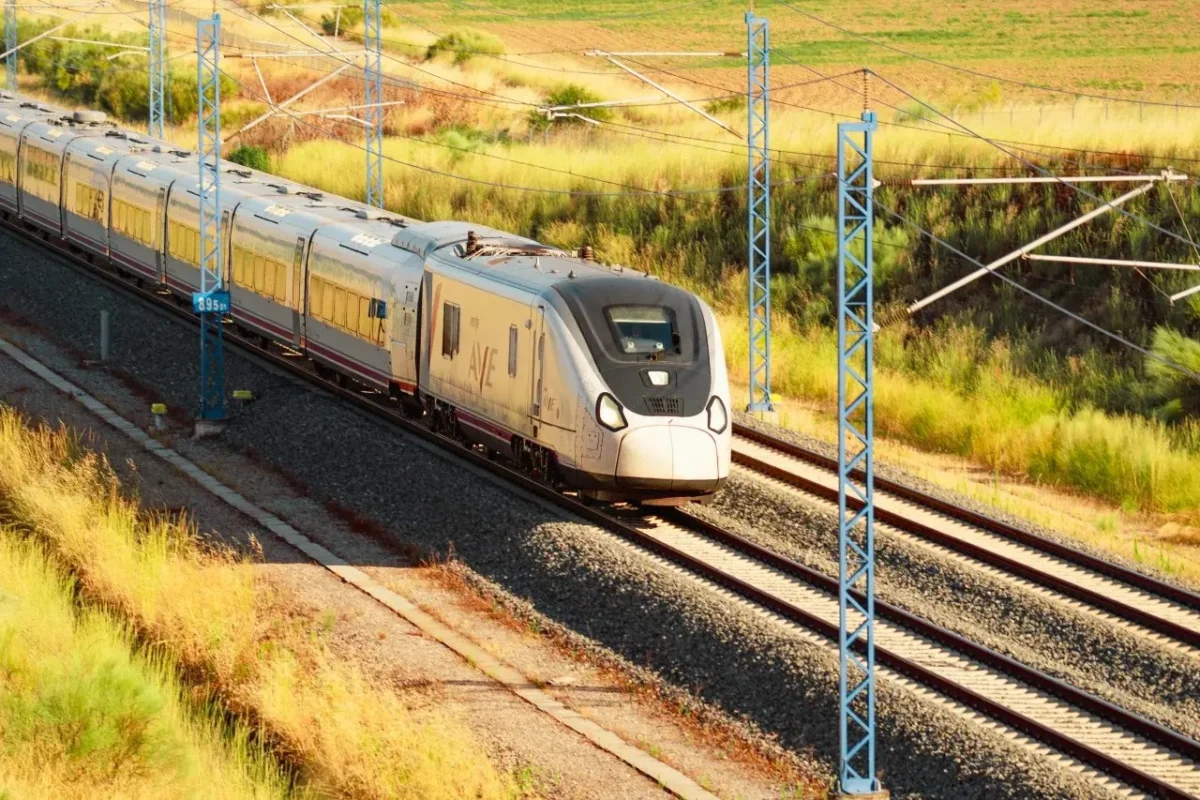
After years of protracted legal tensions, contractual disputes, and operational delays, Spanish rail manufacturer Talgo and the national operator Renfe have reached a comprehensive settlement regarding the S106 "Avril" high-speed train program. This landmark agreement, announced following months of delicate negotiations, effectively draws a line under one of the most contentious chapters in modern Spanish railway history.
By restructuring the delivery terms, settling financial obligations, and committing to a significant technological upgrade for the entire fleet, the two parties have sought to restore stability to Spain’s high-speed rail network. For Talgo, the deal serves as a crucial milestone in its strategic pivot, while for Renfe, it secures the necessary assets to bolster its competitive position in an increasingly liberalized market.
Main Facts: A Strategic Reset
At the heart of the agreement is a decisive shift in the technical configuration of the Avril S106 fleet. Originally, the order for 30 units was split between fixed-gauge trains, destined for standard European high-speed lines, and variable-gauge units capable of transitioning between the Iberian broad gauge and standard gauge.
Under the new terms, Renfe has commissioned the conversion of the 15 remaining fixed-gauge trains into variable-gauge units. This move ensures that the entire 30-train fleet will possess the proprietary "rodals" independent wheel system, granting the operator unprecedented flexibility. This capability is vital for navigating the diverse infrastructure of the Iberian Peninsula, where high-speed lines and conventional tracks frequently intersect.
To facilitate this massive technical undertaking, Renfe has agreed to pay Talgo EUR 132 million. Furthermore, the settlement addresses the long-standing issue of contractual penalties related to delivery delays. Crucially for Talgo’s fiscal health, these penalty payments have been deferred until 2032, allowing the manufacturer to focus on immediate liquidity and long-term industrial growth.
Chronology: A Trajectory of Tension and Resolution
The S106 program, widely considered the flagship of Spanish high-speed rolling stock, has faced a turbulent path since its inception.
- 2016–2019: The initial procurement phase saw Renfe place significant trust in Talgo to deliver a high-capacity train that could revolutionize domestic travel. Technical complexities, exacerbated by the COVID-19 pandemic and global supply chain disruptions, pushed back initial delivery timelines.
- 2020–2023: As delays mounted, the relationship between the two entities deteriorated. Disagreements over technical certification, the rigorous testing required for the variable-gauge systems, and the subsequent imposition of heavy contractual penalties led to a period of institutional friction.
- 2024: The public discourse intensified as Renfe sought to maintain its market share against low-cost entrants like Iryo and Ouigo, with the S106 trains becoming the focal point of the operator’s strategy to increase capacity.
- December 2025 – Mid-2026: A new management approach and a focus on corporate stability led to renewed negotiations. The resulting agreement, finalized in the summer of 2026, marks the end of the deadlock, clearing the path for the full deployment of the fleet.
Supporting Data: Financial and Industrial Impact
The financial ramifications of this agreement are substantial for both stakeholders. Renfe’s commitment to pay EUR 132 million for the gauge conversion is complemented by the release of nearly EUR 200 million in frozen guarantees, a move that significantly strengthens Talgo’s balance sheet.
Fleet Flexibility and Operational Costs
The conversion of the 15 fixed-gauge units is not merely a logistical upgrade; it is an operational necessity. By standardizing the fleet to variable-gauge capability, Renfe can maximize the utilization of its assets across various corridors without being restricted by infrastructure limitations.
However, this flexibility comes with higher maintenance requirements. The agreement includes a revision of the maintenance contract managed by Tarvia—the joint venture between Talgo and Renfe. Maintenance payments will increase by approximately 29%, reflecting the complexity of the independent wheel system and the rigorous upkeep required for high-frequency operations. To mitigate these costs, Renfe will take on the procurement of essential spare parts, streamlining the supply chain and allowing Tarvia to focus on technical execution.
Talgo’s Growing Backlog
Despite the S106 disputes, Talgo’s industrial health remains robust. The company reported a record order backlog of EUR 6.307 billion as of mid-2026, a significant increase from the EUR 4.466 billion recorded at the end of 2025. This momentum is supported by major international wins:
- Saudi Arabia: A EUR 1.332 billion contract for 20 high-speed trains and maintenance for Saudi Arabia Railways (SAR).
- Sweden: A EUR 756 million order from Trafikverket for long-distance and night-train fleets.
- Uzbekistan: An EUR 80 million maintenance extension for existing high-speed units.
With a pipeline of potential commercial opportunities estimated at EUR 14 billion over the next two years, Talgo is positioning itself as a dominant player in the European and international high-speed rail market.
Official Responses and Strategic Outlook
Both parties have framed the agreement as a "new phase" for the Spanish rail sector. For Talgo, the resolution provides the necessary breathing room to focus on its international expansion strategy. By deferring penalties to 2032—past the maturity of its restructured bank debt—the company has secured the financial runway required to scale its production capacity.
Renfe, for its part, has emphasized that the Avril S106 remains the cornerstone of its competitive strategy. The ability to deploy high-capacity, high-speed trains that can traverse both standard and Iberian gauges provides the operator with a "competitive moat" against private rivals. The liberalization of the Spanish rail market has turned speed and seat capacity into commodities; the Avril trains are Renfe’s primary weapon in maintaining its dominance.
Implications: The Future of High-Speed Rail in Spain
The settlement carries deep implications for the broader European rail industry.
1. Competitive Liberalization
The entry of competitors like Ouigo and Iryo has forced Renfe to modernize its fleet. The S106 trains represent a high-capacity solution designed to keep ticket prices low while maintaining high frequency. The resolution of the S106 issues means that Renfe can finally deploy its full potential, potentially shifting the passenger demographic toward rail and away from regional aviation.
2. Technological Standardization
The move to make the entire fleet variable-gauge reinforces the unique requirements of the Iberian rail landscape. It signals to other manufacturers and operators that the "gauge-changing" technology—long a hallmark of Talgo’s innovation—remains the gold standard for connecting non-standard infrastructure to the high-speed grid.
3. Contractual Stability
The deferral of penalties until 2032 serves as a case study in "constructive compromise." Rather than pursuing aggressive litigation that could have crippled a key industrial partner, the entities opted for a long-term payment structure that protects the manufacturer’s viability while ensuring the operator receives the functional equipment it needs.
4. Passenger Experience
For the end-user, the implications are largely positive. The gradual introduction of the fully upgraded S106 fleet is expected to increase total seat capacity, improve reliability, and potentially lower average ticket costs as economies of scale are achieved. Passengers traveling between the heart of the Iberian network and the dedicated high-speed corridors will benefit from seamless, high-speed journeys that previously required transfers or slower, conventional rolling stock.
In conclusion, while the path to the S106 agreement was fraught with friction, the final resolution represents a victory for pragmatic industrial policy. By aligning their incentives, Renfe and Talgo have ensured that the Avril project can transition from a source of conflict to a flagship of efficiency, setting the stage for a new era of connectivity on the Iberian Peninsula.

