

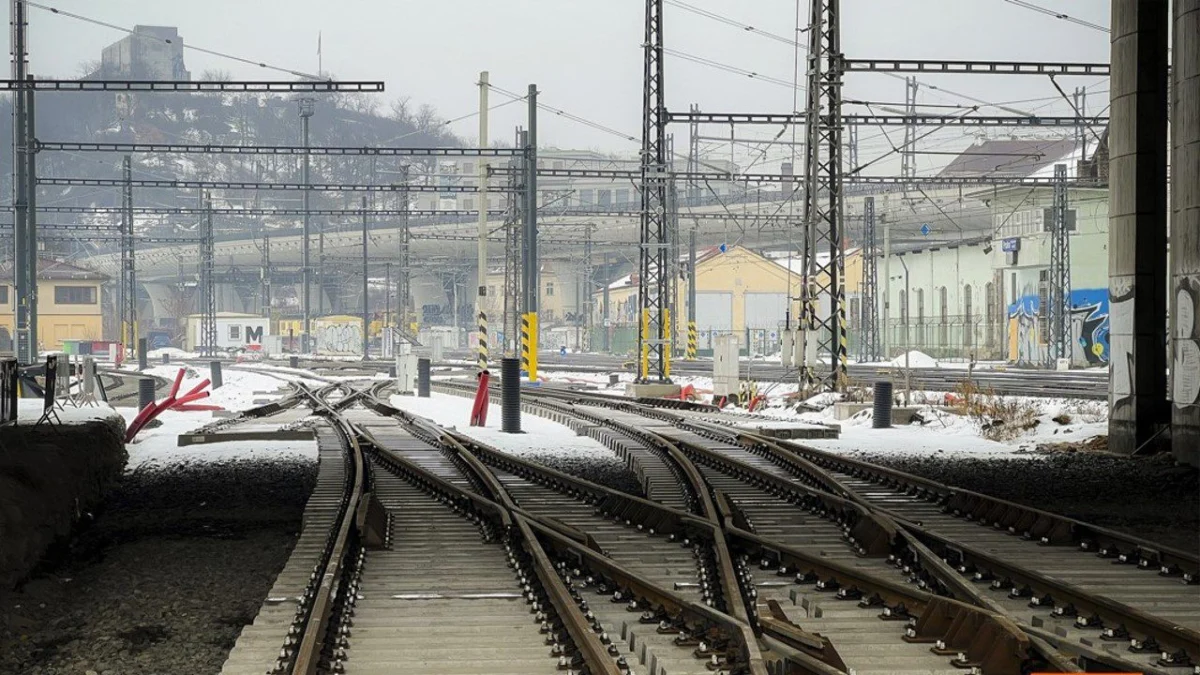
In a landmark move to modernize the Czech Republic’s national rail network, the country’s railway infrastructure administrator, Správa železnic, has announced a comprehensive structural and organizational transformation. Effective this April, the initiative seeks to overhaul the state-owned enterprise’s management hierarchy, modernize its procurement framework, and digitize its operational workflows.
Under the leadership of the newly appointed CEO, Tomáš Tóth, the organization is pivoting toward a leaner, more agile model. The objective is clear: to foster a more competitive market environment, optimize the expenditure of public funds, and accelerate the delivery of vital infrastructure projects. This reform package is expected to yield annual savings of CZK 335.6 million (approximately EUR 14 million), a critical figure as the nation ramps up its multi-billion-euro investment plan for the modernization of the Trans-European Transport Network (TEN-T) corridors.
Main Facts: The Scope of the Reform
The transformation program is not merely a cost-cutting exercise; it is a fundamental shift in how the Czech rail authority conducts its business. The program rests on three strategic pillars:
- Management Simplification: Eliminating redundant layers of bureaucracy within the corporate headquarters.
- Procurement Liberalization: Dismantling entry barriers to encourage a diverse ecosystem of contractors, including international firms and small-to-medium-sized enterprises (SMEs).
- Operational Centralization: Consolidating regional procurement and commercial activities to eliminate duplication of effort and improve the consistency of infrastructure delivery.
While 121 administrative positions are set to be phased out, Správa železnic has explicitly confirmed that these cuts will not impact operational staff. The frontline workforce—those responsible for the day-to-day maintenance and safety of the rail network—will remain untouched, ensuring that service stability remains uncompromised during the transition.
Chronology: A Roadmap for Change
The journey toward this transformation began with an internal audit of Správa železnic’s operational efficiency, which revealed that the organization had become increasingly "robust" (top-heavy) over the last decade.
- Early 2025: Initial assessment and identification of administrative bottlenecks.
- Late Q1 2025: Consensus-building phase with internal stakeholders, where CEO Tomáš Tóth secured the support of the management team to initiate the overhaul.
- April 2026 (Implementation Phase): The formal rollout of the organizational restructure. The centralization of the 21 regional operational units under the two primary dispatch centers in Prague and Přerov commences.
- Q2 2026 – 2027: The phased implementation of revised tender procedures, including the integration of "Design & Build" contracts and the adoption of broader international certification standards.
Supporting Data: Efficiency Through Optimization
The financial logic driving this reform is anchored in the need to maximize the utility of state and European Union funding. By trimming the fat—specifically, reducing expenditure in non-core areas such as IT, marketing, and legal consultancy by 20%—the organization aims to pivot those resources toward the development of high-speed rail and station modernization.
Key Efficiency Metrics:
- Annual Savings: CZK 335.6 million.
- Headcount Reduction: 121 administrative roles removed.
- Operational Integration: 21 regional directorate units merged into two centralized hubs.
- Budgetary Reallocation: Redirecting savings toward the acceleration of capital investment project design and engineering.
The decision to merge regional procurement activities into a centralized unit is designed to mitigate "silo syndrome," where individual regions historically negotiated different prices for the same services. By centralizing these functions, the administrator expects to gain significant leverage in price negotiations with suppliers.
Opening the Market: Procurement Reform
Perhaps the most significant change for the private sector is the overhaul of tender procedures. Historically, the complexity of bidding for Správa železnic projects—characterized by rigid, legacy technical requirements—often restricted competition to a small circle of large, entrenched domestic players.
Expanding the Supplier Pool
To break this cycle, the company is introducing:

- Market Consultations: Engaging with potential contractors before tenders are published to refine requirements and gauge market capacity.
- Contract Fragmentation: Dividing massive, multi-billion-euro projects into smaller, specialized packages. For instance, separating the civil engineering construction (tunnels and tracks) from the signaling and technological systems.
- Technical Harmonization: A gradual acceptance of foreign technical certifications, allowing international construction firms to compete on a level playing field without the need for costly and time-consuming local re-certification.
- Design & Build Expansion: Moving away from the traditional "Design-Bid-Build" model where appropriate. By tasking contractors with both design and construction, the company hopes to encourage innovation and transfer a portion of the project risk to the private sector, resulting in faster completion times.
Official Responses: A Vision for the Future
The government has thrown its full weight behind the transformation, viewing it as a prerequisite for the Czech Republic’s broader economic modernization.
Transport Minister Ivan Bednárik emphasized the strategic necessity of the reform, stating: "Railways are the backbone of transport and have a significant impact on the economy and quality of life in the Czech Republic. State funds must be used as efficiently as possible. This is not just about saving money; it is about building better, faster, and cheaper."
CEO Tomáš Tóth, who spearheaded the internal consensus, expressed relief and optimism regarding the internal reception of the plan: "The management structure has been very robust for a long time, so I expected to encounter much greater resistance to change. However, from the very first round, we managed to find consensus across the entire management team, which I consider a success. We are now aligned in our commitment to modernize our administrative processes to serve the nation’s infrastructure needs more effectively."
Implications: A New Era for Czech Rail
The implications of these changes will be felt far beyond the offices of Správa železnic.
For the Private Sector
Contractors should expect a more transparent and competitive bidding environment. While the barrier to entry will drop, the bar for performance will likely rise. The increased use of the "Design & Build" principle will require contractors to possess stronger engineering capabilities and project management skills.
For the Taxpayer
The focus on efficiency and the reduction of unnecessary bureaucratic costs directly aligns with the public mandate for greater transparency. By publishing more detailed bid components and price breakdowns, the organization is inviting public scrutiny, which is expected to drive down costs over the medium-to-long term.
For the National Infrastructure
The most tangible benefit will be the acceleration of investment. With the savings reinvested into project preparation, the "bottlenecks" that have historically plagued project timelines are expected to ease. As the company streamlines its internal decision-making, the time-to-market for vital rail upgrades—such as the electrification of lines and the construction of high-speed corridors—should decrease, reinforcing the Czech Republic’s position as a transit hub in Central Europe.
In conclusion, the transformation of Správa železnic is a proactive response to the challenges of modern infrastructure management. By choosing to reform internally before facing external pressure, the organization has signaled a commitment to professionalization that is likely to serve as a blueprint for other state-owned enterprises in the region. As the transition unfolds, the focus will remain on the delicate balance of cost-efficiency and the relentless drive to improve the safety, speed, and reliability of the Czech railway network.

