

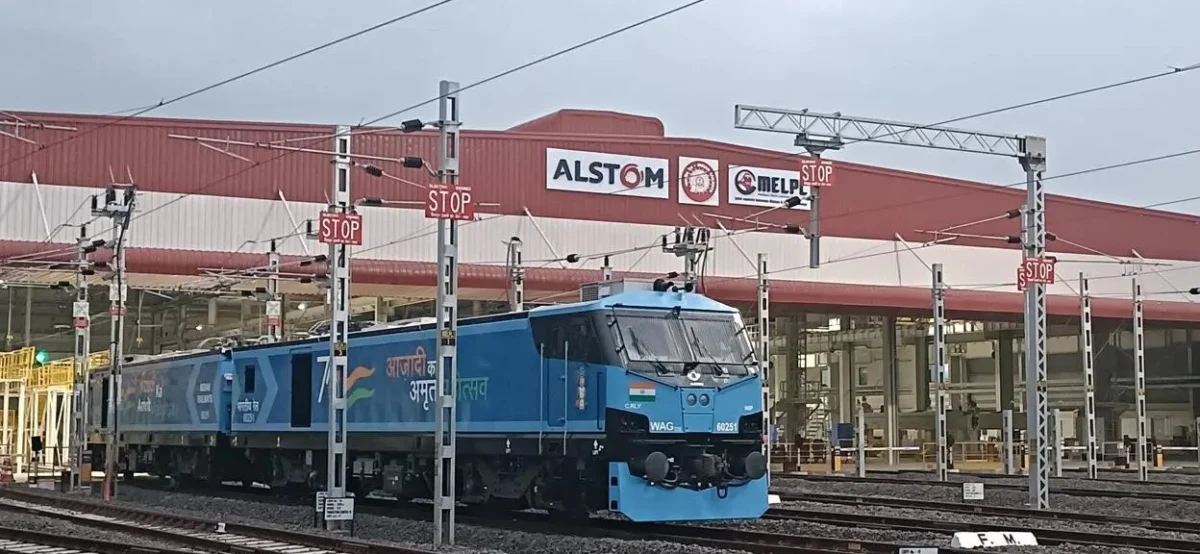
In a significant boost to India’s heavy-haul freight capabilities, Alstom, the global leader in sustainable mobility, has secured a landmark maintenance contract valued at €107 million. The agreement, facilitated through Madhepura Electric Locomotive Private Limited (MELPL)—a strategic joint venture between Alstom and Indian Railways—marks a pivotal moment in the operational lifecycle of the WAG-12B electric locomotive fleet. This five-year commitment ensures the comprehensive maintenance of 250 of these high-performance locomotives, reinforcing the backbone of India’s freight transport network.
The Nagpur Hub: A Benchmark for Railway Excellence
The heart of this new agreement lies in the Nagpur depot, a facility that has rapidly evolved into a center of excellence for rail maintenance in India. Under the terms of the contract, MELPL will oversee the systematic upkeep of 250 WAG-12B units. This is not merely a mechanical service contract; it encompasses the holistic management of depot infrastructure, the deployment of rapid-response technical teams, and an intensive focus on human capital development through on-site training.
The Nagpur depot has been cited by Alstom leadership as a "benchmark" for its collaborative efforts with the Indian government. By centralizing maintenance operations, the facility ensures that the WAG-12B fleet remains operational with minimal downtime, a critical factor for the high-frequency demands of Indian Railways’ freight corridors.
Chronology: From Innovation to Operational Mastery
The journey of the WAG-12B—internationally recognized as the Prima T8—is a testament to the success of India’s "Make in India" and Atmanirbhar Bharat (Self-Reliant India) initiatives.
- The Inception: The partnership between Alstom and Indian Railways was solidified with the creation of the MELPL joint venture, specifically tasked with designing and manufacturing high-horsepower electric locomotives to replace aging diesel engines.
- The First Roll-out: The first Prima T8 WAG-12B locomotive rolled out of the state-of-the-art manufacturing facility in Madhepura, Bihar, signaling a new era for Indian logistics.
- Initial Service Contract: Following the successful induction of the fleet, a four-year maintenance contract was established. This period allowed the teams to gather vital telemetry and operational data, proving the locomotives’ reliability in India’s diverse and often grueling climatic conditions.
- Current Milestone: The new five-year, €107 million contract serves as a vote of confidence, validating the previous four-year operational cycle and paving the way for sustained, high-efficiency rail freight.
Technical Prowess: The Power of the Prima T8
The WAG-12B locomotives are technological marvels designed specifically for the logistical demands of the 21st century. Boasting a power output of 12,000 horsepower (CP), these machines are the workhorses of the Dedicated Freight Corridors (DFCs).
Key Performance Specifications:
- Haulage Capacity: Capable of pulling loads of up to 6,000 metric tons, these locomotives are significantly more efficient than their predecessors.
- Speed: Designed for operational speeds of up to 120 km/h, they drastically reduce the turnaround time for cargo transit.
- Efficiency: By replacing older, less efficient locomotives, the WAG-12B fleet contributes to a significant reduction in the carbon footprint of India’s logistics sector, aligning with global climate goals.
These units are particularly vital for the movement of coal, iron ore, and finished goods across the DFCs—the massive infrastructure projects designed to separate freight traffic from passenger traffic, thereby increasing overall network capacity.
Supporting Data and Strategic Maintenance
The €107 million investment is not just about repairs; it is about "availability optimization." Alstom has implemented a robust ecosystem to ensure the 250 locomotives remain in peak condition.
Mobile Rapid-Response Teams
One of the most critical aspects of the contract is the continued operation of Alstom’s mobile rapid-response teams. These units are strategically positioned across the Indian rail network. Equipped with specialized tools and a ready supply of critical spare parts, these teams can intervene in real-time, drastically reducing the "Mean Time to Repair" (MTTR).
Infrastructure and Skill Building
Maintenance of the depot infrastructure is a core pillar of this agreement. This includes the implementation of digital diagnostic tools that allow engineers to monitor locomotive health remotely. Furthermore, the contract mandates ongoing on-site training programs. By upskilling local technicians, Alstom is ensuring that India’s rail workforce is prepared to manage the most advanced rolling stock in the world, fostering a sustainable ecosystem of local expertise.
Official Perspectives: Commitment to the Indian Rail Revolution
The leadership at Alstom views this contract as more than a financial transaction; it is a declaration of long-term partnership. Olivier Loison, Managing Director of Alstom India, emphasized the importance of this renewal:

"The renewal of this contract is a strong confirmation of our commitment to Indian Railways and the success of our partnership. We are proud that the trust placed in us has translated into the proven performance and reliability of the WAG-12B electric locomotives, which are essential to the freight transport revolution in India."
This sentiment reflects the broader strategy of Alstom in India. With six manufacturing facilities and five major engineering centers, Alstom is deeply embedded in the local supply chain. The company’s presence in India spans the entire value chain—from design and manufacturing to signaling and long-term maintenance.
Implications for the Indian Railway Sector
The ripple effects of this contract extension are profound, touching upon economic growth, environmental sustainability, and industrial self-reliance.
1. Strengthening the Dedicated Freight Corridors (DFCs)
The DFCs are arguably the most important infrastructure projects in India. By ensuring the high availability of 250 powerful locomotives, Alstom is directly contributing to the throughput of these corridors. Increased rail capacity means more goods moving faster, which lowers the cost of logistics and makes Indian industry more competitive globally.
2. Environmental Impact
The transition from diesel to electric freight is a major component of India’s pledge to reach net-zero emissions. By ensuring the WAG-12B fleet operates at peak efficiency, this maintenance contract indirectly helps reduce the national reliance on fossil fuels for heavy transport.
3. Localization and "Make in India"
Alstom’s operations in India are a textbook example of the "Make in India" philosophy. By manufacturing and maintaining these locomotives within the country, Alstom is not only creating high-skilled jobs but also developing a robust vendor base. This creates a multiplier effect in the domestic economy, as local suppliers are integrated into a global supply chain.
4. Technological Advancement
The integration of digital maintenance and real-time monitoring reflects the broader trend of "Industry 4.0" in the railway sector. By utilizing predictive maintenance, the partnership ensures that components are replaced before they fail, thereby extending the lifecycle of the locomotives and optimizing the total cost of ownership for Indian Railways.
Future Outlook: A Sustained Partnership
As India continues to expand its railway network—with ambitious electrification targets and the continuous rollout of the DFCs—the role of reliable, high-horsepower locomotives will only grow. The success of the MELPL joint venture serves as a model for future collaborations between international rail technology leaders and state-owned operators.
Looking ahead, the focus for Alstom and Indian Railways will likely remain on enhancing the digitalization of the fleet. With the data gathered from the Nagpur depot, there is significant potential to further refine maintenance cycles, integrate AI-driven diagnostic software, and continue the drive toward a truly world-class, modernized freight network.
In conclusion, the €107 million maintenance contract for the WAG-12B fleet is a milestone that underscores the technical and operational synergy between Alstom and Indian Railways. By prioritizing maintenance, technology, and human capital, the partners are not just moving freight—they are accelerating the transformation of India’s economic infrastructure. As the Nagpur depot continues to operate at the cutting edge of railway maintenance, it stands as a symbol of the progress, reliability, and innovation defining the future of Indian logistics.

